THE TRUTH ABOUT NO-GLUE LASH INGREDIENTS: LEARN THE RISKS AND CHOOSE GENTLER
IDENTIFY POTENTIAL IRRITANTS, READ A LABEL CORRECTLY, AND UNDERSTAND HOW GLUE-FREE ATTACHMENT WORKS
No-glue lashes are not automatically allergy-free. Eliminating liquid lash adhesive removes one major source of exposure, but a finished lash can still contain several materials. Read the complete ingredient description, confirm how the band attaches, and follow the removal directions—especially if you have sensitive skin or a previous adhesive reaction.
Stinging during wear can come from adhesive, remover, fragrance, preservatives, direct pressure, or a reaction to the band. If discomfort appears, remove the lash instead of waiting for it to pass. Persistent pain, swelling, light sensitivity, discharge, or blurred vision warrants prompt medical advice.
The phrase “what the FDA wishes you knew” is not an official FDA message. In the United States, most ordinary cosmetics do not receive FDA approval before reaching consumers; manufacturers are responsible for substantiating product safety under federal requirements.
Start by separating three questions: What is in the product? How does it attach? What happens during removal? Those answers are more useful than relying on a general label such as “hypoallergenic” by itself.
WHAT THE FDA REGULATORY FRAMEWORK ACTUALLY TELLS YOU
Most cosmetics, including ordinary lash adhesives, do not require premarket FDA approval; color additives are an important exception. Federal cosmetic-labeling rules in 21 CFR Part 701 require covered products to display basic information, including an ingredient declaration and responsible-party details. Manufacturers must also maintain the records needed to substantiate product safety.
- FDA compliance is not a safety endorsement: A properly labeled cosmetic has not necessarily been individually tested by FDA for every wearer.
- Ingredient information improves transparency: It lets you identify known irritants or allergens, but it cannot predict every individual response.
- Manufacturer contact information matters: Keep it available if you need a complete formula, usage guidance, or a reaction report.
A compliant label is a baseline, not a guarantee. Neither the FDA nor a manufacturer can promise that every ingredient will suit every person.
THE ADHESIVE INGREDIENTS THAT DESERVE CAREFUL REVIEW
Not every lash adhesive contains the same compounds, but three ingredients are especially useful to recognize on a label:
- Formaldehyde: Formaldehyde is a known irritant and skin sensitizer. Some formulas use it directly or include preservatives that release it. A reaction can follow repeated exposure, so earlier tolerance does not rule out later sensitivity. Review any label identifying formaldehyde or a formaldehyde-releasing preservative.
- Cyanoacrylate: Cyanoacrylates are fast-setting bonding chemicals commonly associated with super glue. They can irritate skin and eyes. Once cured, a rigid bond can catch natural lashes, so forceful pulling or prolonged soaking may add irritation and mechanical lash breakage.
- Latex: Natural-rubber latex contains allergenic proteins. Contact dermatitis can develop after earlier exposures seemed fine. Redness, itching, burning, or swelling around the eye may occur. If the material description is vague, ask whether latex or rubber-derived components are present before full wear.
Preservatives, solvents, fragrance, and removal products can also matter. “No glue” does not automatically mean “no potentially irritating ingredients,” and rubbing can increase irritation even when every component is disclosed.
READ A LASH ADHESIVE LABEL WITH CONFIDENCE
- Find the complete ingredient list. Look beyond front-of-pack words such as “gentle” or “sensitive-eye friendly.” If the documentation is incomplete, contact the manufacturer before use.
- Identify the bonding mechanism. Determine whether the product uses liquid glue, a pressure-sensitive band, or another attachment system. Directions for application and removal should match that mechanism.
- Review warnings and timing instructions. Pay attention to stated contact time, storage conditions, expiration information, and whether the product is intended for reuse.
- Keep traceability details. Record the manufacturer, lot number, and purchase receipt so an adverse reaction can be traced accurately.
- Ask when the wording is unclear. A responsible manufacturer should explain what materials are present and which removal method is intended for the eye area.
Patch-test only when the manufacturer recommends it. A small band may be placed on the inner wrist or behind the ear and monitored for 24 hours. Never test adhesive on the eyelid. No reaction during that test cannot guarantee that the eye area will respond differently.
Do not use a product that is expired, damaged, leaking, or stored incorrectly. After a reaction, avoid rubbing and discontinue use rather than trying to identify the cause through repeated testing.
HOW GLUE-FREE ATTACHMENT CHANGES APPLICATION AND REMOVAL
A glue-free band rests against the natural lashes. Some surfaces use a tacky or microstructured grip, and gentle pressure—and in certain designs warmth—can support initial contact. Adhesion still depends on the specific band, lash condition, and application method, so follow system-specific directions.
Silicone polymers are common in medical dressings and other products, which is why they are often described as gentle. However, a finished lash may be a layered assembly, and no single band material guarantees that every component suits every person. “Medical-grade silicone” alone is not a complete ingredient disclosure.
Without a liquid bond, there is no cured glue layer to soften or dissolve. This can simplify removal and reduce solvent exposure. Follow the supplied instructions, and do not introduce acetone, alcohol, or another remover near the eye unless the manufacturer explicitly directs it.
A GENTLER APPLICATION AND REMOVAL ROUTINE
- Clean your hands and remove makeup. Residual mascara, skincare, oil, or old adhesive can interfere with the band or make removal less comfortable.
- Inspect and prepare the lash line. Follow the instructions, remove any old glue, and make sure the band is clean, dry, and undamaged.
- Align before pressing. Set the band where it meets the natural lashes, then use gentle, steady pressure for the stated time rather than repeatedly moving it.
- Do not improvise with glue or primer. Additional liquids can change adhesion, stain the band, increase removal force, or introduce the very ingredients you intended to avoid.
- Release slowly and store properly. Avoid tugging. Keep the band protected between uses and follow the maker’s cleaning and storage guidance.
If you notice burning, itching, swelling, or pain, remove the lash and stop using the product. Seek medical advice if symptoms persist or include light sensitivity, discharge, or blurred vision.
WHAT TO LOOK FOR IN A GENTLE LASH SOLUTION
Use the same objective checklist for any glue-free option:
- Clear attachment method: The description should state exactly how the lash stays in place. If avoiding adhesives, magnets, and liners is your priority, confirm which of those the system actually uses.
- Complete material disclosure: Look beyond “hypoallergenic,” which is not the same as allergen-free. A band, adhesive surface, coating, and removal method should all be explained.
- Realistic performance: Evaluate whether the lash is intended to withstand humidity, sweat, and normal movement rather than relying on an unsupported “waterproof” promise.
- A stated multi-wear method: A useful wear claim should include care and storage instructions. More wears are not valuable if the band loses grip or structural integrity.
- Fit, style, and value: Compare lengths, densities, and band shapes for your eyes. For value, divide the amount paid by the manufacturer’s stated wear count rather than judging the total cost alone.
Taken together, these criteria point toward one especially useful design decision: remove the liquid-bonding step instead of simply searching for a milder glue.
- SENSITIVE EYES: The hypoallergenic, glue-free construction reduces exposure to liquid adhesive ingredients. Individual sensitivity still varies, so discontinue use if irritation occurs.
- HOLD AND REUSE: The waterproof band is designed for 30+ wears when applied, removed, and stored according to the directions.
- STYLE AND VALUE: Choose from 17 styles for $59. Based on the stated 30+ wears, that is under $2 per wear.
MEET PHANSTA LASHES: THE GLUE-FREE MICRO-ADHESION ANSWER
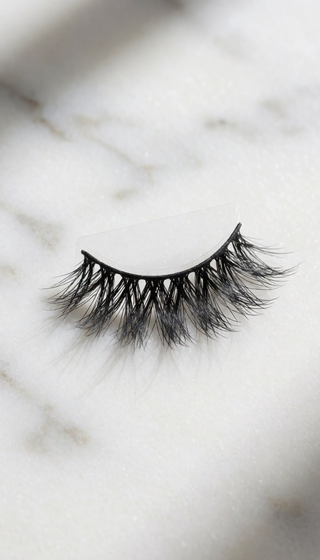
Applied to that checklist, PHANSTA LASHES takes the most direct route by removing liquid glue from the routine. The lashes use glue-free micro-adhesion and require no glue, magnets, magnetic closure, or liner. The band is hypoallergenic and waterproof, with direct pressure replacing a separate bonding liquid.
STYLE AND FIT REFERENCES: Compare ideas for wedding lashes, prom lashes, beach lashes, and festival lashes. For eye-shape education, review guides for hooded eyes, almond eyes, round eyes, monolid eyes, close-set eyes, deep-set eyes, and prominent eyes.
SHOP PHANSTA LASHES — GLUE-FREE, 30+ WEARS →
FREQUENTLY ASKED QUESTIONS
ARE NO-GLUE LASHES ALWAYS HYPOALLERGENIC?
No. “Hypoallergenic” is not the same as allergen-free or medically risk-free. It is a manufacturer claim, and a finished lash can include several materials beyond the band. Check the complete ingredient description, follow the supplied directions, and test cautiously before full wear. If you have a known latex or adhesive sensitivity, ask the manufacturer for specific material information.
WHAT SHOULD I DO IF LASH GLUE IRRITATES MY EYES?
Remove the lashes without pulling glued natural lashes. Rinse gently with lukewarm water if the product instructions advise it, and avoid rubbing, solvents, or more lash products. Persistent pain, swelling, light sensitivity, discharge, or blurred vision warrants prompt medical advice. Do not test a new adhesive on an irritated eye; request ingredient information and the manufacturer’s replacement policy where applicable.
HOW SHOULD A LASH BAND BE PATCH-TESTED?
Manufacturers may suggest placing a band on the inner wrist or behind the ear for 24 hours. Never test adhesive on the eyelid. A clear test does not guarantee that the eye area will not react, so stop if redness, itching, burning, swelling, or discomfort develops. Patch testing can reveal a problem but cannot guarantee complete safety.
ARE PHANSTA LASHES WATERPROOF AND REUSABLE?
Yes. PHANSTA LASHES are waterproof and designed for 30+ wears. Wear time still depends on application, lash-line oils, movement, and care, so follow the included directions. Remove gently, store the band between uses, and inspect it for damage before each wear. Do not reuse a band that has lost its shape, grip, or structural integrity.
DO PHANSTA LASHES USE GLUE OR MAGNETS?
No. PHANSTA LASHES use glue-free micro-adhesion and do not require glue, magnets, a magnetic closure, or a liner. Apply the lash directly along clean, dry natural lashes and press it into place according to the included instructions. The band is hypoallergenic and waterproof, while repeated wear depends on keeping it clean and storing it carefully between uses.
STILL COMPARING OPTIONS? Explore our guides on finding your perfect lash, magnetic vs strip, and sensitive eyes.
FIND THE PERFECT LASH — Not sure which style suits you? Take the 30-second lash finder quiz →