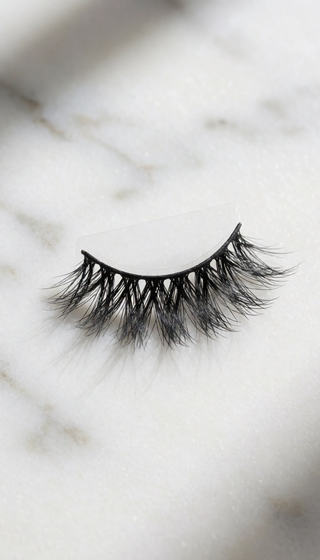
DO MAGNETIC FALSE LASHES REALLY WORK? MYTHS VS FACTS
GET A CLEAR ANSWER: DO MAGNETIC FALSE LASHES REALLY WORK?
Short answer: Yes—magnetic false lashes really can work, but the label alone does not guarantee a secure or comfortable fit. Most systems use compatible magnetic components on the upper and lower lash lines, while some pair an upper band with designated magnetic eyeliner. When the matching parts meet, sit flush, and align with your lashes, they can remain attached without separate lash glue. Misalignment, excess weight, oils, moisture, or an unsuitable band can cause lifting or pulling.
A dramatic style may look secure during a demonstration and shift by midday. That does not automatically mean magnetic lashes fail; it means the closure, band, and eye shape need testing. If the outer corner lifts, the band pulls downward, or a visible gap remains, treat it as a fit signal rather than an application failure.
QUICK TEST: Use clean, dry lashes, align every matching point, close your eye gently, and reopen it. Blink, look down, move your head, and continue through a normal routine for several hours. Remove the lashes if you notice rubbing, pain, swelling, discharge, or a sudden change in vision. Persistent symptoms warrant clinical advice.
FOUR MAGNETIC-LASH MYTHS SEPARATED FROM THE FACTS
Magnetic technology is valid, but broad claims can make different systems sound identical. These distinctions help you assess what a product can realistically deliver:
| MYTH | FACT |
|---|---|
| NO GLUE MEANS NO IRRITATION | A glue-free attachment may reduce adhesive exposure, but fibers, coatings, makeup, or residue can still bother sensitive eyes. |
| STRONGER MAGNETS ARE ALWAYS BETTER | Fit, lash weight, band flexibility, and clean alignment matter more than magnet strength alone. |
| THEY NEVER SHIFT | Oil, moisture, rubbing, movement, and a heavy band can loosen the connection. |
| THEY ARE ALWAYS INVISIBLE | Some systems hide their closures; others leave a visible line or add lower-lash pieces. |
The most useful evidence is a controlled trial on your own eye, not a universal promise. Test the lashes through several hours of ordinary blinking, movement, and wear conditions.
HOW MAGNETIC FALSE LASHES ATTACH AND STAY ON
Magnetic false lashes are a family of systems rather than one identical design. Some place matching pieces on upper and lower bands; others pair a lash band with designated magnetic eyeliner. Attraction works only when those parts make clean contact. Magnetic force cannot compensate for a band positioned too far from the lash line, pulling outward, or failing to follow the eye.
- PREPARE: Remove eye makeup, oils, and loose lashes. Let both natural lash lines dry so the components do not slide.
- FIT: Measure the band before trimming. Trim only at points permitted by the instructions, and avoid cutting through a closure.
- PLACE: Position the upper and lower bands as directed. The fibers and attachment points must face the correct direction.
- CONNECT: Close your eye gently and let the matching points meet. Do not force a misaligned closure or press continuously on the lid.
- TEST: Blink, look down, and move your head. Confirm that the band feels stable without tugging, scraping, or changing position.
A quick fit test is more useful than squeezing harder. If the closure points do not meet cleanly, reposition them or stop. Forcing an incorrect setup can create pressure, scraping, or an unstable attachment.
FIT, COMFORT, AND EYE-HEALTH SIGNALS TO WATCH
A lash can look secure for a few minutes yet feel wrong during a full day. Judge the fit at the outer corner, inner corner, and eyelid—not only at the center of the band.
- MATCH THE EYE: A straight band may not follow a hooded eye or pronounced downward lash line. Watch for rotation, corner lifting, or a gap between the band and lashes.
- MIND THE WEIGHT: Dense styles placed over very fine lashes can pull the natural hairs downward. A lighter band may look more balanced than a heavier trend style.
- KEEP PLACEMENT CLEAN: Do not attach components to wet, oily, or irritated skin. Avoid scraping a rigid closure repeatedly across the lid.
- RESPOND TO SENSITIVITY: Redness, itching, swelling, pain, discharge, or blurred vision are reasons to remove the lashes. Stop rather than trying to endure discomfort.
Contact-lens wearers should keep the area dry when inserting and removing lenses and avoid rubbing the lash line. Anyone with an eye condition, recent procedure, or ongoing irritation should follow their eye-care professional’s guidance before trying a new lash system.
MAGNETIC VS GLUE-ON VS MICRO-ADHESION: WHAT ACTUALLY CHANGES
All three categories can add visible lash hairs, but their attachment methods create different routines and trade-offs.
| OPTION | ATTACHMENT | UPSIDE | REAL TRADE-OFF |
|---|---|---|---|
| MAGNETIC | Matching upper and lower closures or designated magnetic eyeliner | No separate lash glue | Alignment, added weight, and lash-line components affect stability |
| TRADITIONAL GLUE-ON STRIP | Adhesive placed along the lash band | A familiar, direct application | Glue removal, residue, and adhesive sensitivity can complicate use |
| MICRO-ADHESION STRIP | A micro-adhesion surface without liquid glue or magnets | No separate glue or magnetic components | Accurate placement and careful storage still influence adhesion |
Follow the care instructions for the exact system. Store magnetic lashes where the closures cannot bend, protect the band while removing them, clean only as directed, and avoid sharing eye-area products.
WHAT TO LOOK FOR WHEN A LASH SYSTEM MUST WORK FOR YOU
The right approach is the one that fits your lash line, sensitivity level, schedule, and tolerance for maintenance. Evaluate these points before choosing:
- ATTACHMENT: Clarify whether the system uses upper and lower components, eyeliner, glue, or a micro-adhesion surface.
- COMFORT: The style should follow your eye without pulling, scraping, or requiring constant pressure.
- MAINTENANCE: Compare application, removal, storage, and cleaning—not only the initial appearance.
- MATERIALS: Look for clear ingredient and sensitivity information, especially if you have reacted to adhesives before.
- WEAR INFORMATION: Any stated durability should come from the actual product and include realistic care conditions.
If you want visible volume without glue, magnets, or liner, a micro-adhesion approach is worth comparing with magnetic and traditional systems. That comparison keeps the decision centered on fit, comfort, care, and verified product facts rather than a convenient-sounding label.
- GLUE OR IRRITATION: There is no separate glue, magnet, or liner. The lashes are hypoallergenic, although individual skin sensitivity can still vary.
- DURABILITY: Each set is designed for 30+ wears when applied, removed, and stored as directed, without relying on an exaggerated multiple-use claim.
- VALUE: The $59 price works out to under $2 per wear across 30+ wears.
PHANSTA LASHES: REUSABLE VOLUME WITHOUT GLUE OR MAGNETS
For readers who want a magnetic-free alternative, PHANSTA LASHES provide a different way to wear visible volume. The lashes use glue-free micro-adhesion technology rather than glue, magnets, magnetic components, or liner. The waterproof collection includes 17 styles, letting the choice focus on the desired look instead of a multi-component attachment system.
SHOP PHANSTA LASHES — GLUE-FREE, 30+ WEARS →
FREQUENTLY ASKED QUESTIONS
ARE MAGNETIC FALSE LASHES SAFE TO WEAR?
Magnetic lashes can be used without liquid lash glue, but glue-free does not guarantee universal comfort. Fibers, coatings, makeup, or residue may still irritate the lid. Stop if you notice redness, itching, swelling, pain, discharge, or vision changes. Persistent symptoms or signs of infection warrant prompt clinical care.
DO MAGNETIC LASHES NEED EYELINER?
Some systems include matching upper and lower components, while others require designated magnetic eyeliner. Follow the instructions for the exact set because the closure must meet its matching point to function. Do not improvise with loose magnets or place metal components near the eye. A visible liner is a design feature, not proof that every style requires it.
WHY DO MY MAGNETIC LASHES LIFT OR FEEL UNSTABLE?
If the band rotates, the outer corner lifts, or both pieces do not meet, the attachment is misaligned. Reposition clean, dry components and confirm that the band follows your lash line without pulling. Do not compensate by pressing harder. Persistent lifting usually points to fit, placement, residue, or component design rather than a lack of patience.
CAN MAGNETIC FALSE LASHES BE REUSED?
Reusability depends on the exact design and care. Some magnetic systems are intended for repeated wear, while others may be disposable. Follow the maker’s cleaning, removal, and storage directions, keep closures from bending, and protect the band. If fibers fray or attachment parts deform, replace the set rather than relying on a weakened closure.
CAN I WEAR MAGNETIC LASHES WITH CONTACT LENSES?
Contact-lens wearers can try magnetic lashes if the band remains stable and does not touch the lens. Keep hands and the eye area dry when handling lenses, insert and remove lenses before adjusting the lashes, and avoid rubbing the lash line. Follow an eye-care professional’s guidance if you have an eye condition, recent procedure, or ongoing irritation.
STILL COMPARING OPTIONS? Explore our guides on finding your perfect lash, magnetic vs strip, and sensitive eyes.
FIND THE PERFECT LASH — Not sure which style suits you? Take the 30-second lash finder quiz →