FIX WATERPROOF GLUE DAMAGE AND PROTECT YOUR NATURAL LASHES
Use less adhesive, respect the formula’s timing, and remove gently to reduce breakage, irritation, and residue.
THE SHORT ANSWER: Waterproof lash glue is not automatically damaging. Breakage and irritation become more likely when a rigid bond pulls on a moving lash, too much adhesive touches the skin, or removal requires force. The safer fix is simple: use less, follow the formula’s timing, keep glue away from the lid, and slide the application away instead of yanking.
If your lashes already feel stuck, tender, or brittle, stop adding adhesive and use this low-traction reset:
- Stop pulling. Support the lash band and avoid yanking downward, sideways, or directly away from a natural lash root.
- Do not add more glue. Extra adhesive can create a harder bond, more residue, and additional tension.
- Loosen the bond as directed. A cosmetic oil-based remover may help release a compatible adhesive, but the adhesive and remover instructions should always be checked first.
- Clean and pause. Remove residue with a product suitable for the eye area, then let the lashes settle before another application.
If adhesive is attached to the eyelid, removal causes pain, or redness, swelling, burning, or vision changes persists, stop using the formula and consult an eye-care professional.
WHY WATERPROOF GLUE CAN STRESS NATURAL LASHES
Natural lashes move with every blink, sleep position, eye movement, and change in moisture. Water resistance and flexibility are different properties: an adhesive can resist sweat or rain while still creating a hard hold. As an extension shifts, that rigidity may place traction on its natural lash or on neighboring hairs that hold the extension in place.
ADHESION IS NOT THE SAME AS A HEALTHY BOND
A useful lash bond must do more than stick. It should remain flexible enough to move with the lashes, avoid excessive buildup on the skin, and release predictably when removed according to its instructions. A stronger or longer-setting adhesive is not automatically gentler, and applying more adhesive does not correct a bond that is already pulling or has become difficult to remove.
Natural lashes naturally grow and shed on different timelines. Holding an extension while its natural lash enters that shedding phase is not itself damaging when removal is gentle, but a rigid bond can make premature pulling more likely. The main preventable problems are traction, glue-to-skin contact, forceful removal, and irritation from an unsuitable formula.
READ THE ADHESIVE INGREDIENTS—NOT JUST THE WATERPROOF CLAIM
“Waterproof” describes resistance to moisture; it does not confirm flexibility, ingredient safety, or easy removal. Reading the full label helps identify irritants and determine which remover and curing instructions apply.
- Cyanoacrylate: This fast-setting adhesive is used in many conventional lash glues. It can irritate the eyes or skin, and repeated exposure can cause allergic contact dermatitis in some people. A highly concentrated formula should not automatically be assumed to provide safer lash care.
- Carbon black: This pigment is added to make some dark glues appear darker. It does not create the bond itself and may transfer or be unsuitable for someone with a known sensitivity.
- Formaldehyde-related resins or preservatives: Some adhesive formulas may contain ingredients that release small amounts of formaldehyde. Not every glue contains them, and ingredient names vary by country. A known allergy is a reason to avoid the formula. A sharp odor does not reliably identify one ingredient, but strong fumes are a valid reason to stop and check the labeling.
Check expiration dates, storage instructions, and the full ingredient panel. If a formula’s ingredients are unclear or it has a sharp, persistent odor, do not apply it near the eyes.
APPLY WATERPROOF GLUE WITH LESS TENSION AND LESS ADHESIVE
Even a well-formulated adhesive can behave differently when too much is used or the lashes are not prepared. Reduce application stress with this low-traction process:
- Prepare clean, dry lashes. Wash and dry your hands, then remove oil, mascara, skincare residue, and previous adhesive from the lash line. Moisture and oil can make placement less predictable.
- Control the amount. If the formula’s instructions call for shaking, shake rather than stirring, which can introduce bubbles. If the label calls for rolling or stirring, follow it instead. With an applicator system, dip only the base when directed and slide off excess adhesive; do not dunk the entire lash band.
- Respect the tack time. Some fast-setting glues become tacky in roughly 30–45 seconds, but that range is not universal. Applying while the adhesive is wet can increase fumes, overflow, and an uneven buildup. Use the exact timing printed on the formula.
- Place the extension with care. Set it close to the natural lashes rather than the lid or skin. Avoid trapping multiple natural lashes together, and do not add more adhesive after the extension shifts.
- Allow the full set time. Keep the lashes away from rubbing and water for the curing period specified by the manufacturer. Sleep on clean pillowcases and avoid touching the bond while it sets.
REMOVE THE APPLICATION WITHOUT PULLING NATURAL LASHES
Waterproof resistance can make removal feel more difficult, but extra force is not the solution. Work slowly and use only products intended for the adhesive and eye area.
- Pause and stabilize. Keep your hands relaxed and support the extension with clean fingers or an appropriate applicator.
- Use a compatible remover. An oil-based cosmetic remover may loosen many traditional adhesives. Apply it as directed and give it time to work rather than immediately pulling.
- Release instead of pulling. Gently move the lash band away from the root in the direction recommended by the adhesive instructions. Do not twist, bend the natural lash, or force a stuck extension.
- Clear residue carefully. Follow up with an eye-area cosmetic cleanser suitable for the formula. Avoid introducing harsh solvents near the eyes.
SWIMMING, RUBBING, AND SENSITIVE EYES
Only expose a fresh application to water after the complete curing time stated on its label. Some adhesives require at least 24 hours, but that is not a universal rule. Chlorine, salt, sweat, and rubbing can still irritate the eye area even when the bond is waterproof. Rinse afterward and remove the lashes if your eyes feel uncomfortable.
MATCH THE RESULT TO YOUR EYE SHAPE
Once application and removal are under control, use these guides to select a shape that complements your eyes:
WHAT TO LOOK FOR IN A LOWER-TRAUMA LASH SOLUTION
Use the problem—not the word “waterproof”—as the starting point for any lash routine:
- Flexible attachment: The hold should move with the natural lash rather than create a rigid extension bond.
- Predictable removal: The application should release with gentle pressure and a compatible remover.
- Clear labeling: Instructions, ingredients, curing time, and removal requirements should be easy to identify.
- Realistic care: Water resistance should not be confused with protection from chlorine, rubbing, or irritation.
- Sensitive-eye considerations: A hypoallergenic label can be useful, but it cannot guarantee that every person will tolerate every cosmetic product.
If glue buildup, tugging, or removal anxiety is the recurring problem, compare formats that remove adhesive from the routine entirely. Ask exactly how the lash attaches, whether it uses glue, magnets, or a liner, how it handles moisture, and what careful removal should look like. For many readers, the most direct solution is the format that removes the adhesive step without relying on harsher removal technique.
The micro-adhesion band attaches without glue, magnets, or a liner. There is no cyanoacrylate adhesive bond to soften, soak, or pull away, so the routine can return to careful placement and gentle removal.
PHANSTA LASHES: WATERPROOF LASHES WITHOUT GLUE, MAGNETS, OR LINERS
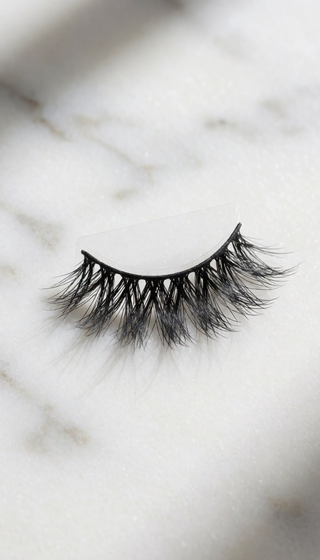
For readers whose main concern is glue residue, pulling, or chemical removal, PHANSTA LASHES provide a natural next format to consider. They are waterproof, hypoallergenic strip lashes built with a flexible micro-adhesion band that sits along the natural lash line.
FREQUENTLY ASKED QUESTIONS
DOES WATERPROOF GLUE DAMAGE NATURAL LASHES?
Waterproof glue can contribute to breakage or irritation, but it does not automatically damage natural lashes. The bigger risks are a rigid hold, excess product, gluing to the skin, and forceful removal. Use the formula as directed, keep adhesive away from the lid, and slide lashes off gently. Stop if you develop persistent burning, redness, swelling, or pain.
HOW SHOULD I TEST A NEW WATERPROOF LASH GLUE?
To test a formula, follow its manufacturer’s directions and use the smallest sensible test, such as one extension at the outer corner. Some guidance suggests a 48-hour wear test, but that is not a universal safety standard. Stop immediately if you notice burning, redness, itching, swelling, or discomfort, and do not rely on a patch test as a guarantee.
WHAT IS THE SAFEST WAY TO REMOVE GLUED LASHES?
Start removal only as directed for that formula. An oil-based remover may loosen a compatible adhesive, but soaking is not automatically required or appropriate for every product. Hold the lash band, gently slide the extension away from the root, and avoid pulling downward or sideways. Remove leftover residue with a product suitable for the eye area, then rinse carefully.
CAN I SWIM WITH WATERPROOF LASH GLUE?
Only expose a fresh application to water after the full curing time stated on its label. Some adhesives call for at least 24 hours, but that is not universal. Chlorine, salt, sweat, and rubbing can irritate the eye area even when the bond is waterproof. Rinse with water afterward and remove the lashes if your eyes feel uncomfortable.
ARE PHANSTA LASHES SUITABLE FOR SENSITIVE EYES?
Yes. PHANSTA LASHES are hypoallergenic and use glue-free micro-adhesion rather than cyanoacrylate, magnets, or a liner. They are also waterproof and designed for 30+ wears per set. Individual sensitivity varies, so stop using any cosmetic product that causes discomfort and seek guidance from an eye-care professional when symptoms persist.
GET 30+ WEARS WITHOUT A GLUE-REMOVAL ROUTINE
If avoiding adhesive is your main priority, focus on the three concerns that matter most:
- Glue and irritation: PHANSTA LASHES use glue-free micro-adhesion and are hypoallergenic, removing the cyanoacrylate bond from the application.
- Durability: Waterproof wear and 30+ wears per set provide consistent reuse without claiming an identical result for every person or routine.
- Cost: Each set is $59, which works out to under $2 per wear when used for 30+ wears.
Choose from 17 styles, then apply each lash carefully and remove it gently to make the most of every wear.
SHOP PHANSTA LASHES — GLUE-FREE, 30+ WEARS →
STILL COMPARING OPTIONS? Explore our guides on finding your perfect lash, magnetic vs strip, and sensitive eyes.
FIND THE PERFECT LASH — Not sure which style suits you? Take the 30-second lash finder quiz →