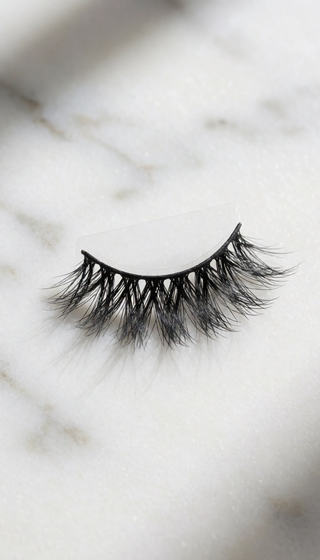
GET A CLEAR ANSWER ABOUT FALSE LASHES AND NATURAL LASH GROWTH
No—false lashes do not make your natural lashes grow. They add fibers to the outside of your natural lash line, so the extra length and fullness disappear when the style is removed. Natural growth comes from hair follicles in the eyelid; placing lashes on top does not lengthen the active growth phase or create new follicles.
What changes is the temporary appearance. While false lashes are worn, they can make your natural lashes look darker, longer, and more defined. After removal, some natural hairs may look longer because the added fibers are gone while the remaining hairs are at different points in their growth cycles. That contrast is optical, not new growth.
Think of natural lashes as hair that moves through growth, transition, rest, and shedding. Those phases continue whether or not false lashes are worn. Gentle handling, complete makeup removal, and a comfortable fit help protect the hairs you already have without confusing cosmetic enhancement with a growth treatment.
UNDERSTAND WHY FULLER LASHES CAN LOOK LIKE FASTER GROWTH
Natural lashes are keratin fibers produced by follicles in the eyelid. Their growth cycle includes the anagen phase, when active growth occurs; catagen, when the follicle transitions; telogen, when the lash rests; and exogen, when it sheds. Clinical descriptions of lash loss emphasize that these phases are not perfectly synchronized from one follicle to another.
Because natural lashes are at different stages, a dense false lash style can make the lash line look unusually full and even. When the style comes off, shorter hairs are suddenly visible beside longer ones. That change in contrast can resemble sudden growth, but no good clinical evidence shows that temporary strip-lash wear creates new follicles or accelerates their activity.
Apparent length can also vary because of genetics, age, hormones, health conditions, medication, and normal shedding. If loss is sudden, patchy, painful, or continuing without an obvious styling cause, it is better to assess the lash line and eyelid rather than assume false lashes caused permanent growth.
SPOT THE DIFFERENCE BETWEEN SHEDDING AND LASH BREAKAGE
Shedding and breakage can look similar, but they happen at different points. A natural lash completes its cycle and detaches at the follicle. Breakage occurs higher along the shaft after the lash is pulled, rubbed, crimped, or caught during removal. Counting a few hairs in a brush or on a makeup-removal cloth is not a reliable growth test, especially because routine makeup can collect hairs that were already shedding.
Breakage-related changes often include an irregular line, many short stubs, lashes that bend instead of lifting, or a need to pinch the band more tightly each time. Persistent tenderness, redness, swelling, or visible residue can indicate irritation that encourages rubbing. Sudden gaps, loss in another eyebrow area, or lashes becoming noticeably thinner without a styling change deserve professional assessment.
Use clean hands or sanitized tools, support the natural lashes while handling a false lash style, and loosen adhesive according to its directions. Never pull a dry strip directly across the lash line or trim natural lashes to make them appear even. If a style repeatedly pulls, feels hot, or lifts at the edges, removing it is safer than adding more adhesive.
PROTECT NATURAL LASHES BY REDUCING FRICTION AND RESIDUE
Mascara, primer, conditioner, and makeup cannot travel down the visible lash to nourish the follicle. They may make hairs look fuller or reduce friction temporarily, but they do not create additional lashes. The more immediate protective step is to avoid irritation, because an itchy or uncomfortable eye often leads to rubbing, rubbing increases breakage, and the shortened hairs can make the lash line appear less dense.
American Academy of Ophthalmology eye-safety guidance emphasizes removing eye makeup completely, using clean cosmetic tools, and not sharing products. Choose a makeup remover suited to the formulas you use, cleanse without harsh rubbing, and avoid leaving adhesive residue along the lid. Replace mascara and eye products on their recommended schedules and never share wand applicators.
For a new lash adhesive, read the directions and patch-test as instructed. Avoid applying it to skin that is already red, scratched, or irritated. Patch testing can identify an obvious reaction, but it cannot guarantee that everyone will respond the same way. Stop using a product if you develop itching, swelling, pain, or ongoing redness.
APPLY FALSE LASHES FOR A NATURAL LOOK WITH LESS TRACTION
A comfortable application begins with the lash line rather than the adhesive. False lashes can change the look of your lashes, but forcing a style into place can make the natural hairs bear the strain. Use the fit and preparation below to keep the band where it belongs without pulling the natural lashes.
1. PREPARE CLEAN LASHES: Remove old makeup and adhesive residue, then let the eyelid area dry. Curling helps separate hairs, but stop if the curler catches or if the eye feels uncomfortable.
2. MATCH THE STYLE TO THE EYE: Consider lash length, band thickness, density, and how much weight will sit near the outer corner. A shorter or lighter band may be easier to wear if you have less lid space or a more delicate lash line.
3. MEASURE BEFORE ATTACHING: Compare the band with the space between the inner and outer corners. Trim only the false lash, preferably at the outer edge, and test the fit before adding adhesive. If the natural lashes must stretch to meet the band, the style is too tight.
4. PLACE FROM THE OUTSIDE IN: Secure the outer corner first, press the center of the band into place, and finish near the inner corner. Support the natural lashes while pressing the band between them.
5. CHECK VISIBILITY AND COMFORT: Blink, look in a mirror, and move through the day as usual. If the band lifts, feels tight, or puts pressure on the lid, remove and reset it rather than stacking more adhesive. Sleeping with the style may also increase rubbing against the lash line.
CHOOSE A LASH APPROACH THAT SUPPORTS NATURAL LASHES
If your goal is lash growth, focus on protecting the follicles and avoiding repeated pulling or irritation. If your goal is immediate fullness, choose cosmetic lashes using the same care standards. Traditional glued strips and magnetic lashes both change appearance rather than natural growth; they differ in attachment, not biological effect. Magnetic lashes are a separate category that use a corresponding magnetic closure.
Comfort and fit: The band should follow the lash line without stretching the skin or pinching natural hairs. Avoid a style that must be held in place for several minutes. A solution that requires constant adjustment is unlikely to support natural lashes.
Materials and routine: Read every material and attachment instruction. If you avoid glue, a liner, or magnets, verify that those steps are genuinely absent rather than merely called something else. Fewer extra components can simplify your routine, but each person still has to consider personal sensitivity.
Removal and care: Clear removal instructions matter as much as the initial application. Look for a method that releases the attachment without dragging the band across natural hairs. Also check how the style should be cleaned, protected, and stored so its stated durability is realistic.
Appearance and value: Compare the documented wear potential and the instructions for care rather than relying only on the initial look. A suitable solution should create the fullness you want while allowing you to keep using your own lashes comfortably.
This approach addresses the central criteria discussed above: reduced dependence on glue, a simpler routine, clear wear potential, and careful placement around natural lashes. The range includes 17 styles, so you can compare different lengths, densities, and looks while keeping the same glue-free, magnet-free, liner-free attachment method.
PHANSTA LASHES: GET A FULLER LOOK WITHOUT GLUE OR MAGNETS
PHANSTA LASHES is the natural answer when the goal is immediate fullness—not biological growth—and you do not want adhesive, magnets, or a special liner. PHANSTA uses glue-free micro-adhesion technology, allowing the lash to sit directly at the lash line without those additional materials.
- Glue and irritation: The lashes are hypoallergenic and use no glue, magnets, or liner. Hypoallergenic does not mean every person will react identically, so follow the supplied care and sensitivity guidance.
- Durability: PHANSTA LASHES are waterproof and designed for 30+ wears. Removing them gently and storing them according to the instructions helps protect that durability.
- Cost and choice: The range includes 17 styles at $59, which works out to under $2 per wear based on the stated 30+ wears.
FREQUENTLY ASKED QUESTIONS
DO FALSE LASHES MAKE NATURAL LASHES GROW?
False lashes sit on top of the natural lash line and do not change the follicles that produce hair. Because natural lashes grow at different speeds and shed on independent schedules, some may appear longer after removal. A temporary fuller look is cosmetic; true growth requires the follicles to remain healthy and active.
WHY DO MY LASHES LOOK LONGER AFTER WEARING FALSE LASHES?
Natural lashes do not all move through the growth cycle at the same time, so a false lash style can make the line look unusually even while it masks shorter hairs. Once the style is removed, those shorter hairs are visible again and may be mistaken for new growth. If hairs are snapping, the issue is breakage, not accelerated growth.
CAN WEARING FALSE LASHES DAMAGE NATURAL LASHES?
Poor removal can pull at the base of a natural lash and cause breakage, while heavy friction can irritate the lid. Use clean hands or tools, loosen adhesive according to its directions, and support the band instead of pulling individual fibers. Stop if you notice ongoing pain, redness, swelling, or discharge.
HOW DO I SAFELY REMOVE GLUED STRIP LASHES?
Start with clean, dry hands or sanitized tools. Hold the band near the outer corner, support the natural lashes, and release the bond slowly according to the adhesive instructions. Use a suitable remover rather than dragging a dry strip across the lash line. Then cleanse away remaining residue without rubbing the eye area.
WHAT SHOULD SENSITIVE EYES LOOK FOR IN FALSE LASHES?
A product labeled hypoallergenic may be a better fit for reactive lids, but labeling cannot guarantee that every person will react the same way. Avoid applying adhesive over irritated skin, follow the product’s patch-testing instructions, and stop if redness, itching, swelling, or pain develops. Persistent symptoms deserve attention from an eye-care professional.
SHOP PHANSTA LASHES — GLUE-FREE, 30+ WEARS →
STILL COMPARING OPTIONS? Explore our guides on finding your perfect lash, magnetic vs strip, and sensitive eyes.
FIND THE PERFECT LASH — Not sure which style suits you? Take the 30-second lash finder quiz →