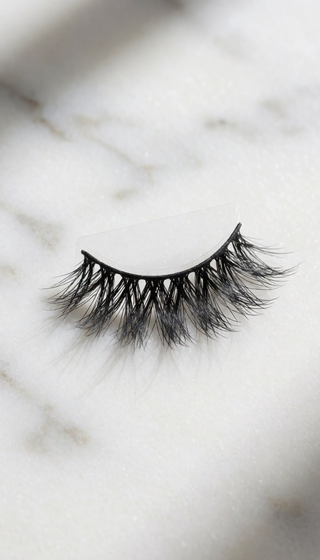
WINTER LASHES HOW TO PREVENT DRYNESS AND FLAKING
If you’ve ever felt like your beautiful lash extensions are suddenly looking brittle, dusty, or like they are shedding prematurely during the colder months, you are not alone. The shift in climate—from humid summer air to dry, heated indoor environments—fundamentally alters how lash materials behave. The key takeaway you need right now is that the issue is rarely the lash itself, but rather the environmental interaction between the lash polymers and low humidity. To start improving your experience immediately, begin by ensuring the storage area for your lashes has a consistent, slightly elevated level of moisture, as this prevents the material from absorbing ambient dryness and becoming rigid.
Understanding this environmental science is the first step toward maintaining a flawless look through the winter. When air moisture drops, the synthetic fibers and adhesives in lash products lose flexibility, leading to static buildup and micro-fractures in the band structure. By addressing the environment and the material properties, you can drastically reduce flaking and maintain a lush, healthy appearance.
UNDERSTANDING THE DRY AIR IMPACT ON LASH POLYMERS
Lash materials, whether synthetic or silk-based, are polymers that react to moisture levels. In high-humidity environments, these polymers remain supple and flexible. However, when the relative humidity drops significantly, as it does with central heating, the polymers begin to lose their internal moisture content. This dehydration process causes the material to become rigid, much like how certain plastics become brittle in cold, dry weather.
This rigidity is the primary cause of flaking. When the band becomes brittle, even minimal movement or the act of curling the lash can cause micro-fractures along the fibers. These tiny breaks are what you perceive as flaking or shedding. Furthermore, dry air increases static electricity, which acts as a magnet for airborne dust and lint, making the lashes appear dull and "crusty" much faster than usual.
- Moisture Loss: Dry air pulls moisture from the lash band polymers, leading to stiffness.
- Static Attraction: Low humidity increases static charge, attracting dust and debris.
- Structural Weakness: Brittle bands are prone to snapping during application or wear.
THE SCIENCE OF STATIC AND LASH MATERIALS
Static electricity is a common complaint in winter beauty routines, and it is directly related to the friction between dry materials and the air. Most standard synthetic lashes are manufactured from materials that are highly susceptible to static buildup when the surrounding air is desiccated. This static doesn't just look bad; it can actually pull fine dust into the lash structure, dulling the finish and making the lash look less voluminous.
To combat this, you must look at the material composition. Some fiber types are naturally more conductive or possess a surface treatment that resists static charge better than others. When selecting lashes, understanding the base material—whether it is a standard synthetic polymer or a more organic fiber like silk—is crucial for cold-weather performance. Silk fibers, for instance, tend to have different surface properties that interact less aggressively with dry air.
Actionable tips for static control:
- Store lashes in a container with a slight ambient moisture level.
- Use metal tools (like a metal spoolie) when brushing lashes, as metal helps dissipate static charge.
- Avoid storing lashes near synthetic fabrics like fleece or polyester, which generate significant static when rubbed.
PREVENTATIVE CARE: HYDRATING YOUR LASH STORAGE
The most critical step in preventing winter flaking is managing the environment where your lashes live when not in use. Simply keeping them in a closed box is often insufficient because the air inside the box can become stagnant and equally dry. You need to create a microclimate that mimics a more temperate environment.
A simple humidifier placed near your lash storage area can make a noticeable difference. If a dedicated humidifier isn't feasible, you can create a small, sealed container with a few drops of a natural, non-oily oil—such as fractionated coconut oil—applied sparingly to the lash band after cleaning. This acts as a sealant, keeping the polymer flexible and preventing the band from becoming chalky or brittle.
Remember, this conditioning must be done on the *cleaned* and *stripped* band only. Applying oils to the entire lash structure is unnecessary and can interfere with adhesion or cause residue. The goal is to keep the base material pliable, not to treat the fibers themselves.
THE ROLE OF LASH BAND FLEXIBILITY IN WEAR TIME
The longevity of a lash set is directly tied to the flexibility of its band. A lash band that is too stiff cannot conform perfectly to the natural curve of the eyelid. This poor conformity creates stress points where the adhesive bond is weakest, leading to premature lifting and flaking, especially when the eyelid moves or the eye is exposed to temperature changes.
When the band is supple, it moves with the natural contours of the eye, distributing the weight and tension evenly across the lash base. This even distribution reduces localized stress, allowing the lash to remain securely attached for its intended wear time. If you notice a lash feels rigid or "stiff" when you handle it, it is a clear indicator that the material has dehydrated and needs environmental intervention.
Consider these factors when assessing lash quality:
- Flexibility Test: Can you gently bend the band without it snapping?
- Conformity: Does the lash naturally curve to fit the eye shape, or does it feel like a rigid strip?
- Material Integrity: Does the lash feel soft and resilient, or hard and chalky?
MAINTENANCE BEYOND STORAGE: DAILY CARE
Even with the best storage practices, daily handling contributes to lash health. When removing lashes, always ensure your hands are clean and moisturized. Dry hands can transfer oils that interact poorly with the lash structure, and conversely, overly dry hands can be rough on the delicate band edges.
When applying lashes, take your time. Do not force the lash into the natural lash line. Gently press the lash into place, allowing the micro-adhesion to work without excessive pressure. If you are experiencing flaking, it might be that the lash was applied too aggressively or that the lash itself was already compromised by dryness before application.
Always use a clean, metal spoolie to brush through the lashes before and after wear. This not only removes dust but also helps distribute any natural oils from the skin evenly across the lash base, which helps maintain a healthy, non-flaking appearance throughout the day.
EYE SHAPE AND LASH STRUCTURE INTERACTION
Different eye shapes interact with lash structure in unique ways, which can affect how quickly dryness or stiffness becomes apparent. For hooded eyes, the lash band needs exceptional flexibility to lay flat against the mobile lid without creating a visible crease or lift. A stiff, dry band will immediately show this lack of conformity.
For rounder or more upturned eyes, the lash needs a specific upward sweep, but even here, a brittle band will snap at the point of highest tension, often near the outer corner. The material must be resilient enough to handle the natural movement of the eye without fracturing under minor tension. This is why material quality is paramount—it dictates how well the lash performs across all eye anatomies.
WHAT TO LOOK FOR IN A SOLUTION
When you are evaluating any lash product designed for challenging climates, you need to look beyond the aesthetic appeal. Focus on the material science. Does the description mention polymers known for their resilience? Is there evidence of a structure designed to resist static buildup? Critically, does the product offer a solution that requires minimal intervention from the user, meaning it is inherently stable against environmental shifts? The best options provide a durable, flexible structure that maintains its integrity regardless of the ambient temperature or humidity.
THE PHANSTA DIFFERENCE: ENGINEERED FOR ALL SEASONS
We understand that your lash experience should be effortless, regardless of the weather forecast. PHANSTA LASHES are engineered specifically to overcome the challenges of dry, cold climates. We utilize a unique, glue-free micro-adhesion system that eliminates the need for harsh adhesives, ensuring your lashes stay perfectly in place without irritation.
These lashes are designed for endurance, offering 30+ wears per pair, and they are completely hypoallergenic and waterproof, meaning they resist environmental moisture changes better than standard formulas. With 17 distinct styles to suit every eye shape, you can find the perfect match that remains supple and beautiful, all while keeping the cost extremely low at under $2 per wear. It is simply beauty that works with your life, not against it.
Glue-free micro-adhesion · 30+ wears · Seconds per eye
FREQUENTLY ASKED QUESTIONS
Why do my false lashes get brittle in the winter?
Answer. Central heating drastically reduces indoor humidity. This dry air pulls moisture from the lash band polymers, causing them to become stiff and brittle, which leads to micro-fractures and flaking.
How can I stop my lashes from being staticky in winter?
Answer. Static is caused by dry air friction. Use a metal spoolie to brush your lashes, and ensure you store them in a slightly humid environment, away from synthetic fabrics that generate static.
What is the best lash style for winter weather?
Answer. Look for materials with inherent flexibility and static resistance. Options like those utilizing silk fibers tend to be more resilient to the drying effects of cold, dry air.
Can I condition my lashes with oil?
Answer. Yes, but only after thoroughly cleaning and stripping the band. Apply a tiny amount of fractionated coconut oil to keep the polymer supple and prevent cracking during storage.
How does micro-adhesion help with dry weather?
Answer. Because it relies on a gentle, non-chemical bond rather than strong adhesives, the lashes are less likely to be stressed or compromised by the environmental changes that affect traditional glue.
NOT SURE ABOUT YOUR EYE SHAPE?
Find your eye shape and get personalized lash recommendations:
FIND THE PERFECT LASH FOR EVERY MOMENT
Explore our occasion-specific lash guides:
EXPERIENCE THE DIFFERENCE
Join thousands of women who have made the switch. No adhesive, no damage, no salon appointments — just beautiful lashes in seconds.
SHOP PHANSTA LASHES — GLUE-FREE, 30+ WEARS →