THE COMPLETE GUIDE TO BEGINNER FOR HEAVY-LIDDED EYES

Achieve Lift and Definition Without Lifting Your Eyelids: The Science of Lash Adhesion for Heavy Lids
If your natural lashes are heavy or your eyelids have extra skin, standard lash applications often fail because the weight of the lash pulls the adhesive away from the lash line, especially at the outer corner. The solution isn't just about stronger glue; it's about selecting a lash structure that actively works against the downward pull of the lid. Understanding the mechanics of lash weight, band thickness, and curvature is the key to a flawless, long-lasting application.
Understanding the Mechanics of Lash Failure on Heavy Lids
Heavy eyelids introduce constant downward pressure on the lash band. When this pressure is combined with a lash that is too thick or too heavy, the adhesive bond is compromised. The primary failure point is not the glue itself, but the inability of the lash structure to maintain contact with the natural lash line under tension. This pressure causes the band to shift or lift prematurely, often within the first few hours of wear.
Why Common Lash Types Struggle with Lid Tension
-
•
Thick Strip Lashes: These are often too dense and heavy. Their weight exacerbates the downward pull, causing the adhesive to fail around the outer corner when the lash band bends under the lid's natural curve.
-
•
Magnetic Lashes: While convenient, the physical bulk of the magnetic pair often prevents the lash from conforming perfectly to the unique topography of a heavy lid, leading to gaps and uneven wear.
-
•
Individual Clusters: Although flexible, the bond strength of standard clusters may not be robust enough to withstand the consistent, heavy pressure exerted by a lower, heavier eyelid throughout the day.
The Structural Requirements for Lasting Lash Adhesion
To combat lid tension, you must look past the length and focus on the engineering of the lash itself. The ideal lash for heavy lids possesses specific geometric properties that allow it to lift and support the eye rather than being weighed down by it.
Analyzing Lash Geometry: The Inner-to-Outer Ratio
The most critical factor is the length distribution across the lash. Look for a lash where the outer corner is significantly longer than the inner corner—a ratio of 1:1.8 or lower is ideal. This intentional tapering ensures that the outer extension has enough upward momentum to counteract the gravitational pull of the eyelid, creating a natural lift effect.
The Importance of Band Profile and Material
The band is the interface between the lash and your skin. A thin band profile, specifically around 0.5 mm, is necessary because it allows the lash to mold seamlessly to the natural curve of the eyelid rather than creating a rigid barrier that fights the lid's shape. Furthermore, the material must be lightweight to minimize overall perceived weight.
Application Technique for Maximum Hold
Even the best lash requires proper application. Always ensure you are trimming the outer edge of the lash by approximately 2 mm. This prevents excess extension from creating an unnatural, heavy tip that can cause the lash to lift prematurely. When applying, a thin, even layer of adhesive is preferred, allowing a brief moment of setting time (around 30 seconds) before placement to ensure maximum initial contact.
Selecting a Solution That Adapts to Your Lid, Not the Other Way Around
When searching for a lash solution, prioritize lightweight construction, a carefully engineered upward curve, and a band designed to conform to your specific lid shape. You need a lash that provides structural support and lift, not just decoration. The ideal product will utilize advanced, gentle adhesion technology that bonds securely without the need for heavy, restrictive materials.
The PHANSTA LASHES Difference: Engineered for Comfort and Durability
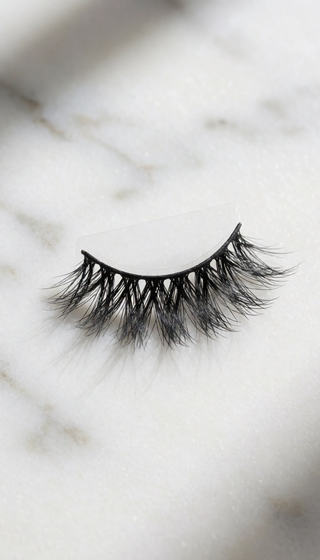
PHANSTA LASHES are specifically designed with a reinforced, thin band and an outward curve engineered to support heavy lids and maintain lift throughout the day. Our GLUE-FREE micro-adhesion technology ensures a secure bond that is gentle on your natural lashes while providing exceptional wear. With 17 distinct styles, you can find the perfect structural match for your unique eye shape.
Discover the PHANSTA LASHES collection designed for lasting wear.
FREQUENTLY ASKED QUESTIONS
What is the best lash style for heavy lids?
A winged or cat-eye style with a long outer corner is structurally best. This design provides the necessary upward trajectory to counteract the downward pull of a heavier eyelid, creating an illusion of lift.
Should I use cream or liquid adhesive?
For heavy or oily lids, liquid adhesive is recommended as it provides a more durable bond. Apply a thin layer and allow a 30-second setting time before carefully placing the lash.
Can I sleep in my lashes?
No, it is advised to remove all lash applications before sleeping. This prevents potential tugging on your natural lashes while you sleep.
How long do PHANSTA LASHES typically last?
When applied correctly, PHANSTA LASHES are designed for 30+ wears per pair, offering consistent wear and comfort without the need for daily reapplication.
Are glue-free lashes safe for sensitive eyes?
Yes, PHANSTA LASHES are formulated to be hypoallergenic and utilize GLUE-FREE micro-adhesion technology, making them a safe option for sensitive eyes.
STILL COMPARING OPTIONS?
See how PHANSTA compares to traditional lashes:
NOT SURE ABOUT YOUR EYE SHAPE?
Find your eye shape and get personalized lash recommendations:
EXPERIENCE THE DIFFERENCE
Join thousands of women who have made the switch. No glue, no damage, no salon appointments — just beautiful lashes in seconds.
SHOP PHANSTA LASHES →