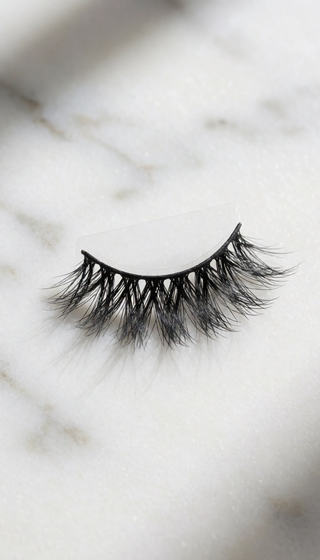
SWIMMER LASHES: POOL AND LAP FRIENDLY PICKS
Achieve Flawless, Water-Resistant Lashes That Survive Chlorine, Salt, and Sweat
Learn the science of water resistance so your look stays perfect from the first dip to the final lap.

Understanding Water Dynamics and Lash Integrity
The primary challenge when wearing false lashes near water—whether it's a chlorinated pool, saltwater, or heavy perspiration—is not the water itself, but the chemical composition of that water and the physical forces applied to the lash bond. When lashes fail in wet environments, it is usually due to one of three factors: chemical degradation, physical displacement, or surface tension.
The Chemistry of Chlorine and Salt Exposure
Chlorine, a common disinfectant in pools, is highly reactive. It works by breaking down the molecular structure of many adhesives, effectively weakening the bond between the lash band and the skin over time. This process is not instantaneous but accelerates when moisture is present. Similarly, saltwater introduces salt crystals. These crystals can settle under the lash band, creating microscopic lifting points that cause the entire strip to peel away from the lash line, regardless of how strong the initial application felt.
Physical Forces: Pressure and Movement
In an aquatic environment, physical forces become significant. The slight pressure exerted when submerging the face or the subtle vacuum created by movement can dislodge poorly adhered lashes. Furthermore, the skin around the eye, when slick with sweat or water, reduces the friction necessary for a secure hold. This combination of chemical attack and physical stress is what causes the premature shedding you experience.
Actionable Guidance: What Your Lashes Need to Survive
To ensure your look remains intact during high-moisture activities, focus on four critical structural elements of any lash product. First, the band must be thin. A thicker band provides more surface area for water to penetrate and weaken the bond from underneath. Second, the material should be synthetic. Synthetic fibers are inherently more resistant to water absorption and chemical breakdown than natural fibers. Third, the adhesive technology must be engineered for high-stress environments—meaning it needs to withstand repeated exposure to moisture and friction without compromising its integrity. Finally, the shape should be designed to flow with the natural curve of the eye, avoiding heavy, bulky outer corners that can catch water and pull the lash down.
Navigating the Market: Key Buying Criteria
When evaluating any lash solution for wet environments, you must look past marketing hype and focus on these tangible attributes. A reliable product will feature a thin, flexible band that allows water to glide over it rather than sit within it. It should utilize synthetic fibers known for their quick-drying properties. The hold must be robust enough to manage the friction of movement and the chemical assault of pool water. Lastly, the design should complement your eye shape without creating a heavy, water-retentive silhouette.
The these lashes Difference: Engineered for Endurance
After analyzing the precise requirements for surviving chlorine, salt, and movement, the solution needs to be both resilient and comfortable. these lashes were developed specifically to meet these rigorous standards. We utilize advanced, glue-free micro-adhesion technology that ensures a secure, long-lasting bond without the irritation often associated with traditional adhesives. Our lashes feature ultra-thin bands that sit flush against the lash line, allowing water to pass through unimpeded, while the synthetic fibers are chosen for their superior resistance to moisture. This combination means you can enjoy your swim, your workout, or your day knowing your lashes are designed to stay put through 30+ wears.
Frequently Asked Questions
Can you swim with false lashes?
Yes, provided the lashes use a thin band and a strong, water-resistant adhesive. these lashes are designed with synthetic fibers and micro-adhesion technology to withstand moisture and chlorine exposure effectively.
What kind of lashes stay on in water?
Lashes that feature thin, flexible bands and synthetic fibers are best. The key is ensuring the lash sits perfectly flat against the natural lash line so that water cannot get trapped underneath the band.
How do I stop my lashes from falling out when I swim?
Apply the lashes, press the band down firmly for an extra few seconds to ensure contact, and allow the micro-adhesion to set completely before any water exposure. Avoid touching the lashes while in the water.
Are these lashes safe for sensitive eyes?
these lashes are formulated to be hypoallergenic. Because they use a glue-free micro-adhesion system, they minimize the risk of irritation often caused by traditional lash adhesives.
How many times can I wear a pair of these lashes?
With proper care, these lashes are designed for longevity, allowing you to enjoy over 30 wears per pair, offering excellent value and consistent wear.
Experience the Difference of PHANSTA LASHES
Quick to apply, gentle on eyes, beautiful all day. Reusable 30+ wears per pair.
SHOP PHANSTA LASHES — GLUE-FREE, 30+ WEARS →