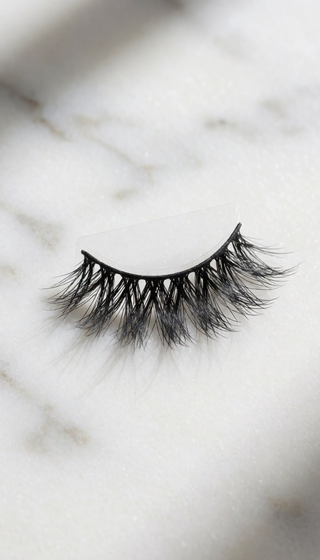
REUSABLE LASHES: HOW TO GET 20+ WEARS
Discover the science of material memory and the exact cleaning rituals used by beauty professionals to maximize the lifespan of your reusable lashes, ensuring perfect curl and seamless wear every single time.

THE SCIENCE OF LASH LONGEVITY: WHY YOUR LASHES FAIL EARLY
The lifespan of any reusable lash is rarely determined by the application, but rather by the inherent quality of its components and the maintenance routine applied. Many lashes fail prematurely because they are constructed from synthetic fibers that lack structural integrity. When these fibers are subjected to the natural oils, humidity, and makeup residue of daily life, they begin to lose their intended curl and shape after just a few uses.
Understanding Fiber Memory vs. Plastic Degradation
The core difference between a durable lash and a disposable one lies in the material science. High-quality fibers, such as premium faux mink or silk blends, possess what is known as 'material memory.' This means the fiber structure is designed to naturally spring back to its original, intended curve even after being saturated with water or subjected to gentle cleaning. Conversely, cheaper synthetic plastics often suffer from structural fatigue; once the polymer bonds are compromised by residue, the lash becomes brittle and loses its defined shape permanently.
The Critical Role of the Lash Band
The band is not merely a base; it is the structural anchor of the entire lash. A weak or overly stiff band acts as the first point of failure. If the band cannot flex smoothly with the natural contours of the eyelid, it will either snap under tension or fail to hold the fibers in place over multiple applications. For longevity, the band must be thin enough to be virtually invisible against the skin, yet possess enough inherent flexibility to resist snapping during the cleaning and reshaping process.
The 5-Step Maintenance Protocol for Maximum Wear
To ensure your lashes reach their maximum potential lifespan, a specific, gentle cleaning ritual is required. This process is designed to dissolve buildup without physically damaging the lash fibers or the band structure. This routine focuses on gentle dissolution rather than aggressive scrubbing.
- Soak, Do Not Rub: Submerge the lashes in lukewarm water mixed with a drop of gentle, non-irritating facial cleanser. Allow them to soak for approximately 60 seconds. This allows the water to penetrate and dissolve adhesive residue and makeup without tugging at the fibers.
- Gentle Swirling: Using only your fingertips, gently swirl the lashes in the solution. Avoid pinching, squeezing, or wringing the lashes, as this causes unnecessary stress points and fiber breakage.
- Rinse Thoroughly: Hold the lashes under a steady stream of cool, clean water for about 10 seconds. This ensures all loosened residue is completely flushed from the fibers and band.
- Pat Dry Strategically: Lay the lashes flat onto a clean, absorbent paper towel. Gently pat the top surface to remove excess moisture. Avoid using terry cloth, as the looped texture can snag and pull out the delicate lash hairs.
- Restore the Natural Curve: While the lashes are still slightly damp, gently wrap the band around a small, cylindrical object—such as a makeup brush handle. Allow them to sit for 30 minutes. This process helps restore the natural, intended curve that flattens during wear.
Identifying the End of Life: When to Retire Your Lashes
Even with the most meticulous care, every lash has a natural lifespan. Recognizing the signs of fatigue is crucial for maintaining a polished look. Watch for these three indicators:
- Visible Thinning: If you can clearly see gaps or areas where the fibers have thinned out significantly, the overall density of the lash is compromised.
- Band Distortion: If the band no longer sits flush against the lash line—if it begins to pop up or curl away from the skin—its structural integrity has failed.
- Excessive Shedding: If you find yourself losing more than 3 to 4 individual fibers during a single cleaning cycle, the lash is past its optimal performance window.
WHAT TO PRIORITIZE WHEN SELECTING A HIGH-PERFORMANCE LASH
When moving beyond basic maintenance to selection, focus on three core criteria that guarantee longevity. First, prioritize a band that is thin and flexible enough to conform to diverse eye shapes without snapping. Second, ensure the fibers are made from high-memory materials—look for silk or faux mink blends, actively avoiding cheap, low-memory plastics. Third, consider the storage solution; a sturdy, rigid case is an essential part of the care routine, protecting the lash from crushing and deformation when not in use.
THE NATURAL SOLUTION FOR DURABLE WEAR
Finding a lash that combines superior material science with effortless application can be challenging. PHANSTA LASHES has engineered its lashes specifically around these principles of durability. Utilizing a blend of high-memory faux mink fibers and a flexible, lightweight band, our lashes pass rigorous structural tests designed to mimic real-world wear. They are designed to maintain their curl and shape through repeated use, allowing for 30+ wears with the proper maintenance.
PHANSTA LASHES provides the perfect balance: the comfort of a glue-free, micro-adhesion system paired with the resilience of premium materials. This means you get the luxury of a flawless look without the constant cycle of replacement.
FREQUENTLY ASKED QUESTIONS
How many times can you actually wear reusable lashes?
Answer: With the proper maintenance, including the soaking and reshaping ritual, a high-quality pair can be worn 30+ times. The key is using lashes built with high-memory fibers and storing them securely to maintain their original form.
Can you wear strip lashes without mascara?
Answer: Yes, you can wear them without mascara. In fact, applying mascara to the fibers can sometimes cause them to clump or shed prematurely. For maximum wear, it is best to apply mascara only to your natural lashes before applying the strip.
How do you know if lashes are good quality?
Answer: Check for material memory. A good lash band should be flexible and return to its original shape when bent (the twist test). Look for fibers made of silk or faux mink, as these retain their curl better than cheap synthetic plastics.
What is the difference between micro-adhesion and glue?
Answer: Micro-adhesion is a technology that allows the lash to adhere gently to the natural lash without harsh chemical glues. This gentle bond is what allows the lash to be removed and reapplied safely, contributing to its long-term reusability.
Are reusable lashes safe for sensitive eyes?
Answer: Yes, PHANSTA LASHES are formulated to be hypoallergenic. Because they utilize a micro-adhesion system instead of harsh glues, they are designed with the comfort and safety of sensitive eyes in mind.
📚 Browse our complete library of lash guides →
📚 Browse our complete library of lash guides →
Experience the Difference of PHANSTA LASHES
Quick to apply, gentle on eyes, beautiful all day. Reusable 30+ wears per pair.
SHOP PHANSTA LASHES — GLUE-FREE, 30+ WEARS →