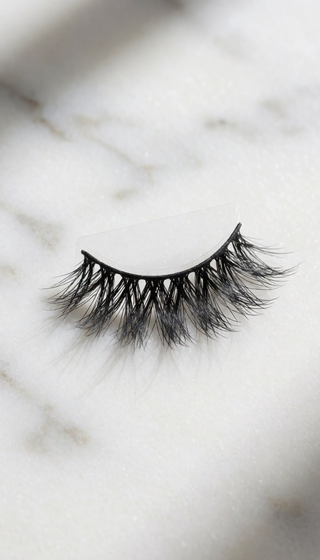
MYTH: YOU CAN'T WEAR LASHES WITH CONTACT LENSES
THE MYTH IS CLEAR: WEAR LASHES WITH CONTACT LENSES WITHOUT COMPROMISING COMFORT
Yes. Contact lenses and strip lashes can usually be worn together because they do not occupy the same part of the eye. A contact lens rests on the cornea, while lash fibers and the band sit along the eyelid or natural lash area. With careful lens hygiene and thoughtful lash placement, the two can coexist without disrupting a contact-lens routine.
The combination is not automatically comfortable. Irritation is more often linked to wet lash adhesive, odor or fumes, a stiff band, trapped moisture, a lens that is not fitting well, or movement caused by watering. The useful question is not whether contacts make lashes impossible; it is which materials, placement steps, and removal habits keep both separated from the moist eye surface.
A reliable routine starts with washing and drying your hands, inserting lenses first and allowing them to settle according to their directions, placing a lash on a clean, dry lid away from the waterline, and removing both before sleep. Stop wearing them if you develop pain, marked redness, light sensitivity, discharge, or vision changes. Persistent symptoms or a lens that repeatedly feels loose need professional attention rather than repeated lash changes.

WHY CONTACT LENSES AND LASHES CAN COEXIST
False lashes are designed to attach at the natural lash line, the perimeter of the eyelid. They are not designed to rest on the cornea or float over a contact lens. The eyelid itself forms a physical separation between the lash band and the lens surface. This is why adding a strip lash does not mean two products are competing for the same location.
Blinking and tearing can still alter that separation. If an adhesive odor makes the eyes water, the lens may move more than usual, creating blur or a foreign-body feeling. A band positioned too low can also brush the moist lid edge. Correct placement and thoughtful material choices preserve the natural space between the lash and the lens.
IDENTIFY THE REAL SOURCES OF EYE DISCOMFORT
Discomfort may be physical, chemical, or both. Physical interference includes a band pressing on the lid, fibers rubbing the waterline, or loose fibers entering the eye area. Chemical irritation can occur when wet adhesive exposes the eye to irritating ingredients or vapors. Both problems can cause watering, squinting, and lens movement.
Traditional lash adhesives may contain cyanoacrylate, and some formulations may also contain latex. For a sensitive wearer, the smell or vapors from a wet band may provoke tears even when the lash does not touch the lens. Watering can shift a contact lens, making the combination feel unstable and leading the wearer to blame the lash for a broader lens problem.
Heavy or rigid construction creates another issue: pressure. A band that does not flex with the eyelid can create poking points, while fibers concentrated toward the outer corner may pull unevenly. Shedding or flaking is also undesirable because stray fibers near the eye can trigger blinking and watering. Simply adding more lashes does not correct any of these variables.
USE A REPEATABLE SEQUENCE FOR COMFORTABLE PLACEMENT
A consistent sequence separates lens handling from lash placement. These steps reduce avoidable friction without changing the need for healthy lens wear and removal habits.
- Insert lenses first: Wash and dry your hands before touching either item. Place your contact lenses first and allow them to settle according to the lens schedule. Applying lashes first can create extra reaching and rubbing near the eye, potentially disturbing a newly placed lens.
- Prepare a clean, dry lid: Inspect the lash before placement. Moisture can weaken wet adhesive and make positioning less precise. Keep oil, mascara, and loose powder away from the lash line because residue can interfere with the band.
- Allow adhesive curing time: If using traditional adhesive, follow its label and allow at least 60 seconds after application before touching the lash to your eye. This gives volatile vapors more time to dissipate. The wait does not replace precise application or the adhesive manufacturer’s directions.
- Place the band slightly higher: Position it on clean lid tissue, above the natural lashes and away from the waterline and soft inner rim. Set the outer corner first, followed by the center, without pulling the strip toward the temple. Adjusting a small misalignment is safer than forcing the band.
- Check the fit before leaving: Blink naturally and inspect the placement from several angles. Look for contact with the waterline, trapped natural lashes, pressure at one corner, or fibers pointing toward the eye. Remove and reposition anything that rubs.
REMOVE LASHES WITHOUT PULLING OR SHIFTING YOUR LENSES
Never pull or yank a lash that is beginning to lift. Support the lid and use a slow, gentle peel from the outer corner toward the center while following the product’s removal directions. If resistance increases, pause instead of forcing it; pulling can trigger watering and move the lens.
Remove lashes before bed and before handling lenses again. Wash your hands, remove lenses according to your eye-care schedule, and clean, disinfect, store, or discard them exactly as directed. Never use saliva or tap water on a lens. Your lash routine should never interfere with established lens-care steps.
CHOOSE A LASH DESIGN THAT RESPECTS THE LASH LINE
Compatibility depends on function as well as appearance. Use these four specifications to assess a lash before committing to a long wear day:
- Band flexibility: A thin, flexible band follows the eyelid without creating rigid pressure points. It should contour smoothly rather than repeatedly lifting at one end.
- Weight distribution: Lightweight fibers and evenly distributed weight reduce pulling, poking, and shifting caused by gravity.
- Fiber integrity: Look for a design that minimizes shedding and flaking. Stray fibers near the eye can trigger blinking, watering, and an increased desire to rub.
- Edge precision: Smooth, carefully cut edges should sit along the lash line without sharp ends pointing toward the eye or inner lid.
Length and density also matter. Choose a style you can blink comfortably in, and verify water-resistance and reuse claims against the product directions. A more dramatic style is not automatically a more comfortable one.
QUICK COMFORT CHECK
- Watering after adhesive: Remove the lash, let your eyes settle, and review the adhesive and lens-care directions before trying again.
- Pressure or poking: Check band flexibility and placement. A strip that touches the waterline or presses into one corner should be removed or repositioned.
- Blurred vision: Remove both items and follow your contact-lens cleaning and wearing schedule. Do not rely on blinking or tears to clear persistent blur.
- Pain, redness, light sensitivity, or discharge: Stop wearing the lens and lash, then seek appropriate professional eye-care advice.
WHAT TO LOOK FOR IN A CONTACT-FRIENDLY LASH FORMAT
Look for a format with no wet adhesive near the eye when that is your sensitivity trigger, a thin flexible band, lightweight fibers, smooth edges, and clear wear and removal directions. The best balance is a stable hold with minimal contact—not simply the strongest hold.
A contact-friendly solution should also leave lens care untouched: wash your hands, keep the lens surface clear, respect the wearing schedule, and remove both before sleep. It should be easy to position above the lash line and gentle to remove. Those requirements narrow the decision: reducing avoidable adhesive exposure can matter more than adding more dramatic fibers.
THREE CONCERNS TO CHECK BEFORE CHOOSING A LASH FORMAT
- Glue and irritation: PHANSTA LASHES contain no adhesive, magnets, or liner, removing wet adhesive odor, fumes, and additional components from the application process.
- Durability: The stated 30+ wear count supports repeated use when the lashes are applied, removed, and stored according to the care directions.
- Cost per wear: At $59 and 30+ wears, PHANSTA LASHES work out to under $2 per wear while offering 17 style options.
PHANSTA LASHES: GLUE-FREE WEAR FOR A CONTACT-LENS ROUTINE
Those selection criteria lead to one practical format: taking wet lash adhesive out of the routine. PHANSTA LASHES use GLUE-FREE micro-adhesion technology to attach along the lash area without adhesive, magnets, or liner. This removes adhesive odor and curing fumes from the process, leaving clean placement and gentle removal as the focus.
PHANSTA LASHES are hypoallergenic and waterproof, with 17 styles priced at $59 and designed for 30+ wears, or under $2 per wear. Contact-lens comfort still depends on a healthy lens fit, clean lenses, and consistent eye-care guidance.
| WHAT MATTERS | PHANSTA LASHES | GLUE-BASED STRIP LASHES |
|---|---|---|
| Attachment | Micro-adhesion; no adhesive | Wet adhesive required |
| Components | No magnets or liner | Adhesive and removal routine |
| Water resistance | Waterproof | Formula-dependent; check the label |
| Reuse | 30+ wears | Varies by adhesive and care |
| Eye sensitivity | Hypoallergenic | Review ingredients and directions |
| Style range | 17 styles | Varies by brand |
For a fuller format comparison, see PHANSTA LASHES vs glue lashes.
FREQUENTLY ASKED QUESTIONS
CAN I SLEEP IN LASHES WHILE WEARING CONTACT LENSES?
No. Remove both before bed. Sleeping in contact lenses increases the risk of complications, and sleeping in lashes can cause the band to shift or press against the lid. Follow your eye-care professional’s lens schedule, wash your hands, and store or discard lenses exactly as directed.
WILL LASHES MAKE MY CONTACT LENSES FOGGY?
Lashes usually do not cause fog by themselves. Fogging often accompanies dryness or watering, and wet lash adhesive can trigger tears in sensitive eyes. Remove the lash, let your eyes settle, and follow the contact-lens cleaning and wearing directions. Persistent blurred vision is not something to troubleshoot with more eye makeup.
WHAT LASH DESIGN IS MOST COMFORTABLE WITH CONTACTS?
Start with a flexible, thin band that follows the eyelid without touching the waterline. Lightweight fibers, evenly distributed weight, smooth edges, and minimal shedding help limit poking and stray fibers near the lens. Choose a density and length you can blink comfortably with, and follow each product’s placement and care directions.
HOW LONG DO PHANSTA LASHES LAST WHEN WORN WITH CONTACTS?
PHANSTA LASHES offer 30+ wears when used and stored according to the care directions. Contact lenses do not change that stated wear count, but daily handling, moisture, and residue can affect reuse. Remove the lash before sleeping, keep the band clean, and stop using it if the lash or micro-adhesion area becomes damaged or difficult to remove.
ARE PHANSTA LASHES SUITABLE FOR SENSITIVE EYES?
PHANSTA LASHES are hypoallergenic and use glue-free micro-adhesion rather than traditional lash adhesive. Because the format contains no adhesive, magnets, or liner, it may reduce avoidable irritants for some wearers, but no cosmetic product is right for every person. Contact-lens sensitivity can come from the lenses, solutions, or an underlying eye condition, so persistent symptoms deserve professional advice.
STILL COMPARING OPTIONS? Explore our guides on finding your perfect lash, magnetic vs strip, and sensitive eyes.
FIND THE PERFECT LASH — Not sure which style suits you? Take the 30-second lash finder finder →
SHOP PHANSTA LASHES — GLUE-FREE, 30+ WEARS →