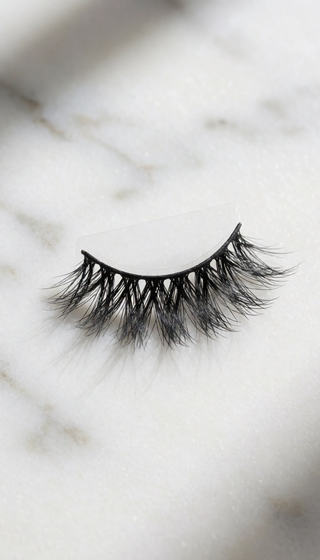
MYTH: LASH GLUE HURTS WHEN REMOVING LASHES

Achieve Flawless Lash Looks Without the Pain or Damage
Discover why the sensation of stinging or pulling during lash removal is rarely about the glue itself, but rather the method of removal. Learn how to protect your natural lash cycle while achieving dramatic, long-lasting volume.
Understanding the Science of Lash Bond Failure
The perception that lash glue is inherently painful often stems from the chemical composition and the physical forces applied during removal. Most cosmetic adhesives are formulated to create a strong, water-resistant bond—a necessary trait for surviving daily activities like humidity or light moisture. However, this strength is a double-edged sword when it comes to removal.
When a traditional adhesive bonds a false lash to your natural hair, the bond is not merely a surface attachment; it becomes an integral part of the hair's structure. When removal is attempted through mechanical force (pulling or yanking), the tension is transferred directly to the natural lash follicle. This action bypasses the adhesive bond and instead stresses the follicle itself. Natural lashes have a predictable growth cycle, typically lasting between 40 to 90 days. Aggressive removal forces the premature shedding of lashes that were scheduled to remain for weeks, leading to noticeable thinning over time.
Chemical Considerations in Lash Adhesives
Many conventional strip lash glues utilize ingredients such as latex or cyanoacrylate. Latex can be a known irritant for sensitive skin, potentially causing redness or a stinging sensation upon contact. Cyanoacrylate, the base of many super glues, can generate heat upon curing or breaking the bond. Therefore, the discomfort you experience can be a reaction to these specific chemical agents or the physical trauma of the removal process.
The key takeaway is that the pain or burn is often a symptom of the bond being forcibly broken, rather than an inherent property of the adhesive itself when used correctly.
Actionable Steps for Gentle Lash Removal
To mitigate the risk of trauma when using traditional adhesive systems, a methodical, chemical-based approach is necessary. The goal is to dissolve the bond, not to tear it. Follow these steps:
- Allow Adhesion Time: Wait a minimum of 10 hours, or until you observe the lashes beginning to lift naturally. Attempting removal too soon means the adhesive has not fully set or has not begun to degrade, increasing the risk of pulling.
- Select Dissolving Agents: Utilize an oil-based makeup remover or a specialized lash glue remover. Water-based removers are generally ineffective against strong adhesives and can lead to excessive pulling.
- Soak, Do Not Rub: Saturate a cotton pad with the chosen remover and press it firmly against your closed eyelid for 30 to 45 seconds. The objective is to allow the solvent to break down the adhesive bond, not to scrub it away.
- Gentle Release: Once the adhesive is softened, gently press and slide the lash from the inner corner toward the outer corner. The lash should release cleanly, much like a leaf detaching from a branch. If resistance remains, repeat the soaking process.
Crucially, never pull, yank, or peel dry lashes. This action constitutes extraction, not removal, and is the primary cause of follicle damage.
The Underlying Issue: Why Lash Health Stagnates
Many individuals focus solely on the application process, believing that using a stronger adhesive or a more aggressive remover is the key to better results. However, this perspective overlooks the long-term impact on the lash cycle. Every instance of forceful removal sends a negative signal to the hair follicle, weakening its resilience over time. This cumulative trauma can lead to a fragile lash line, regardless of how well you condition your lashes afterward. The solution requires addressing the mechanism of attachment itself.
Criteria for a Non-Traumatic Lash System
When evaluating any lash system, shift your focus from 'hold time' to 'interaction quality.' Look for these specific attributes:
- Instant Removal: The process should take mere seconds, eliminating the need for lengthy soaking or chemical intervention.
- Chemical Neutrality: The system must be free from harsh chemicals that could irritate the delicate skin or waterline.
- Structural Integrity: The lash band should possess a flexible profile, allowing it to conform naturally without stiffness.
- Reliable Wear: It must maintain its position securely through a full day or night without lifting or migration.
- Simplicity: The entire wear experience should be manageable without requiring extensive makeup removal procedures afterward.
The Shift: Introducing PHANSTA LASHES
PHANSTA LASHES were developed specifically to bypass the entire adhesive and removal dilemma. By utilizing advanced micro-adhesion technology, the need for traditional glue is eliminated. This means there is no drying time, no adhesive residue, and critically, no forceful bond to break. The lashes are designed to be gently affixed and lifted away with minimal effort, protecting the natural lash cycle from the start.
PHANSTA LASHES VS. TRADITIONAL GLUE STRIP LASHES
| Feature | PHANSTA LASHES | Traditional Glue Strip Lashes |
|---|---|---|
| Application time | ~10 seconds | 5–15 minutes |
| Removal time | 2 seconds | 15+ minutes with remover |
| Pain during removal | None | Common |
| Damage to natural lashes | None | Can pull out growth-phase lashes |
| Reusability | Yes | Sometimes |
FREQUENTLY ASKED QUESTIONS
Why does my eye burn when I remove lashes?
Most likely the adhesive bond was not fully dissolved. Oil-based removers are necessary to break down the bond, whereas water-based removers often fail, forcing you to pull, which strains the delicate blood vessels around your lid.
Can lash glue damage your natural lashes?
Yes, if removal is performed too roughly. Forcing the bond can pull out hairs currently in their growth phase, leading to uneven lash lines or localized thinning. The trauma of the pull is the primary concern.
Why did my lash glue burn when I put it on?
This can indicate sensitivity to ingredients like latex, formaldehyde, or ammonia present in some adhesives. Always perform a patch test if you are concerned, but switching to a glue-free system eliminates this risk entirely.
How long do PHANSTA LASHES last?
PHANSTA LASHES are designed for longevity, offering 30+ wears per pair. Because they use micro-adhesion instead of traditional glue, they maintain their hold throughout your day while remaining gentle on your natural lashes.
Are glue-free lashes safe for sensitive eyes?
Yes. They are formulated to be hypoallergenic and utilize glue-free micro-adhesion technology, meaning there are no harsh chemical bonds to cause irritation or allergic reactions during wear or removal.
Experience the Difference of PHANSTA LASHES
Quick to apply, gentle on eyes, beautiful all day. Reusable 30+ wears per pair.
SHOP PHANSTA LASHES — GLUE-FREE, 30+ WEARS →