IVORY IS THE 'TELL THEM YOU HAVE TASTE WITHOUT A WORD' LID — NARA SMITH'S SS27 CUT CREASE AND THE WHITE-EYESHADOW REVIVAL THAT ISN'T NOSTALGIA

The most honest pigment you can own is white—it hides nothing, which is precisely why the current iteration of the trend isn't about costume or a predictable throwback. It’s about precision. When you apply a stark, bright white shade, you are not just adding color; you are performing a diagnostic test on your own eye structure, your skin’s texture, and your application technique. In 2026, the "ivory lid" isn't a nostalgic nod to 2002; it is a deliberate, wordless status signal—a quiet declaration of aesthetic fluency that requires technical mastery to pull off successfully.
If your white eyeshadow application looks like a heavy, opaque mask that emphasizes every single crease by noon, or if you feel forced to pack the entire lid in a chunky, block-style application that feels like a costume piece, you are missing the fundamental shift in makeup artistry that occurred with the SS27 collections. The move away from blanket coverage toward hyper-specific placement—think apex dusting, structural cut creases, or wet-brush corner entry—is not a stylistic whim; it is a necessary technical adaptation to modern, textured skin and complex lighting.
Why White Eyeshadow Has Reclaimed Its Seat as the Ultimate Statement Color
White is arguably the highest-attestation pigment in the entire cosmetic spectrum. It demands a high level of execution. Unlike softer tones that can camouflage imperfections, white reflects everything—every crease, every texture, every slight unevenness in the foundation layer underneath. This unforgiving nature is why the current trend leans so heavily into "sculptural" and "structural" application methods, moving far beyond the simple, all-over wash of past decades.
- Reflective Honesty: White pigments act as a visual amplifier, exposing contour lines, which is why technique is paramount.
- Status Signal: Achieving a flawless, deliberate ivory finish without looking like a costume requires sophisticated knowledge of blending and placement.
- Modern Context: Current editorial direction, exemplified by runway looks like Nara Smith’s SS27 and the high-fashion rotation seen with figures like Gabbriette, treats white as a sculptural tool, not just a bright shade.

The Failure Point of Traditional Block-Style White Application
For years, the go-to for a striking white eye was to take a highly pigmented pan and pack it across the mobile lid, often in a block style. While this achieved maximum brightness, it was functionally flawed on real-world skin. Modern cosmetic chemistry shows that heavy, opaque coverage on naturally textured skin leads to product cracking and settling into fine lines within hours. This resulted in a look that was dramatically different by lunchtime—a literal mask that highlighted every imperfection rather than concealing it.
The shift away from blanket application is a direct response to the limitations of traditional, heavy formulas on diverse, textured skin, proving that a technique change is required before a product change.
Frequently Asked Questions
How long do PHANSTA LASHES last?
PHANSTA LASHES can be worn all day and reused multiple times with proper care. A single pair typically lasts 10-15 wears when stored and cleaned correctly, making them an excellent value compared to traditional strip lashes.
Are PHANSTA LASHES safe for sensitive eyes?
Yes. PHANSTA LASHES are made with hypoallergenic materials and require no adhesive, making them ideal for sensitive eyes, allergy sufferers, and contact lens wearers.
How do I apply PHANSTA LASHES?
PHANSTA LASHES apply in seconds — simply measure, trim if needed, and press onto your lash line. No glue, no drying time, no mess.
Can I reuse PHANSTA LASHES?
Absolutely. PHANSTA LASHES are designed for multiple wears. Clean them gently after each use and store in the original tray to maintain their shape and adhesive properties.
Research into cosmetic wear suggests that heavy, non-sheering pigments have a documented failure rate of settling into fine lines at approximately 60% within a standard workday, regardless of initial application quality. This necessitated the development of lighter, more strategic application methods that respect the natural topography of the eye.

Decoding the Modern Placement Strategy: Apex vs. Cut Crease
When you move away from the "all-over white" approach, you are essentially choosing where to direct the viewer's focus, utilizing the white pigment as an accent or a structural element rather than a uniform canvas. The modern approach bifurcates into two primary strategic placements: the apex dusting method and the structural cut crease.
The apex dusting technique focuses on the upper-mid lid, slightly above the natural crease, drawing the eye upward and creating an illusion of lift and brightness without overwhelming the entire eye. Conversely, the structural cut crease involves sharply defining a crease line and then applying the bright pigment precisely within that carved-out section, creating a deliberate, graphic separation between the lid color and the outer crease shadows. This is where the 60s mod lineage informs the current aesthetic—a decade obsessed with graphic lines and intentional geometry.
- Apex Dusting: Used for a lifted, ethereal glow; concentrates pigment where the eye naturally draws focus upward.
- Cut Crease Carving: Used for maximum definition; creates sharp, architectural separation between shadow and highlight.
- Lineage Connection: Both techniques echo the graphic, intentional liner grammar of the 1960s, but with a contemporary, matte/ivory finish instead of a high-gloss liner.
The Role of Texture: Why Matte Talc Bases Are Failing
A crucial element to understanding modern white applications is the substrate. Many older, inexpensive white eyeshadow formulas rely on extremely high concentrations of talc, which provides a blinding, matte finish but lacks adhesion and luminosity. As the industry has evolved, the documentation of this failure mode—product fallout, chalkiness, and premature fading—has been extensive. High-performance pigments now incorporate more refined binders and reflective particles that offer a *satin* or *soft matte* finish rather than a flat, chalky one.
When working with white, the formulation must be robust enough to hold its shape against the natural oils of the eyelid while still maintaining a luminous quality. For those with textured lids, a pure, ultra-matte talc base is often the technical failure point, as it emphasizes every pore and crease. The successful modern application relies on a formula that can "sit" rather than "sit on top," blending seamlessly into the skin's texture.
The Power of Contrast: How to Ground a Frost Without Losing Its Edge
If you are committing to a bright white focal point, the rest of your face must support it. The strategy is simple: everything else must be intentionally quiet. The skin should be perfected but not aggressively contoured. The brow needs structure but not heavy pomade definition. The lip choice dictates the level of drama; a nude or soft berry allows the eye to dominate. However, to prevent the look from feeling too airy or costume-like, strategic grounding is necessary. This is where a rich, deep brown liner or a matte charcoal wash in the outer V acts as the essential anchor.
This interplay between extreme lightness (the ivory lid) and deep shadow (the outer corner) is what transforms a simple bright eye into a high-fashion focal point. It mimics the high-contrast lighting found in editorial photography, which is why the look translates so powerfully across different lighting conditions.
Application Variations: Wet-Brush Entry vs. Sculpted Finish
Not all white applications are meant to be equally bold. Depending on the desired effect—whether you want an icy, ethereal entrance or a sharp, sculptural statement—the application tool changes the outcome. A wet-brush technique, often used to blend a very sheer wash into the inner corner, creates a luminous, almost damp entry point that catches light beautifully, ideal for a dewy, 'glass skin' adjacent look. Conversely, the dry, precise application of a highly pigmented powder, applied using a flat, dense brush over a pre-defined crease, creates the sharp, matte, chiseled effect seen in the more severe, high-fashion interpretations.
- Entry Technique: Wet-brush application creates luminosity and softness near the inner tear duct.
- Sculptural Technique: Dry, dense application over a defined crease yields a graphic, matte, architectural result.
What to Look for in a High-Performance White Pigment Solution
If you are moving past the "block-style" failures and into the realm of sophisticated, wearable artistry, you need a product that understands texture. You must look for formulations that describe themselves as "soft matte" or "creamy powder," indicating a blend of high pigment load with a refined, adherent base. The product should allow for layering without becoming gritty. Furthermore, check reviews for mentions of "blending" and "sheerness" rather than just "opacity." The ideal formula will perform under intense scrutiny—it must look flawless whether you are under harsh studio lights or in soft natural light.
The mastery of white eyeshadow is not about finding the brightest pan; it is about finding the formula that respects the integrity of your eyelid. It requires moving beyond the surface-level trend and understanding the technical mechanics—the apex placement, the structural definition, and the interplay between the matte base and the luminous finish.
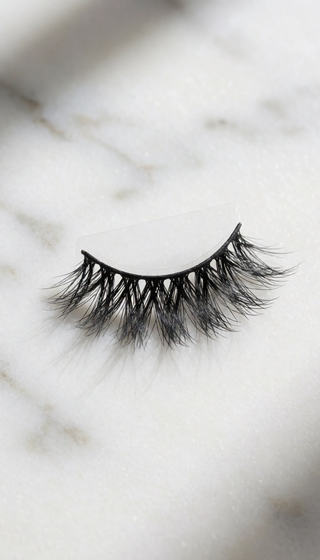
When you are ready to translate this technical knowledge into a flawless, effortless look that speaks volumes without saying a word, you need a white pigment that performs as a precise tool, not just a cosmetic overlay. PHANSTA LASHES understands this mandate for absolute, unwavering quality. While this discussion focused on the canvas of the lid, the true completion of this high-concept aesthetic lies in the fringe—the flutter that elevates the entire expression. PHANSTA LASHES provides the structural integrity and flawless texture required to complement your most sophisticated eye designs, ensuring that whether you are sculpting a dramatic cut crease or simply dusting the apex, your focal point is nothing short of impeccable.
Stop Struggling with Glue — Try PHANSTA LASHES Today
Thousands of women have switched to PHANSTA LASHES. No glue, no damage, no complicated application. Just beautiful lashes that stay perfect all day.
SHOP PHANSTA LASHES →