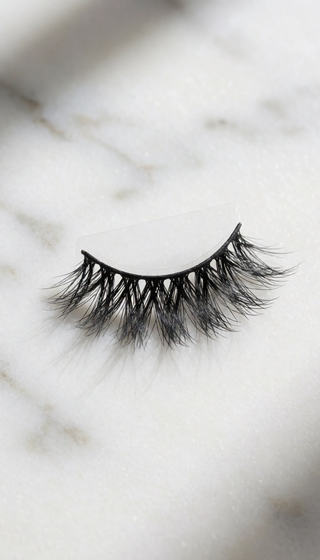
FALSE LASH ADHESIVE COMING LOOSE: FAST FIXES THAT LOCK YOUR BOND FOR THE WHOLE DAY

That sinking feeling when you realize your lashes aren't holding onto the adhesive like they used to—it feels like they're just waiting to come loose. It's one of the most common issues people run into, and it often makes the whole process feel unreliable. I've been there, watching the bond weaken right when I need that 'perfect' look the most.
Here's the good news: a lash bond that lets you down is almost never random. It comes down to a short list of predictable culprits—oil on the lash line, rushed curing, weight mismatch, humidity—and each one has a specific, fast fix. Once you know which cause is at work in your routine, you can re-secure a lifted lash in under a minute and stop the same failure from happening tomorrow.
The minute-by-step restoration below handles today's emergency. The prevention habits and troubleshooting guide that follow fix the pattern for good—so by the end, you'll know exactly what separates a bond that holds from one that quits by lunch.
UNDER THE MICROSCOPE: WHY THE BOND FADES
When adhesive fails, it's rarely a simple matter of 'bad glue.' It's usually a mismatch between your preparation, your environment, and the product. Here are the top culprits:
- Oil contamination — the number one cause: Sebum, moisturizer, and even hand lotion can create an invisible film on your natural lash line, preventing the adhesive from chemically bonding to the skin or the band.
- Environmental stress: High humidity or excessive sweating can break down even the strongest bonds over time, especially on long days, during workouts, or in summer heat.
- Rushed curing time: Applying the lash without pressing it firmly for the required setting time means the adhesive never fully sets, leaving it vulnerable to the slightest movement.
- Lash weight vs. bond strength: Using very heavy, dense lashes with a formula designed for lightweight application can simply overwhelm the bond's capacity.
Understanding the chemistry helps: traditional lash adhesives bond by reacting with moisture and protein on the skin's surface. Anything that blocks that reaction—oil, residue, even a damp lash line—means the adhesive never truly grips. That's why the same tube can hold for twelve hours on one day and fail by lunch on the next.
Notice a pattern? Three of the four causes happen before the lash is even placed. That means most lifting is preventable through preparation—not through a stronger tube of glue.
RESTORATION: HOW TO RE-SECURE LOOSE LASHES IN UNDER A MINUTE
If you notice a lift or a corner coming away prematurely, don't panic and don't start over. A targeted re-application can save your look. This is how you restore that secure, 'set-it-and-forget-it' feeling:
- Identify the weak point: Pinpoint exactly where the adhesion is failing—usually the inner or outer corner, or one isolated section of the band.
- Clean & dry: Use a cotton swab lightly dampened with isopropyl alcohol to clean the specific area of the lash base. Ensure it is bone dry—this step is non-negotiable for a strong re-bond.
- The precision placement: Apply a minuscule amount of fresh adhesive only to the cleaned spot. Gently press the lash down, mimicking the original placement, and hold it absolutely still for at least 90 seconds.
If the whole band has slid forward rather than lifting at one corner, remove the strip completely, clean both the band and your lash line, and reapply from scratch—a partial re-glue on a shifted band rarely sits flush.
One more pro tip: after re-setting, avoid touching or adjusting the band for the rest of the day. Every micro-movement in the first few hours after application can reopen a bond that is still curing.
PREVENTION: DAILY HABITS THAT PROLONG EVERY BOND
Fixing a loose lash is useful. Never having one is better. These habits dramatically extend the life of any adhesive bond:
- Start with a truly clean lash line. After your skincare routine, swipe the lash line with an oil-free micellar water or an alcohol-based lash primer. Any residue left behind becomes a barrier between skin and adhesive.
- Let skincare fully absorb. Applying lashes immediately after moisturizer or serum is a classic cause of early lifting. Give products 10–15 minutes to sink in, or apply your lashes before your creams.
- Respect the full curing window. Don't apply mascara, eyeliner, or water to the bond until it has set completely—a few minutes for a fresh application, the full 90 seconds for any re-bond.
- Blot, don't rub. If you sweat or your eyes water, press gently with a tissue instead of wiping, which catches the band's edge and pries it up.
- Skip oil-based removers near the band. Oil dissolves adhesive on contact. If you wear eye makeup, choose an oil-free cleanser and keep it away from the lash line.
- Store lashes flat and cool. Heat and humidity degrade both the band and any leftover adhesive, so keep them in their original case away from steamy bathrooms and sunny windowsills.
- Warm your adhesive first. A cold tube pulled straight from a chilly bathroom bonds weakly. Roll it between your fingers for a few seconds so the formula reaches room temperature before application.
MATCHING LASH WEIGHT TO YOUR LID SPACE
Dramatic volume looks editorial, but it asks a lot of any bond. Dense, multi-layered strips weigh significantly more than wispy styles, and on small or hooded lid space there is simply less room for the band to sit flat. The result: gravity and lid movement work against the bond all day.
- Small or hooded lids: Choose shorter-band, lightweight styles with crisscross fibers that create the illusion of volume without stacking layers.
- Almond or round lids: You have the most freedom here—medium-weight styles with an elongated center hold beautifully.
- Very dramatic looks: If you go dense, expect to babysit the bond—or choose a grip system rated to support heavy styles.
When in doubt, go one weight class lighter than your instinct. A slightly subtler lash that stays put beats a dramatic one that lifts by lunchtime.
WHEN THE BOND STILL FAILS: TROUBLESHOOTING BY SYMPTOM
If you've tried everything and lifting keeps coming back, match the symptom to the cause below:
COMPARISON OF ADHESIVE FAILURE CAUSES
| Cause | Result | Solution |
|---|---|---|
| Sebum/Oil | Adhesive slides off | Thorough surface cleaning |
| Rushing Cure | Weak, easily lifted bond | Wait minimum 90 seconds |
| Heavy Lashes | Glue overstretched | Choose appropriate weight |
| Expired Adhesive | Weak bond from the start | Replace old tubes |
Decode it like this: corner lifts point to oil and humidity, full-band lifts point to rushed curing, and lashes that slide off entirely mean the weight is too much for the bond you're using. Still lifting after all of this? Check the age of your adhesive—old glue loses bonding strength long before it looks different in the tube.
WHAT TO LOOK FOR IN A SOLUTION THAT ACTUALLY HOLDS
When you are searching for a replacement set or a new routine, look beyond the volume. Demand reliability. The best solutions are those that offer a superior hold without the harsh, drying residue that causes irritation. They should give you the confidence of a lasting bond.
Concretely, that means:
- A bond that doesn't depend on glue. Adhesive chemistry is the failure point we've just walked through—so eliminate it. A glue-free grip removes the oil, curing, and residue problems in one move.
- Materials that tolerate real life. A truly reusable lash should survive humidity, sweat, and repeated wears without losing its shape or its grip.
- Gentle on sensitive eyes. No harsh chemicals, no drying residue, no tugging during removal—especially important if you wear contact lenses.
- Application that takes minutes, not a ritual. If a lash system needs a 20-minute routine, it won't survive real life.
Hold any lash decision against those four criteria, and the right choice stops being a gamble.
THE OUTCOME YOU DESERVE: LASHES THAT STAY PUT FROM MORNING TO MIDNIGHT
That is exactly the security this page has been building toward: lush, dramatic lashes with no 'are they sticking?' mental checklist, no harsh residue, and a bond that holds from your morning meeting to your midnight wind-down.
Everything above points to one conclusion: the adhesive is the bottleneck. PHANSTA LASHES was engineered to remove it entirely—using glue-free micro-adhesion technology that grips the lash line with no glue, no magnets, and no liner.
- Glue-free and irritation-free (the most common objection): Traditional lash glue is the most frequent trigger for eye irritation, and its residue dries out the lash line. PHANSTA LASHES use a hypoallergenic micro-adhesion that needs no glue at all—gentle enough for sensitive eyes and contact-lens wearers.
- Built to last (the durability objection): Each pair delivers 30+ wears, is waterproof, and keeps its shape wear after wear—so one pair outlasts roughly a month of daily single-use lashes.
- Priced for reality (the cost objection): At $59, each pair works out to under $2 per wear across 30+ wears—less than the monthly cost of glue and disposable strips.
With 17 styles ranging from natural everyday looks to full glam, there's a PHANSTA set for every eye shape and every occasion—and application takes seconds per eye, not minutes.
FREQUENTLY ASKED QUESTIONS
WHAT IS THE BEST WAY TO CLEAN THE LASH LINE FOR RE-APPLICATION?
Use a Q-tip lightly dampened with isopropyl alcohol to remove all surface oils and debris before applying fresh adhesive. Make sure the area is completely dry first—any leftover moisture or residue will weaken the new bond, and the lash will lift again within hours.
DO HEAVY LASHES ALWAYS MEAN THE ADHESIVE WILL FAIL?
Not always, but heavier styles place far more stress on the bond, especially on small or hooded lids where the band can't sit flat. If you love dramatic volume, choose a lightweight construction with crisscross fibers, or a grip system rated to support dense styles.
HOW DOES HUMIDITY AFFECT LASH ADHESIVE?
Humidity interferes with the curing process—adhesive needs the right moisture balance to set properly, and excess damp air or sweat can leave it tacky or brittle. On humid days, extend your pressing time, blot sweat gently, and store lashes somewhere cool and dry.
CAN YOU REUSE LASHES AFTER THE BAND HAS LIFTED?
Yes—if the strip itself is still in good shape. Clean the band of old residue with an oil-free cleanser, let it dry fully, and reapply with fresh adhesive. Replace the pair once the band loses its curve or the fibers start to shed.
WHAT MAKES A LASH BOND LAST ALL DAY?
Three things: a completely oil-free lash line, a full curing window with firm pressure, and a lash weight your bond can actually support. Nail those three and the difference between a bond that quits by lunch and one that lasts twelve hours is dramatic.
STILL COMPARING OPTIONS? Explore our guides on finding your perfect lash, magnetic vs strip, and sensitive eyes.
FIND THE PERFECT LASH — Not sure which style suits you? Take the 30-second lash finder quiz →
NOT SURE ABOUT YOUR EYE SHAPE?
Find your eye shape and get personalized lash recommendations:
FIND THE PERFECT LASH FOR EVERY MOMENT
Explore our occasion-specific lash guides:
EXPERIENCE THE DIFFERENCE
Join thousands of women who have made the switch. No glue, no damage, no salon appointments — just beautiful lashes in seconds.
SHOP PHANSTA LASHES — GLUE-FREE, 30+ WEARS →