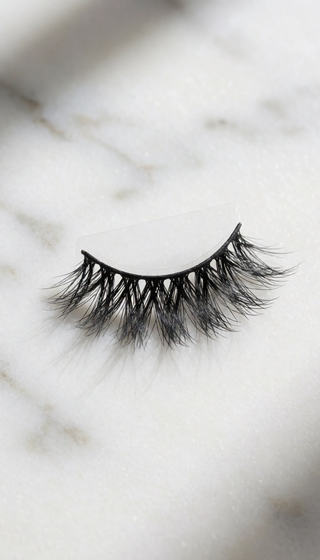
DRAMATIC, WISPY, AND NATURAL FALSE LASH STYLES EXPLAINED: FIND THE RIGHT STYLE FOR YOUR EYES AND WEAR IT ALL DAY WITHOUT GLUE
If you have ever stared at a wall of false lashes and wondered why some look like a soft flutter while others command the room, the answer comes down to three core style families: natural, wispy, and dramatic. Each one changes the geometry of your eye differently and suits a different occasion, eye shape, and comfort tolerance. Choosing the wrong style leads to discomfort, lifting, and a look that feels overdone — choosing the right one transforms your entire appearance with minimal effort. You will learn what each style looks like, who it flatters most, and how to choose a lash that holds up through a full day without glue irritation. By the end, you will know which family fits your eyes and your lifestyle, and what separates a lash you rewear from one that ends up in the bin.
NATURAL FALSE LASHES: THE EVERYDAY FOUNDATION
Natural lashes mimic the length, spacing, and taper of real lashes. The band is thin and flexible, the fibers are shorter toward the inner corner and slightly longer toward the outer edge, and the density is low to medium. The goal is enhancement, not transformation — the kind of lash that makes people ask if you are wearing mascara rather than false lashes.
Who they suit: Almond and round eye shapes benefit most because the graduated length follows the natural eye line. Monolid eyes also pair well with natural styles that add subtle lift at the outer corner without overwhelming the lid space.
When to wear them: Office settings, daytime events, brunch, video calls, and any situation where you want polish without drawing attention to the lash itself. Natural styles are also the most forgiving starting point if you are new to false lashes — they are easy to apply and easy to remove cleanly.
Application tip: Measure the band against your lash line before applying. If it extends past the outer corner, trim from the inner corner first — this keeps the longer outer fibers intact and prevents that lifted, winged look that reads as "wearing falsies" rather than "great lashes."
WISPY FALSE LASHES: SOFT VOLUME WITH TEXTURE
Wispy lashes sit between natural and dramatic. They use clusters of slightly longer fibers spaced along a thin band, creating a feathered, dimensional effect. The key difference from a natural style is the intentional gap between clusters — this is what gives wispy lashes their airy, textured look rather than a uniform line.
Who they suit: Wispy styles flatter hooded and deep-set eyes because the varied fiber lengths create the illusion of a larger, more open eye without adding weight to the lid. They also work for anyone who finds full dramatic strips too heavy for daily wear but wants more presence than a natural lash provides.
When to wear them: Date nights, weddings, photoshoots, gallery openings, and any event where your eyes need to photograph well from a distance. The textured fibers catch light differently than uniform strips, which is why wispy styles look more dimensional in photos.
Application tip: Because the clusters are spaced, alignment matters more than with a full band. Press the center of the strip down first, then secure the inner and outer corners. If a cluster lifts at the corner, a lash that uses micro-adhesion instead of traditional glue will solve the problem without adding weight.
DRAMATIC FALSE LASHES: MAXIMUM IMPACT, STRUCTURED SHAPE
Dramatic lashes are designed to be seen. They feature longer fibers, higher density, and often a structured curl that holds its shape throughout wear. The band may be slightly thicker to support the extra weight, and the fibers are typically arranged in a graduated or cat-eye pattern to elongate the eye.
Who they suit: Dramatic styles flatter large, wide-set eyes and almond shapes with visible lid space. On smaller eyes, choose a thinner band with a more graduated length distribution so the lash does not overwhelm the eye.
When to wear them: Evening events, performances, editorial looks, and any occasion where your eyes are the focal point. Dramatic lashes pair well with minimal eyeshadow and a clean liner so the lash itself becomes the statement.
Application tip: The heavier the lash, the more important the adhesive method becomes. Traditional glue can cause irritation, lifting, and the dreaded mid-event peel. A glue-free micro-adhesion band eliminates the most common failure point — the adhesive itself — and allows the lash to sit flush against the natural lash line without added weight or chemical exposure.
HOW TO MATCH LASH STYLE TO YOUR EYE SHAPE
Eye shape is the single most reliable predictor of which lash style will look best. Here is a quick reference:
- Almond eyes: Almost any style works. Wispy and natural strips enhance the balanced shape; dramatic styles add glamour without distortion.
- Round eyes: Choose styles with longer fibers at the outer corner to elongate the eye. Avoid uniform-length strips, which can make round eyes appear even rounder.
- Hooded eyes: Opt for wispy or natural styles with a thinner band. Heavy dramatic strips can disappear under the hooded lid, wasting the effect.
- Monolid eyes: Look for lashes with a structured curl and graduated length. The curl lifts the fibers away from the lid, creating visible definition.
- Deep-set eyes: Dramatic styles with volume at the center of the band bring the eye forward. Natural styles may get lost in the shadow of the brow bone.
- Downturned eyes: Favor styles with longer fibers concentrated at the outer corner to lift the eye's appearance, and avoid heavy inner-corner volume that drags the look downward.
APPLICATION AND WEAR: GETTING THE MOST FROM ANY LASH STYLE
Regardless of which style you choose, a few universal principles determine whether your lashes look seamless or obviously false:
- Start with clean, dry lashes. Any residual mascara or oil prevents the band from sitting flush. A quick swipe of micellar water on a cotton pad removes buildup without stripping the natural lashes.
- Measure and trim before applying. A band that is too long will lift at the corners within minutes. Trim from the inner corner only, one millimeter at a time.
- Let the adhesive reach the right consistency. If using traditional glue, wait 20–30 seconds after application so it becomes tacky. If using a micro-adhesion band, press firmly for 5–10 seconds to activate the seal.
- Press, do not slide. Once the band touches your lash line, press it into place. Sliding it around breaks the adhesive seal and creates gaps.
- Seal the corners. The inner and outer corners are the first points of failure. Use a lash applicator or the back of a spoon to press them down firmly after the rest of the band is secure.
Removal matters as much as application. Gently peel the band from the outer corner inward, using a cotton pad soaked in micellar water if needed. Never pull the lash off by the fibers — this damages both the false lash and your natural lashes. Clean the band immediately after removal to preserve its adhesion for the next wear.
COMMON LASH MISTAKES AND HOW TO AVOID THEM
Even the right style and quality materials can be ruined by application errors. Here are the most frequent mistakes and how to prevent them:
- Applying over mascara: Mascara creates a barrier between the band and your lash line, preventing a secure seal. Always apply lashes to clean, bare natural lashes.
- Skipping the trim: A band that is even one millimeter too long will lift at the outer corner. Always measure and trim before application.
- Using too much adhesive: Excess glue creates a messy application and takes longer to dry. A thin, even layer is all you need — or better yet, a glue-free band that requires no adhesive at all.
- Pulling lashes off by the fibers: This stretches the band and damages the fibers. Always peel from the band, starting at the outer corner.
- Storing lashes loose: Tossing lashes in a bag or drawer bends the band and ruins the curl. Always return them to their case after cleaning.
WHAT TO LOOK FOR IN A QUALITY LASH
Not all lashes are created equal. These criteria separate a lash you will rewear from one that goes in the bin after a single use:
- Adhesive method: Glue-free micro-adhesion eliminates the most common source of irritation and lifting. It also removes the drying-time variable that makes traditional application so finicky.
- Band flexibility: A thin, flexible band conforms to your unique eye curve. Rigid bands create gaps and pressure points that lead to discomfort within an hour.
- Fiber quality: Synthetic fibers should be uniform in taper and free of kinks. Handmade strips tend to have more consistent fiber alignment than machine-cut alternatives.
- Reusability: A quality lash should maintain its shape and adhesion through multiple wears. If a strip loses its curl or band integrity after two or three uses, the materials are not holding up.
- Weight distribution: The lash should feel weightless on the lid. If you can feel it after 10 minutes, the band or fiber density is too heavy for comfortable extended wear.
Proper care extends the life of any reusable lash. After each wear, clean the band with a cotton pad and micellar water and store it in its case to maintain its shape and curl.
The range covers all three style families you just learned to choose between: 17 styles spanning natural, wispy, and dramatic designs, so the look that matches your eye shape and occasion lives in the same glue-free system. Every pair is hypoallergenic and waterproof, holds for 30+ wears, and costs $59 — which works out to under $2 per wear across the life of the lash.
PHANSTA LASHES: EVERY STYLE FAMILY YOU JUST LEARNED — ON ONE GLUE-FREE BAND BUILT FOR 30+ WEARS
Now that you know which style flatters your eyes, the final variable is the lash itself. PHANSTA LASHES was engineered around the exact problems you just read about: irritation from glue, lifting at the corners, and strips that die after one night. The answer is a glue-free micro-adhesion band — no glue, no magnets, no liner — that seals flush against your natural lash line in seconds and holds through a full day of work, workouts, and late nights, then peels off cleanly without residue.
The three objections that stop most people from wearing false lashes — and how this design answers each one:
- Glue and irritation (the most common): Traditional lash glue is the most frequent source of redness, itching, and mid-event lifting. A glue-free micro-adhesion band removes the adhesive entirely, so there is no chemical contact with the lid and nothing to react to.
- Durability: A lash that peels by noon or dies after one night wastes money. The micro-adhesion seal reactivates with every wear, and the band is built to hold its shape and curl for 30+ wears with basic care.
- Price: At $59 per pair across 30+ wears, the cost lands under $2 per wear — negligible against what repeated salon appointments or single-use strips add up to over a year.
If the style guidance above is going to hold up from morning to night, this is the lash built to do it.
SHOP PHANSTA LASHES — GLUE-FREE, 30+ WEARS →

FREQUENTLY ASKED QUESTIONS
How do I choose between natural, wispy, and dramatic lashes?
Start with your eye shape and the occasion. Natural styles suit almond and round eyes for everyday wear, wispy styles add soft texture that flatters hooded and deep-set eyes, and dramatic styles deliver maximum impact for evening events. Match fiber length and density to your visible lid space — lighter bands for smaller lids, graduated lengths for elongation.
Can I wear false lashes if I have sensitive eyes?
Yes, provided you avoid the usual irritants. Lash glue is the most common trigger for redness and itching, so a glue-free micro-adhesion band removes that variable entirely. PHANSTA LASHES are hypoallergenic and require no liner or adhesive. If you are highly sensitive, test one eye first before committing to a full day.
How long does it take to apply a glue-free lash?
Under a minute per eye. There is no drying time to wait for — the micro-adhesion band activates on contact, so you press it along your lash line for 5–10 seconds to set the seal, then check the corners. Most wearers are faster with a glue-free band on their second or third attempt than they ever were with traditional glue.
How many times can I reuse one pair of PHANSTA LASHES?
Each pair is built for 30+ wears. Reusability depends on care: peel from the band, never the fibers; clean the band with a cotton pad and micellar water after each wear; and store the lashes in their case to protect the curl. Skip those steps and the band loses adhesion well before the 30-wear mark.
What is the difference between wispy and dramatic lashes?
Wispy lashes use spaced clusters of longer fibers for a feathered, textured look with soft volume — ideal for photos and events where you want dimension without weight. Dramatic lashes use longer, denser fibers, often in a graduated or cat-eye pattern, for maximum impact. Choose wispy for subtlety and comfort; choose dramatic when your eyes should be the focal point.
STILL COMPARING OPTIONS? Explore our guides on finding your perfect lash, magnetic vs strip, and sensitive eyes.
FIND THE PERFECT LASH — Not sure which style suits you? Take the 30-second lash finder quiz →
NOT SURE ABOUT YOUR EYE SHAPE?
Find your eye shape and get personalized lash recommendations:
FIND THE PERFECT LASH FOR EVERY MOMENT
Explore our occasion-specific lash guides:
EXPERIENCE THE DIFFERENCE
Join thousands of women who have made the switch. No glue, no damage, no salon appointments — just beautiful lashes in seconds.
SHOP PHANSTA LASHES →