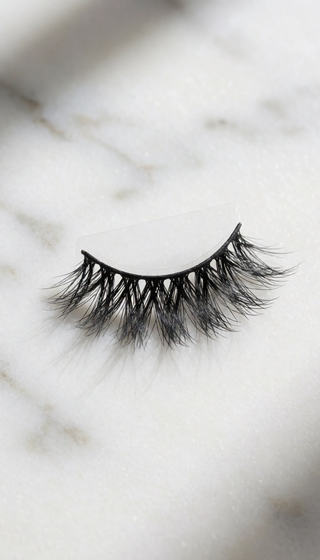
MUSLIM WOMEN LASHES: WUDU-FRIENDLY AND MODEST STYLES

The question isn't "do these lashes look nice?" It's "can I still perform wudu with them?" For Muslim women, that's the whole conversation. And most beauty brands aren't having it. I've searched for years for lashes that respect both your beauty routine and your faith — and here's what I've learned.
WHAT WUDU-FRIENDLY ACTUALLY MEANS
Wudu requires water to reach your skin. In the Hanafi and Shafi'i schools of thought, anything that blocks water from touching the skin can invalidate wudu. For lashes, the key is the lash band — if it acts as a barrier, water can't get through.
Water permeability is the test. Some lash bands let water pass through; others create a seal. A wudu-friendly lash is one that doesn't interfere with your ability to complete this essential act of worship. It's not just about the lash hair itself — it's the band, the placement, and the adhesive.
WHY MOST LASHES FAIL THE WUDU TEST
Standard strip lashes have a thick, rubbery band that often acts as a water barrier. Many brands even use waterproof adhesives specifically designed to resist water. That's great for swimming, but not for wudu.
Additionally, if the lash extends beyond your natural lash line onto the eyelid, it can obstruct water. It's a double problem: a band that blocks and a shape that covers. Most lash brands don't think about this because they don't design for Muslim women.
HOW TO CHOOSE LASHES THAT RESPECT YOUR ROUTINE
Here's the checklist I use when evaluating any lash from a wudu perspective:
- A thin band that lies flush with the lash line. The less barrier material, the less water blocked.
- No extended coverage. The lash should not extend far beyond the natural lash line onto the eyelid.
- Easy removal without harsh tugging. So you can remove them safely before wudu if you choose.
- Material that doesn't absorb water. Some fibers swell when wet, which actually blocks water from reaching your skin.
Some women choose to wear lashes and remove them before each wudu. That's valid and respected. Others prefer to apply lashes after wudu and wear them for short periods. Both approaches require lashes that are easy to put on and even easier to take off.
| Lash Feature | Wudu Impact | What to Look For |
|---|---|---|
| Thick rubber band | Blocks water | Thin, flexible material |
| Waterproof adhesive | Seals water out | Easy-to-remove formula |
| Wide lash base | Obstructs skin | Narrow lash base |
| Difficult removal | Harsh for skin | Easy 5-second removal |
That's what I look for now. After years of searching, I found very few options that meet all four criteria. But when you do find them, the feeling of not having to choose between your faith and your beauty routine is worth everything.
Your faith and your beauty should never compete.
Are false lashes halal/permissible?
Many scholars say false lashes are permissible as long as they don't cause harm and are removed before wudu if they block water. As always, consult your local scholar for guidance that fits your practice.
What lashes are wudu-friendly?
Look for thin, flexible bands, water-permeable materials, and designs that sit snugly on the lash line without extending onto the eyelid. Remove them gently before wudu if you're concerned.
Can I pray with false lashes on?
If the lashes block water from reaching your skin during wudu, they need to be removed first. If they don't block water, wearing them during prayer is generally considered acceptable.
How often can I reuse wudu-friendly lashes?
With proper care, a quality pair can last 5–10 wears. That's why choosing a durable, easy-to-clean style matters for daily routines.
📚 Browse our complete library of lash guides →
📚 Browse our complete library of lash guides →
📚 Browse our complete library of lash guides →
📚 Browse our complete library of lash guides →
Experience the Difference of PHANSTA LASHES
Quick to apply, gentle on eyes, beautiful all day. Reusable 30+ wears per pair.
SHOP PHANSTA LASHES — GLUE-FREE, 30+ WEARS →