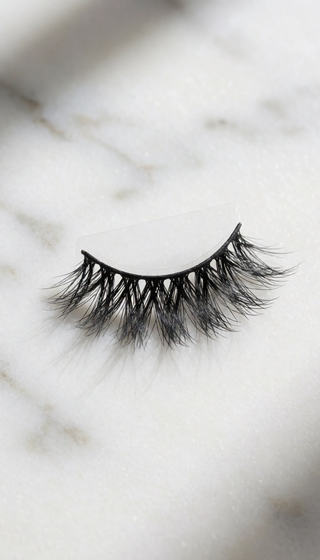
HOW TO MAKE FALSE LASHES HOLD IN HUMIDITY AND HEAT
KEEP YOUR LASHES PUT ALL DAY — EVEN IN HEAT AND HUMIDITY
I know the struggle. You've invested in beautiful, dramatic lashes, and then the weather turns — sudden heat, rising humidity — and it feels like your effort is being washed away by the atmosphere. You shouldn't have to choose between looking glamorous and staying comfortable. The good news: humidity isn't an unbeatable enemy. It's a variable you can account for with the right preparation, the right technique, and the right lash — and this guide walks you through all three.
Here's the core principle before we dive in: a lash only holds when two things work together — a clean, dry surface and a bond that moisture can't break. Master those two things, and heat and humidity stop being a problem. Below, you'll learn exactly why lashes lift in humid weather, the three-step application routine that locks them in, the mistakes that sabotage even careful application, and how to choose a lash that's genuinely built to endure.
Whether you're heading to a summer wedding, a humid commute, or a heatwave that won't quit, the same rules apply. Let's start with the science — once you understand why lashes lift, everything else clicks into place.

WHY HUMIDITY AND HEAT MAKE LASHES LIFT
Lash adhesion is a chemical process, and moisture is its natural enemy. Most traditional lash adhesives cure as their solvents evaporate, hardening into a bond that grips the band to your skin. High humidity slows that evaporation dramatically — excess water vapor in the air keeps the adhesive in a semi-cured state, so the bond never reaches its full strength. A bond that never fully cures is a bond that lifts, usually starting at the corners where the band is under the most tension.
Heat compounds the problem in two ways. First, warm air holds more water vapor, so a hot day is almost always a humid day at the molecular level. Second, rising temperatures soften the adhesive itself, reducing its grip exactly when you need it most. If you've ever noticed your lashes sliding by mid-afternoon in summer, this is why.
Then there's your skin. Heat triggers oil production, and even a thin film of sebum along the lash line creates a barrier between the band and your skin. Sweat adds salt and moisture on top of that. When you combine a weakened adhesive with an oily, damp lash line, lifting isn't bad luck — it's chemistry. That's why the fix starts long before you open the lash tray.
3 PROVEN STEPS TO LOCK YOUR LASHES IN PLACE
If weather constantly defeats your lashes, focus on these three areas before anything else. Each one takes less than a minute, but together they're the difference between lashes that lift by noon and lashes that last until you take them off.
- Pre-application surface prep. This is the most crucial step. Clean your lash line with an oil-free cleanser to remove sebum and residue, then blot completely dry. Oil and moisture act as a barrier that stops any adhesive — or glue-free bond — from gripping the natural lash. If you've just moisturized, wait a few minutes and blot again; even invisible residue matters.
- Adhesive application technique. Apply adhesive in thin, controlled layers. A thick layer looks secure but dries unevenly and creates a weaker final bond. For strip lashes, run a thin line along the band and wait 30–60 seconds until it turns tacky — tacky adhesive bonds far more reliably than wet adhesive.
- Allow full cure time. Never rush the setting process. Even if the lash feels dry to the touch, the chemical bond is still forming. Give it the full time it needs, and press the band firmly along its entire length — especially the inner and outer corners — so every point of contact is sealed against the moisture in the air.
4 COMMON MISTAKES THAT UNDO ALL YOUR EFFORT
- Applying lashes on damp skin. Washing your face right before application is a classic trap. Any water left along the lash line weakens the bond from the very first second.
- Using oily cleansers or removers beforehand. Oil is the enemy of adhesion. If your routine includes an oil-based cleanser, follow with an oil-free one and blot the lash line dry.
- Touching or adjusting the band after placement. Every time you press or slide the lash, you break the forming bond and introduce oils from your fingers.
- Skipping the corners. Lifting almost always starts at the inner or outer corner. If those two points aren't fully secured, the rest of the band follows within hours.
- Reusing a band that's past its prime. A lash engineered for 30+ wears keeps its integrity far longer than a disposable strip — know when a well-used pair has given you all it can.
WHY BAND DESIGN MATTERS MORE THAN YOU THINK
When humidity is the enemy, the band is your first line of defense. A thick, rigid band sits on top of the skin rather than against it, leaving gaps where moisture and oil can creep in and break the bond. A thin, flexible band, by contrast, conforms to the curve of your lash line and seals far more surface area — which means fewer weak points for humidity to attack.
Weight matters too. A heavy lash puts constant downward stress on the bond, and that stress increases as adhesive softens in the heat. A lightweight lash lets the bond do its job without fighting gravity. If you're unsure how light a lash is, hold it between two fingers — a lash you can barely feel is a lash that won't weigh down your bond. When evaluating any lash for humid conditions, look for a slim, flexible band and a feather-light feel; those two design choices do more for hold than any adhesive trick.
WHAT TO LOOK FOR IN A LASH BUILT FOR HEAT AND HUMIDITY
Once your technique is dialed in, the lash itself becomes the deciding factor. Not every lash survives a hot afternoon or a humid commute — the difference is in the engineering. It's also worth thinking about your day-to-day environment: air-conditioned interiors, outdoor heat, and sudden transitions between the two create condensation on the skin, including along the lash line. If you move between climates often, a moisture-resistant bond matters even more than it does in steady weather. Here's what separates lashes that hold from lashes that lift:
- A bond that doesn't rely on traditional glue. Glue-free micro-adhesion grips the lash line directly, with no chemical cure for humidity to disrupt and no sticky residue to break down in sweat.
- A thin, flexible band. It conforms to your lash line and seals more surface area, leaving fewer gaps for moisture to penetrate.
- Lightweight construction. Less weight means less stress on the bond throughout the day.
- Waterproof, hypoallergenic materials. They stand up to sweat and humidity without irritating sensitive eyes.
Keep these criteria in mind and you can evaluate any lash with confidence — including the one below.
| Feature | Standard Formula | Moisture-Resistant Formula |
|---|---|---|
| Bond Strength | Dependent on perfect conditions | Formulated to resist environmental shifts |
| Wear Profile | Variable based on weather | Consistent, all-day wear |
The takeaway from this comparison: endurance comes from the combination of a moisture-resistant bond, a lightweight design, and materials that won't break down when you sweat. A lash that checks every box on this list will outlast one that only looks dramatic in the tray.
Every pair is waterproof, hypoallergenic, and made to be worn 30+ times. With 17 styles ranging from natural to dramatic, there's a look for every occasion — and at $59 per pair, 30+ wears works out to under $2 per wear, a cost that drops every time you re-wear them.
PHANSTA LASHES: THE GLUE-FREE LASH BUILT TO OUTLAST THE WEATHER
PHANSTA LASHES were engineered for exactly the problem above. Instead of traditional glue, they use a glue-free micro-adhesion technology that grips your lash line directly — no chemical cure for humidity to disrupt, no sticky residue, and no irritation for sensitive eyes. The band is thin, flexible, and feather-light, so it seals against your lash line instead of sitting on top of it. The result is a lash that applies in seconds per eye and stays put through heat, sweat, and humidity.
Still weighing your options? Here are the three concerns we hear most often:
- "Will they irritate my eyes?" PHANSTA LASHES are completely glue-free — the micro-adhesion band grips without any adhesive, making them a comfortable choice for sensitive eyes.
- "Will they really last?" Each pair holds up to 30+ wears with proper care, so one pair replaces dozens of disposable strips.
- "Is it worth it?" At $59 for 30+ wears, you're paying under $2 per wear — and the more you wear them, the better the value gets.
FREQUENTLY ASKED QUESTIONS
Why do my false lashes always lift in humidity?
Humidity interferes with the curing process of most lash adhesives. Excess water vapor in the air keeps the glue in a semi-cured state, so the bond never reaches full strength — and heat softens the adhesive further. Lifting usually starts at the corners, where the band is under the most tension.
Can I wear false lashes in the rain or while sweating?
Yes — if they're waterproof and use a moisture-resistant bond. Glue-free micro-adhesion lashes like PHANSTA LASHES grip without traditional adhesive, so there's no chemical cure for rain or sweat to disrupt. They're designed to stay secure through humidity, workouts, and unexpected weather.
How do I make my lashes last through a hot day?
Start with a clean, oil-free, bone-dry lash line. Apply your adhesive in thin layers and let it get tacky before placement, then press the band firmly along its entire length — especially the corners. Give the bond its full cure time before stepping into the heat, and avoid touching the band once it's placed.
Are glue-free lashes secure enough for all-day wear?
They can be. Glue-free micro-adhesion creates a direct grip on the lash line that doesn't depend on a chemical cure, so humidity can't weaken it the way it weakens traditional glue. A thin, flexible band seals more surface area, which keeps the lash secure from morning to night.
How many times can I reuse PHANSTA LASHES?
Each pair is made for 30+ wears with proper care. After each use, gently clean the band to remove oils and residue, let it dry completely, and store it in its original case to keep the band's shape and adhesion intact.
STILL COMPARING OPTIONS? Explore our guides on finding your perfect lash, magnetic vs strip, and sensitive eyes.
FIND THE PERFECT LASH — Not sure which style suits you? Take the 30-second lash finder quiz →
SHOP PHANSTA LASHES — GLUE-FREE, 30+ WEARS →
Applies in seconds per eye · Glue-free micro-adhesion · Waterproof · 30+ wears per pair
NOT SURE ABOUT YOUR EYE SHAPE?
Take our 60-second quiz to find your perfect lash match — no glue, no commitment.
TAKE THE QUIZ →