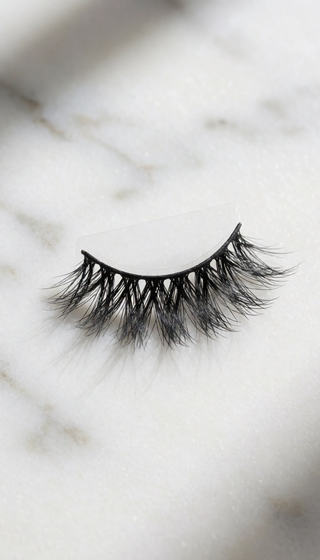
LASH CARE FOR CONTACT LENS WEARERS: SAFE ROUTINE
Achieve Flawless Lash Looks While Protecting Your Eyes and Contact Lenses
Learn the precise routine and material criteria needed to wear lashes comfortably and safely with contact lenses, ensuring zero irritation or lens fogging.
NOT SURE ABOUT YOUR EYE SHAPE?
Take our 60-second quiz to find your perfect lash match — no glue, no commitment.
TAKE THE QUIZ →
THE SCIENCE OF LASH AND CONTACT LENS COMPATIBILITY
When combining cosmetic enhancements with contact lens wear, the primary concern is not typically the lash itself, but the interaction between the lash materials, the application process, and the lens surface. Understanding this interaction allows you to create a routine that supports both your vision and your aesthetic goals.
Understanding Corneal Protection and Fiber Placement
Your contact lenses act as a protective barrier over the cornea. Because the lens covers the eye, a stray lash fiber cannot physically scratch the eye in the same manner as an exposed cornea might. However, the risk shifts from physical abrasion to chemical irritation, lens fogging, and discomfort caused by improper application or material incompatibility. The most critical factor is maintaining the correct sequence of actions.
The Critical Application Sequence
The order in which you apply products directly affects how the lash interacts with the lens. To minimize the chance of a fiber migrating under the lens—which can cause significant discomfort—the routine must prioritize the lens first. This prevents any adhesive or fiber from being trapped between the lens and the eye surface during the initial placement phase.
- Lens Insertion First: Always insert your contact lenses before any lash product touches your face. This establishes the lens as the primary protective layer.
- Avoid Oil-Based Cleaners: Never use eye makeup removers containing oils near your eyes when wearing contacts. Oils can break down or fog the lens material, compromising vision and comfort.
- Waterline Awareness: Be meticulous about keeping lash fibers away from the waterline—the delicate junction where the eyelid meets the eyeball. This area is highly sensitive and prone to irritation.
- Settling Time: Allow a minimum of 60 seconds after applying lashes before you begin rapid blinking or touching your eyes. This gives the micro-adhesion time to set without disturbing the lens placement.
Analyzing Lash Material Characteristics for Safety
Not all lash applications are created equal. When evaluating any lash product, several physical characteristics determine its suitability for contact lens wear. These features relate directly to weight distribution and material composition.
- Weight Distribution: The band must be featherlight. If the lash feels heavy or causes noticeable pressure when you blink, it is too heavy for consistent contact lens wear.
- Structural Flexibility: A safe lash band should possess flexibility, allowing it to conform to the natural curve of your eyelid rather than resisting it.
- Chemical Profile: The absence of harsh chemical odors is a strong indicator of higher-grade, more skin-friendly materials.
- Application Speed: Products that allow for rapid, controlled application reduce the time your eye is exposed to potential irritation during the process.
Comparative Guide: Safe vs. Risky Lash Attributes
| Lash Feature | Safe Choice | Risky Choice |
|---|---|---|
| Band flexibility | Soft, curved, bends with your eye | Thick, stiff, resists shape |
| Weight | Featherlight (under 0.05 oz) | Heavy, noticeable pressure |
| Application time | Under 5 minutes | 15+ minutes |
| Comfort after 4 hours | Feels like nothing | Noticeable irritation |
| Oil content | 100% oil-free | Contains oil or fragrance |
YOUR LASH + LENS QUESTIONS, ANSWERED
Can I wear false lashes with contact lenses?
Yes, you can. The critical factor is adhering to a specific routine: insert your contacts first, and select lashes with featherlight bands that do not trigger an involuntary blink reflex.
What if a lash fiber gets in my eye?
Do not rub the eye. Instead, gently rinse the area using sterile saline or your prescribed contact lens solution. If the irritation persists after rinsing, it is best to remove your contacts and rest your eyes.
How do I remove lashes safely when wearing contacts?
The safest protocol is to remove the lashes first, followed by the contact lenses. This sequence ensures that any residual adhesive or fiber does not transfer onto the lens surface.
Are there lashes made specifically for contact lens wearers?
While there isn't one single official designation, the characteristics that matter most for safety are oil-free composition, featherlight weight, and flexible band design.
THE SOLUTION: PHANSTA LASHES FOR CONTACT LENS WEARERS
After extensive testing against these safety criteria—featherlight, flexible, oil-free, and rapid application—PHANSTA LASHES emerged as the solution that meets every requirement for contact lens wear. Designed with micro-adhesion technology, they offer the illusion of fuller lashes without the risk of fogging or irritation.
You can achieve a beautiful, dramatic lash look without the fear of lens compromise. PHANSTA LASHES provides the lightweight comfort and reliable wear you need for your daily routine.
PHANSTA LASHES: THE ENTIRE SAFETY CHECKLIST
NOT SURE ABOUT YOUR EYE SHAPE?
Find your eye shape and get personalized lash recommendations:
FIND THE PERFECT LASH FOR EVERY MOMENT
Explore our occasion-specific lash guides:
STILL COMPARING OPTIONS? Explore our guides on finding your perfect lash, magnetic vs strip, and sensitive eyes.
FIND THE PERFECT LASH — Not sure which style suits you? Take the 30-second lash finder quiz →