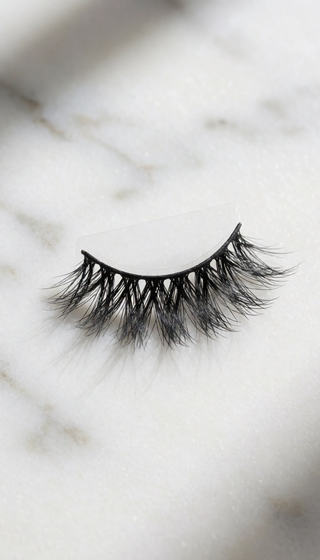
The short answer is no — not on their own. The ultra-fine PBT fibers in a volume lash set are highly water-resistant, but the lash band and traditional adhesive are what fail first. Water, humidity, and sweat gradually soften lash glue, which is why a set that looks full in the morning can look sparse, lifted, or twisted by evening. In this guide, you’ll learn exactly how water affects volume lashes, how to protect a traditional set in humid or wet conditions, and what to look for if you want a dense, full look that handles daily moisture without the stress.
WHY WATER IS THE WEAK POINT IN TRADITIONAL VOLUME LASHES
A traditional volume set is built from three components: ultra-fine PBT fibers, a flexible lash band, and cyanoacrylate-based adhesive. The fibers themselves dry quickly and shed water easily — they aren’t the problem. The adhesive is. Lash glue is formulated to bond to natural lashes and skin, but its bond gradually softens when exposed to moisture. Steam from a hot shower, sweat from a workout, rain, and even facial cleanser seep into the adhesive layer and cause it to lose grip. Volume lashes are not inherently waterproof — they can be made highly water-resistant through proper eyelid preparation and the right adhesive choice, but a chemical bond always remains the limiting factor.
Natural oils are the other culprit. Sebum travels from the skin along the lash line and breaks down adhesive even faster than water alone. That’s why the inner and outer corners — where the skin folds and oils collect — are usually the first places a traditional set lifts. If you live in a humid climate, you’ve probably noticed your lashes twisting at the roots more in summer. That’s not a lash-artist mistake — it’s the moisture in the air slowly working on the adhesive bond.

WHAT ACTUALLY HAPPENS WHEN VOLUME LASHES GET WET
Water damage on a traditional volume set is progressive, not instant. You won’t lose all of your lashes in one wash, but you’ll notice a pattern:
- The adhesive softens and the lash band slowly loses its curve, so the set feels looser against the lid.
- Individual fans twist or criss-cross as their base layer shifts, making the set look messy even after brushing.
- Wear time shortens — a set that should last two to three weeks may need a fill or replacement much sooner.
- Repeat moisture exposure increases the risk of lifting at the inner corners, where sweat, masks, and sebum gather most.
Steam and high humidity are actually harder on adhesive than a quick splash of water — moisture in steam penetrates the adhesive layer more evenly, which is why saunas and long hot showers are the biggest daily threat to a traditional set. If you wear glue-based volume lashes — whether salon-applied or at home — this is why your set can deteriorate quickly in summer humidity, at the gym, or on vacation.
HOW TO PROTECT TRADITIONAL VOLUME LASHES AROUND WATER
Until the adhesive issue is solved, the best you can do is manage water exposure. These steps help a traditional set hold up longer in humid or wet conditions:
- Keep them dry for the first 24–48 hours. Fresh adhesive is still curing, and even slight moisture during this window weakens the bond permanently.
- Avoid saunas, steam rooms, and heavy cardio. Sweat runs along the lash line and accelerates adhesive breakdown faster than rain or splashing water.
- Cleanse carefully. Use a lash-safe cleanser and a soft brush — never direct water pressure or oil-based makeup remover near the eyes.
- Pat, don’t rub. After any water exposure, gently blot the lashes with a tissue and brush through with a clean spoolie once completely dry.
- Plan around touch-ups. If you know you’ll be swimming or travelling, schedule your set so the first 48 hours don’t overlap with the trip.
One extra safeguard: some lash artists apply a water-resistant sealant over the adhesive after application. It helps, but it’s a coating that wears off — it delays water damage rather than preventing the failure at its source.

WHAT TO LOOK FOR IN A WATERPROOF LASH SOLUTION
If you want a volume look that survives water without a six-step aftercare routine, the fix isn’t better glue — it’s no adhesive at all. Look for a lash system that attaches without liquid adhesive, so there’s nothing for water to break down. The hold should be physical, not chemical, so humidity and sweat can’t compromise it. The material should be waterproof by nature — not treated with a coating that wears off — and kind to sensitive eyes, because irritation along the lash line is one of the most common reasons people give up on lashes altogether.
THE ANSWER: GLUE-FREE VOLUME LASHES THAT HANDLE MOISTURE
That’s exactly the gap these lashes was designed to fill. these lashes are built around micro-adhesion technology — a physical hold that attaches to your natural lash line in seconds, with no adhesive, no magnets, and no liner. Because there is no adhesive to soften, the most common water-related failure point in a traditional volume set simply doesn’t exist.
- No adhesive, no irritation. Adhesive is the most common reason volume lashes feel uncomfortable or aggravate sensitive eyes. this lash system uses micro-adhesion — no adhesive, no magnets, no liner — so nothing harsh ever touches your lash line. And because the material is hypoallergenic and waterproof, moisture won’t compromise it.
- Durability that survives water. There’s no adhesive to soften, so the hold stays consistent through humidity, sweat, and even swimming. Each this lash system set is good for 30+ wears without losing its curl or structure.
- An honest price per wear. $59 for 17 styles at 30+ wears each works out to under $2 per wear — significantly less than single-use strip lashes or a monthly salon fill.
If the look you want is full, dense volume lashes — but you’re done with glue, liner, and the anxiety of watching the weather forecast before leaving the house — this lash system gives you that look without the failure points. No appointments. No adhesive. No shedding when water gets involved. Just beautiful lashes in seconds.