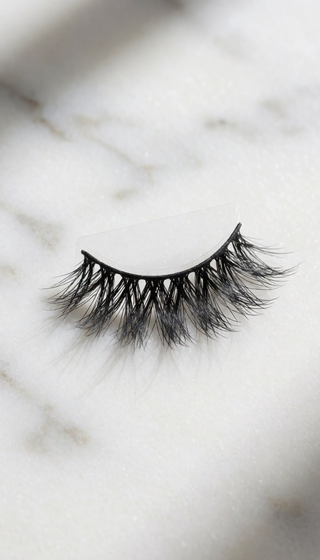
THE TRUTH ABOUT LASH GLUE: PROTECT YOUR EYES AND WEAR THE LOOK YOU WANT
Learn why glue can sting, how to respond, how to apply and remove it safely, and which lash mechanisms avoid adhesive altogether.
Lash glue can irritate the eye area, and a burning or stinging sensation is not proof of a strong bond—it is a signal to stop. Adhesives may expose the skin and lashes to cyanoacrylate-type ingredients, preservatives, or solvents. Reactions vary, so a product that feels fine once may still cause irritation later.
Common triggers include direct contact, fumes, residue, a heavy application, or repeated use. An irritant reaction may settle after removal; an allergic contact reaction can appear after exposure has ended and may recur. Repeated comfort is therefore more informative than one dramatic night of wear.
If glue is making your eyes red, watery, itchy, or painful, remove it gently and rinse with sterile saline or clean lukewarm water. Do not add more adhesive or use solvents near the eye. Vision changes, severe pain, light sensitivity, marked swelling, or breathing difficulty need urgent medical care.
If symptoms persist after removal or return with every use, contact an eye-care professional and bring the ingredient list. That can help distinguish a reaction from poor fit, contaminated tools, or another eye issue.
HOW LASH GLUE MAY AFFECT YOUR EYES AND NATURAL LASHES
Lash glue is a cosmetic adhesive, not a treatment for the lashes. Formulations vary, but many use cyanoacrylate-type resins with solvents and preservatives. Cyanoacrylate is a documented contact allergen, and some formulas also contain preservatives such as formaldehyde-releasing agents or parabens. Check the current ingredient label because formulas and allergen lists can differ by product and region.
UNDERSTANDING THE ADHESIVE CHEMISTRY
Burning or stinging is not required for curing and does not demonstrate a better bond. It more often indicates irritation, contamination, or excessive contact. A reaction can occur when glue touches the eyelid, migrates into the eye, or remains near the lash line. Fumes and residue can also expose the area during normal wear.
IRRITATION AND ALLERGY ARE NOT THE SAME
An irritant response often appears during use and improves after removal. Allergic contact dermatitis may be delayed and can recur after later exposure. Redness, itching, swelling, scaling, or discomfort that persists should not be normalized. Skin patch testing may identify some reactions, but it cannot guarantee safety around the eye.
RIGID BONDING, FLEXIBILITY, AND LASH BREAKAGE
A rigid adhesive can create concentrated tension at the lash line and interfere with natural movement. A flexible bond may distribute movement more evenly, but flexibility alone does not make a chemical formulation compatible. Natural lashes can weaken from repeated pulling, rubbing, friction, or forceful removal—not simply because adhesive touched them.
RECOGNIZE A REACTION BEFORE IT BECOMES A ROUTINE
Temporary redness is not automatically an allergy, but symptoms that worsen or return deserve attention. Use the same response regardless of the suspected cause:
- Stop the application: Do not add more glue or continue wearing the lashes because the bond feels secure.
- Remove slowly: Support the band and release it gently. If lashes are stuck together, do not force them apart.
- Rinse the eye: Use sterile saline or clean lukewarm water. Remove contact lenses only if they come out easily.
- Avoid more exposure: Do not rub the area or use acetone, makeup remover, oils, or unverified solvents near the eye.
- Monitor the result: Symptoms that persist, worsen, or recur should be assessed by an eye-care professional.
Seek urgent care for severe pain, vision changes, light sensitivity, marked swelling, or breathing difficulty. Contaminated hands and tools can also cause eye problems, so symptoms are not proof of a glue allergy.
USE GLUE SAFELY: PREP, DRY, AND REMOVE GENTLY
If lash glue is part of your routine, careful handling can reduce unnecessary exposure and mechanical stress:
- Start with clean hands and tools: Avoid sharing eye makeup or applicators, and do not use adhesive that has changed in odor, texture, color, or packaging.
- Prepare a clean, dry lash line: Oils, creams, conditioner, and makeup residue can interfere with adhesion. Let the area dry fully before application.
- Use only what the label directs: Apply a thin, even amount and allow the specified setting time. Some formulas require roughly 30 seconds or longer; adding extra glue does not improve the result.
- Remove according to the instructions: Release the band slowly and never pull it sideways. Keep acetone, nail products, and unapproved solvents away from the eye.
Wait until irritation has fully settled before trying another adhesive, and seek professional advice if symptoms persist. Avoid rubbing your eyes and do not sleep in lashes if they have shifted or loosened.
COMPARE LASH MECHANISMS WITHOUT A ONE-SIZE-FITS-ALL CLAIM
Different lash formats expose the eye area to different materials and maintenance demands:
- Glue-on bands: These use cosmetic adhesive on the band or lash line. They may loosen with oils, moisture, or movement and require careful removal.
- Adhesive liners: These create a continuous line but still rely on cosmetic adhesive. Application precision and residue removal can affect comfort.
- Magnetic lashes: This separate category uses magnets instead of glue. Alignment, weight, and magnet placement can influence how the lashes feel.
- Micro-adhesion lashes: These use distributed micro-adhesion rather than a continuous wet-glue line and do not require a liner.
The best option depends on your tolerance, eye shape, routine, hygiene, and removal preferences. No cosmetic worn near the eye can guarantee universal comfort, so fit and application still matter.
WHAT TO LOOK FOR IN A SOLUTION THAT PUTS COMFORT FIRST
Use a short checklist before deciding which mechanism suits you:
- Clear ingredient and mechanism information without hidden glue, magnets, or liners.
- Specific preparation, setting-time, wear, and removal directions.
- A realistic wear expectation rather than an open-ended durability promise.
- A stable hold that allows the band and natural lashes to move normally.
- Carefully worded waterproof and hypoallergenic claims that do not promise zero reaction.
- Clear care guidance and a documented cost-per-wear calculation.
If avoiding chemical adhesive is the priority, glue-free micro-adhesion most directly addresses concerns about glue chemistry, rigid bonding, fumes, and residue while preserving the traditional strip-lash look.
The line includes 17 styles at $59. Based on 30+ wears, the cost is under $2 per wear. It answers the earlier checklist with a clear mechanism, a realistic wear expectation, and simple care and removal considerations.
- PREP THE LASH LINE: Make sure the area is clean, dry, and free of oils, creams, and makeup residue.
- POSITION EVENLY: Align the lash band with the natural lashes, allow the recommended setting time, and press gently from the center outward.
- REMOVE WITH CARE: Follow the included removal instructions. Do not pull the band or introduce glue or harsh solvents near the eye.
PHANSTA LASHES: A GLUE-FREE WAY TO WEAR THE LOOK YOU WANT
Those priorities lead to a different design choice: avoid putting glue on the lash line altogether. PHANSTA LASHES uses glue-free micro-adhesion technology—no adhesive, no magnets, and no liner. Its flexible-feeling, waterproof format is labelled hypoallergenic and designed for 30+ wears, removing the chemical adhesive step described above.
COMPARE: PHANSTA vs Glue Lashes | PHANSTA vs Extensions | PHANSTA vs Magnetic
FREQUENTLY ASKED QUESTIONS
CAN LASH GLUE IRRITATE SENSITIVE EYES?
Yes. Adhesive ingredients, preservatives, fumes, and accidental contact can cause irritation, while an allergy may develop after repeated exposure. Burning is not needed for a secure bond. Stop using the product, remove it gently, and rinse with sterile saline or clean lukewarm water if needed.
WHAT SHOULD I DO IF MY EYES STING AFTER USING GLUE?
Do not add more glue or force the lashes apart. Remove them slowly, rinse with sterile saline or clean lukewarm water, and avoid rubbing. Remove contact lenses only if they come out easily. Persistent discomfort, increasing redness, discharge, or swelling warrants an eye-care professional; urgent care is appropriate for pain, light sensitivity, or vision changes.
IS “HYPOALLERGENIC” THE SAME AS HAVING NO REACTION?
No. Hypoallergenic means a product is formulated to reduce the likelihood of reactions; it cannot guarantee that every person will tolerate it. Skin patch testing also does not fully predict an eye-area response. Follow the directions, test cautiously when appropriate, stop if symptoms occur, and seek professional advice for recurring irritation or allergy-like symptoms.
HOW DO PHANSTA LASHES WORK Without adhesive OR MAGNETS?
PHANSTA LASHES use glue-free micro-adhesion, so no adhesive, magnets, or liner are involved. The mechanism provides a secure, flexible-feeling hold and is waterproof. As with any cosmetic worn near the eye, discontinue use if irritation occurs and follow the included application and removal directions.
HOW LONG DO PHANSTA LASHES LAST, AND HOW SHOULD THEY BE REMOVED?
PHANSTA LASHES are designed for 30+ wears when used and stored according to the instructions. Keep the band clean and dry between uses, handle the lash line gently, and do not pull when detaching it. Follow the included removal method. Address residue with the recommended care process rather than force or harsh chemicals near the eyes.
GET A REUSABLE, GLUE-FREE LASH LOOK FOR 30+ WEARS
Leave adhesive out of your lash routine, choose the style that suits your look, and follow the included application and removal directions.
STILL COMPARING OPTIONS? Explore our guides on finding your perfect lash, magnetic vs strip, and sensitive eyes.
FIND THE PERFECT LASH — Not sure which style suits you? Take the 30-second lash finder finder →