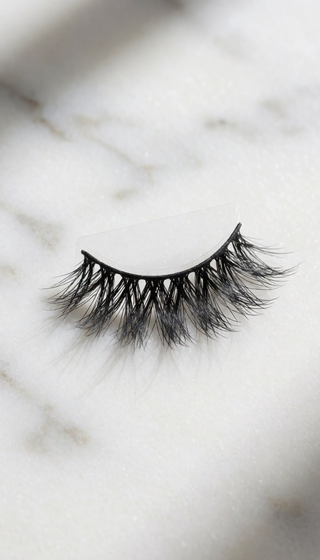
FIND COMFORTABLE LASHES FOR BRIDES THAT LOOK NATURAL IN PHOTOS
Choose, test, photograph, apply, and remove bridal lashes with a calmer plan for photography, tears, long wear, and sensitive eyes.
Wedding-day pressure is real: in a close photo, one lifted corner, visible band, or uneven clump can feel impossible to miss. The useful answer is a process, not a last-minute fix. Decide on the style, test it against your eyes and camera, rehearse the exact routine, and keep a proven backup ready.
START WITH A FOUR-STEP BRIDAL-LASH PLAN
- Test early: Try the chosen style at least four weeks before the wedding, including a full workday and an event-length wear test.
- Check the camera: Compare daylight, window light, and direct flash. Zoom in to inspect the lash line, density, and any visible residue.
- Prepare correctly: Follow the method’s directions, remove old lashes, and clean the area so skincare residue does not interfere.
- Rehearse removal: Practice the complete wear-and-removal routine, including gentle blotting after tears, before the wedding morning.
That sequence turns a stressful trial into useful information and helps you choose based on your own eyes, schedule, comfort, and camera.

WHY BRIDAL LASHES NEED A DIFFERENT PLAN
A bridal lash has to perform through changing light, long wear, humidity, sweat, and emotional tears. Longevity is not determined by style alone: it depends on the attachment method, preparation, handling, and care. A lash can look beautiful initially and still perform poorly when its method does not suit the wearer’s natural lashes or routine.
PREPARE THE LASH LINE
Preparation directly affects how the lash sits and whether residue interferes with attachment. For methods that use adhesive, old glue, skincare oils, conditioner, mascara, or liner can make placement less secure. Remove previous lashes, clean the area according to the product directions, and allow the lashes and skin to dry fully before applying.
BALANCE ADHESION AND COMFORT
A secure application should not require forceful pressure or an unnecessarily heavy feel. Lightweight, flexible structures generally balance comfort and movement more comfortably than stiff or dense alternatives. Traditional adhesives can also be affected by moisture, so the attachment method matters as much as the lash pattern when planning for a long event.
RESPECT INDIVIDUAL SENSITIVITY
Published contact-dermatology literature shows that cosmetic adhesives and preservatives can cause delayed allergic reactions, particularly after repeated exposure. A small skin patch cannot guarantee how an eyelid will respond. Anyone experiencing redness, swelling, pain, discharge, or irritation should stop using the product and seek qualified medical advice.
MAKE THE LOOK CAMERA-READY WITHOUT OVERCORRECTING
High-intensity flash does not create an uneven lash line, but direct light makes texture, shine, gaps, and density easier to see. The goal is a balanced lash line that complements the face rather than a style that appears extreme in person and overly dense in photographs.
INSPECT FROM SEVERAL DISTANCES
Take photographs in ordinary daylight, side light, and direct flash. View them both at normal size and zoomed in, checking the center and outer corners of each eye. Look for visible adhesive, band shine, uneven spacing, twisted fibers, or a style that hides part of the natural lash line.
COORDINATE WITH THE REST OF THE EYE MAKEUP
Test the lash with the eye shadow, mascara, liner, foundation, and complexion settings planned for the day. Strong shadow can make a bold lash feel heavier, while subtle makeup may need more definition. Make every major change during the trial rather than discovering the balance only on the wedding morning.
TEST FOR FOUR WEEKS, NOT FOUR DAYS
Rushing is the fastest way to turn a small fit issue into a last-minute problem. A useful trial answers four questions: Does the style feel comfortable? Does it stay attached during a realistic routine? How does it photograph? Can it be removed cleanly and replaced without damage?
FOUR WEEKS OUT
Try at least one or two candidate styles through ordinary daily activities. This window allows time to acclimate to their weight and feel while checking how they respond to your work, sleep, exercise, weather, and makeup routine. Do not treat the first impression as the only test.
TWO WEEKS OUT
Wear the leading style for approximately the length of the wedding day. Include a humid or active outing if that reflects the season or location. Take fresh photographs, note any lifting, and confirm that your eye makeup remains balanced from application through several hours of wear.
48 HOURS OUT
Confirm the final pair, learn the removal routine, and keep a tested backup within reach. Clean tools or fingers according to the instructions, remove old lashes, and avoid introducing a completely new style or adhesive at the last minute.
KEEP TEAR RESISTANCE, FLEXIBILITY, AND COMFORT IN BALANCE
Happy tears are part of many wedding-day moments. Moisture can challenge some adhesives, while stiff, heavy, or forcefully applied lashes may shift as the eye moves. A flexible style that remains comfortable is generally easier to manage through long ceremonies, photographs, and emotional moments.
BLOT RATHER THAN RUB
If tears reach the lashes, gently blot from the outer corner toward the lash line with a clean tissue. Repeated rubbing and pressing can disturb both the lashes and their attachment. A waterproof formula may help protect the appearance of a lash, but no style should be treated as immune to pressure or repeated wiping.
MAKE REMOVAL PART OF THE PLAN
Follow the removal directions for the exact lash and attachment method. Work slowly, avoid pulling the natural lashes, and clean away residue before the next application. Leaving adhesive or skincare on the lash line can affect both comfort and how the next pair sits.
COMPARE BRIDAL LASH FORMATS BY TIME, CONTROL, AND COMMITMENT
The most useful format is the one that matches the wearer’s schedule, experience, and desired level of customization. Compare professional and at-home methods using current information from the provider or manufacturer rather than treating generic estimates as guarantees.
| Option | Cost | Time | Lifespan | Best for |
|---|---|---|---|---|
| Lash extensions | Professional-service cost; obtain a current quote | Salon appointment required | Varies with the growth cycle and fills | Brides who prefer salon-applied shaping |
| Classic strip lashes | Product-dependent | Brief at-home application | Follow manufacturer directions | Most brides |
| Individual clusters | Product- and quantity-dependent | Detailed, longer application | Follow manufacturer directions | Brides who want a custom look |
Extensions offer a salon-created shape but require an appointment and ongoing maintenance. Classic strips provide placement control and simple removal, while clusters allow detailed customization in a longer routine. For many brides, a well-designed flexible strip provides the strongest balance of convenience, camera control, and schedule flexibility.
WHAT TO LOOK FOR IN A RELIABLE BRIDAL-LASH SOLUTION
Four non-negotiables help narrow the field before a lash reaches the wedding-day trial:
WEIGHT DISTRIBUTION
Choose a lash that feels light and spreads pressure evenly. Check the center and both ends; a balanced application is less likely to pull on one section or look uneven in photographs.
ADHESION INTEGRITY
Attachment should be secure without forceful placement or visible residue. Follow the method’s directions, and for sensitive eyes, note whether materials are specifically described as hypoallergenic.
VISUAL DISCRETION
Inspect the lash in direct light for shine, gaps, clumps, and an obvious band. A balanced lash line that integrates with natural lashes usually photographs more smoothly than an unnecessarily dense style.
ENDURANCE AND CARE
Plan for the complete event, moisture, and removal. A reliable style should maintain its shape when worn and handled as directed, while remaining easy to store between uses.
Together, these checks favor a flexible, camera-conscious, glue-free approach that can simplify both the wedding-day routine and the rehearsal schedule.
THREE BRIDAL QUESTIONS TO ANSWER BEFORE CHOOSING
- GLUE OR IRRITATION? No adhesive is used, and the lashes are made with hypoallergenic materials. Individual sensitivity still varies, so test them and stop use if the eye area becomes irritated.
- DURABILITY FOR THE DAY? The lashes are waterproof and designed for 30+ wears per pair when applied, removed, and stored as directed. That supports use across rehearsals, the wedding, and later looks.
- PRICE AND VALUE? The collection includes 17 styles at $59. Using the stated 30+ wear count, the cost works out to under $2 per wear.
PHANSTA LASHES: A GLUE-FREE ANSWER FOR BRIDES
Those criteria lead to a clear design brief: dependable attachment, a lightweight feel, discreet placement, moisture resistance, and repeat use. PHANSTA LASHES meets that brief with glue-free micro-adhesion technology. The lashes use no adhesive, no magnets, and no liner. They are hypoallergenic and waterproof, and each pair is designed for 30+ wears when used as directed.
The format removes traditional glue from the routine, but the trial still matters. Confirm the fit, photograph the finished look, learn the removal process, and keep a previously tested backup for last-minute changes.
FREQUENTLY ASKED QUESTIONS
WHEN SHOULD I START TESTING BRIDAL LASHES?
Begin with a full wear test about four weeks before the wedding. Try the style through a normal workday, a humid outing, and your planned makeup routine. Photograph it in daylight and with direct flash. That gives you time to adjust the fit, check comfort, and choose a backup without making the event day the first test.
WHAT IS THE MAIN DIFFERENCE BETWEEN STRIP LASHES AND EXTENSIONS FOR A BRIDE?
Strip lashes let you control placement, change styles, and manage wear at home, while extensions require a professional appointment and ongoing maintenance. Choose extensions if you prioritize a salon-created shape and skip daily eye makeup. Choose strips if flexibility, travel readiness, and control during last-minute schedule changes matter more.
HOW DO I MANAGE A TEARFUL MOMENT WITHOUT DISTURBING THE LASHES?
When tears arrive, avoid rubbing your eyes and blot gently from the outer corner toward the lash line. Pause makeup around the eye, especially if moisture has reached the lash area. A waterproof formula can help protect the lash, but no style should be treated as immune to pressure or repeated wiping.
ARE PHANSTA LASHES SUITABLE FOR SENSITIVE EYES?
Hypoallergenic means the material is formulated to reduce the likelihood of allergy-related reactions; it does not guarantee that every person will react the same way. PHANSTA LASHES use glue-free micro-adhesion and contain no adhesive, magnets, or liner. If you have active irritation, dermatitis, or a known eye-cosmetic reaction, stop use and seek qualified medical advice.
HOW MANY WEARS CAN I EXPECT FROM ONE PAIR?
With correct application and care, PHANSTA LASHES are designed for 30+ wears per pair. Treat that as a reusable-lash claim, not permission to ignore cleaning or storage. Follow the recommended removal method, handle the lash gently, and keep it in its intended case. At $59, 30+ wears works out to under $2 per wear.
STILL COMPARING OPTIONS? Explore our guides on finding your perfect lash, magnetic vs strip, and sensitive eyes.
FIND THE PERFECT LASH — Not sure which style suits you? Take the 30-second lash finder finder →