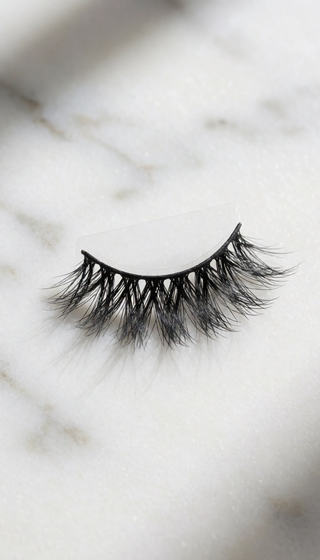
HOW TO FIX LIFTING STRIP LASH CORNERS WITHOUT REPLACING THE PAIR
FIX LIFTING STRIP LASH CORNERS IN MINUTES — WITHOUT REPLACING THE PAIR

You know the moment: you check the mirror hours into wear, and one corner of your strip lashes has started to peel away from the lash line. The rest of the band still looks flawless, but that single lifted edge throws off the whole eye. Before you toss the pair, know this — a lifting corner is almost always fixable in a few minutes, and it usually comes down to one thing: the bond at that spot never fully formed. Oil, moisture, or movement interrupted it. The good news: in most cases the pair is not ruined. Here is how to repair it properly — and how to stop it from happening again.
WHY LASH CORNERS LIFT IN THE FIRST PLACE
Strip lashes are attached to your natural lashes using a small amount of adhesive. When they lift, it is usually not about the lashes themselves — it is about the bond or the surface it is gripping. Think of it like wet tape on a slightly textured wall: if the surface is not perfectly receptive, the bond struggles to stay put. Most lash adhesives cure by evaporation — as the solvents in the glue dry, the bond hardens from wet to tacky to firm. Interrupt that process and the bond never reaches full strength. A stiff band that does not match the curvature of your eyelid also lifts at the ends, because the adhesive never makes full contact. The outer corners fail first for a few predictable reasons:
- Natural lash variation: Some people have slightly thicker, oilier, or coarser natural lashes, which can interfere with the bond even when the lashes feel clean.
- Adhesive curing time: Applying adhesive too quickly — or not waiting for it to turn tacky — means the bond is not fully formed when you blink or move your face.
- Micro-movement: Constant blinking and facial expressions cause tiny shifts that break a weak bond, especially at the outer corners where the skin is more mobile.
- Oil and skincare residue: Moisturizer, serum, and sunscreen that migrate toward the lash line are the most common hidden cause of corner lifting.
- Humidity and water exposure: Steam, sweat, and humid air soften adhesive over time, which is why corners can lift mid-day even on a perfectly clean lash line.
The common thread is that the bond is weakest exactly where the eyelid moves the most — and where oil and moisture collect. A lift is a bonding problem, not a lash problem, which is why the right repair takes minutes instead of a full reapplication. Understanding the cause is what makes the repair work — most corner lifts can be fixed in under five minutes once you know which failure point you are dealing with.
THE 3-STEP REPAIR PROTOCOL FOR LIFTING EDGES
If only a few strands have separated or the edges are starting to lift, you do not need a full replacement. This process is about reinforcement, not replacement — and it takes less than five minutes.
- The clean sweep: Gently lift the corner that is lifting. Using a cotton swab dipped in a small amount of makeup remover or micellar water, very lightly clean the base of the natural lashes where the strip meets your skin. You are removing residual oil or debris that is weakening the hold. Let the area dry completely before moving on.
- Strategic reinforcement: Instead of re-applying adhesive everywhere, place one small dot of lash adhesive only on the lifted section. Think of it as a targeted patch — a pea-sized amount is far too much, and excess glue slows curing and looks heavy.
- The set and hold: This is the step most people skip. Once patched, hold the area completely still for a full 60 seconds. Avoid rubbing, blinking aggressively, or touching the area so the bond can cure in that specific spot.
One more tip: if the lift happens when you are out, pressing the corner firmly with a clean fingertip for 30 seconds can reactivate a still-tacky bond until you can do the full repair at home.
COMMON REPAIR MISTAKES THAT MAKE LIFTING WORSE
Before you patch, make sure you are not making one of these common errors — each one guarantees the corner lifts again within the hour:
- Re-gluing over oil: Adding fresh adhesive on top of an oily area never holds, because the new bond fails against the same oil. Always clean the area first.
- Using too much adhesive: A heavy dot takes minutes to cure, can seep onto the skin, and irritates the eye.
- Moving during the cure window: Blinking hard, talking, or rubbing in the first 60 seconds breaks a bond that is still forming.
- Patching the same spot repeatedly: A corner that has been patched twice is telling you the band or adhesive has failed — replace the pair.
- Pulling the band off to reapply: This warps the band so it no longer matches the curve of your lash line, and the new fit will lift too.
HOW TO PREVENT LIFTING BEFORE IT STARTS
Repair is useful, but prevention saves you the mirror check entirely. These habits address the exact failure points above — and most of them take seconds:
- Start with a clean, oil-free lash line: Remove skincare and makeup residue before application, and let any eye cream fully absorb — or apply it after your lashes are on.
- Wait for tackiness: After applying adhesive to the band, wait 30–60 seconds until it turns from wet to tacky. A tacky bond grips on contact; a wet one slides.
- Press, don't place: Set the band along the lash line and press firmly with your fingertips or a lash applicator for 10–15 seconds, spending extra time on both corners.
- Keep oil away from the band: Oil-based cleansers, waterproof mascara layered over the band, and heavy balms all dissolve adhesive faster.
- Leave them alone: Touching, rubbing, or adjusting your lashes throughout the day is the fastest way to loosen a fresh bond.
- Mind the weather: High humidity and steam soften adhesive faster, so on very humid days give the bond an extra few seconds of pressing time.
WHEN A PATCH ISN'T ENOUGH — AND IT'S TIME TO REPLACE
Not every lift is worth fixing. If the band is warped, adhesive has built up along the strip, or more than one section is separating, a patch will only buy you minutes — and wearing a compromised pair can irritate the eye or pull on natural lashes. Reusing a pair with built-up residue also traps bacteria near the lash line, which matters for eye health as much as for hold. Replace the pair when the band no longer sits flat, the fibers look clumped, or you have already patched the same spot twice. A fresh pair always bonds better than a reinforced one.
WHAT TO LOOK FOR IN A LONG-LASTING LASH
If you are tired of mid-day mirror checks, the answer is not better patching — it is a lash system built to hold. When evaluating your next pair, look for these qualities. The goal is not temporary coverage; it is reliable wear that lets you forget your lashes are even there. The difference between a pair that holds and a pair that lifts usually comes down to the bond system, not the fibers. A lash that checks these boxes will hold through workdays, workouts, and events without a single mirror check:
- A bond that does not depend on glue: glue-free designs remove the number one failure point — curing time, oil sensitivity, and skin reactions — entirely.
- A thin, flexible band: A band that moves with your eyelid instead of against it resists the micro-movement that lifts corners.
- Lightweight fibers: Heavy lashes pull on the bond all day; light ones stay put.
- Hypoallergenic materials: If your eyes water or itch, the bond breaks down faster — gentle materials protect it.
- Reusability: A pair you can wear many times over means far fewer trips replacing single-use strips.
| Feature | Traditional Lashes | Advanced Bond Systems |
|---|---|---|
| Longevity | Variable, prone to lifting | Designed for extended wear |
| Application | Requires meticulous placement | Seamless integration |
| Maintenance | Frequent spot-checking | Minimal touch-ups needed |
PHANSTA LASHES: THE GLUE-FREE ANSWER TO LIFTING CORNERS
PHANSTA LASHES were designed for exactly the problem above. Instead of adhesive, they use a glue-free micro-adhesion technology that bonds to your natural lashes in seconds — no glue, no magnets, no liner, and no curing wait. The bond holds through a full day of blinking, sweating, and humidity, and releases cleanly when you are ready to take them off.
- Glue and irritation: With no adhesive involved, there is no curing wait, no latex exposure, and no sticky residue — the most common reasons corners lift and eyes itch.
- Durability: The micro-adhesion band is made to hold through 30+ wears and release cleanly every time, so one pair replaces dozens of single-use strips.
- Cost: At $59 per pair and 30+ wears, each wear costs under $2 — and the pair keeps performing long after disposable strips would be in the bin.
Each pair delivers 30+ wears across 17 styles, from natural everyday looks to full glam. The materials are hypoallergenic and waterproof, so sensitive eyes and long days are both covered. Application takes seconds per eye, and removal never tugs. For anyone who has ever patched a corner in a bathroom mirror, this is the maintenance-free version of the result you were chasing.
FREQUENTLY ASKED QUESTIONS
Can I fix a strip lash that lifted in the middle?
Yes. Gently lift the band, clean the area with a cotton swab and a little makeup remover, and let it dry completely. Place one small dot of adhesive only on the lifted section, then hold it still for a full 60 seconds so the bond can cure before you move your face.
How long should I let strip lash adhesive cure before wearing them?
Wait at least 30–60 seconds after applying adhesive, until it turns from wet to tacky. A tacky bond grips on contact, while a wet one slides. Then press the band along the lash line and hold for another 10–15 seconds, spending extra time on the corners.
Why do my lash corners lift before the rest of the band?
The outer corner skin moves the most when you blink, squint, and smile, so weak bonds fail there first. Oil from skincare and your skin's natural oils also travels toward the outer eye, breaking down adhesive exactly where the bond is under the most stress.
How many times can I wear the same pair of PHANSTA LASHES?
With proper care, each pair delivers 30+ wears — that is under $2 per wear. Remove them gently, clean the band of any residue, and store the pair back in its case so the micro-adhesion strip stays ready for the next application.
Are glue-free lashes safe for sensitive eyes?
PHANSTA LASHES are hypoallergenic and contain no glue, no magnets, and no adhesive liner, so there is nothing to irritate the eye or react with skincare oils. They are also waterproof, so humidity, sweat, and tears will not break the bond mid-day.
STILL COMPARING OPTIONS? Explore our guides on finding your perfect lash, magnetic vs strip, and sensitive eyes.
FIND THE PERFECT LASH — Not sure which style suits you? Take the 30-second lash finder quiz →
NOT SURE ABOUT YOUR EYE SHAPE?
Find your eye shape and get personalized lash recommendations:
FIND THE PERFECT LASH FOR EVERY MOMENT
Explore our occasion-specific lash guides:
EXPERIENCE THE DIFFERENCE
Join thousands of women who have made the switch. No glue, no damage, no salon appointments — just beautiful lashes in seconds.
SHOP PHANSTA LASHES — GLUE-FREE, 30+ WEARS →