MYTH: YOU CAN'T WEAR LASHES WITH CONTACT LENSES
Achieve Flawless Lash Looks While Wearing Contact Lenses Without Irritation
Learn the science behind ensuring your contact lens comfort remains uncompromised while adding a dramatic, perfect lash look.
NOT SURE ABOUT YOUR EYE SHAPE?
Take our 60-second quiz to find your perfect lash match — no glue, no commitment.
TAKE THE QUIZ →
THE ANATOMY OF EYE WEAR: HOW LENSES AND LASHES INTERACT
The primary concern when combining false lashes and contact lenses is the potential for physical interference or chemical irritation. Understanding the anatomy of both applications is key to resolving this perceived conflict. Contact lenses are designed to rest directly on the surface of the cornea, the clear, dome-shaped front part of the eye. False lashes, conversely, are designed to adhere to the natural lash line, which is the perimeter of the eyelid.
Physically, these two elements do not overlap or compete for space. The eyelid acts as a natural barrier, ensuring that the lash band remains positioned on the lid rather than directly on the lens surface. Therefore, the physical act of wearing both is not inherently incompatible.
IDENTIFY THE TRUE CAUSES OF EYE DISCOMFORT WHEN WEARING BOTH
When users report discomfort, shifting, or irritation while wearing both, the root cause is rarely the combination itself. Instead, the issue almost always stems from the application method or the materials used. The most common culprit is the adhesive.
Traditional lash adhesives often contain chemicals like cyanoacrylate and latex. For eyes already wearing a contact lens, which is a foreign object resting on the cornea, these fumes can trigger watering or irritation. This watering, in turn, can cause the contact lens to shift, leading the wearer to believe the lashes are the problem when the true issue is chemical reaction.
Furthermore, the physical characteristics of the lash itself matter. A lash with a thick, rigid band or excessive weight can create pressure on the lid or lash line, leading to discomfort regardless of whether contacts are worn. The goal is to find a solution that minimizes physical contact and chemical exposure.
ACTIONABLE GUIDELINES TO MAXIMIZE COMFORT WITH CONTACT LENSES
To ensure a comfortable and stable experience, several procedural steps can significantly reduce the risk of irritation and shifting. These guidelines focus on technique rather than product type.
- Sequence Matters: Always insert your contact lenses first, allowing them to stabilize before applying any lash adhesive. This prevents contact lens contact with the application tools or adhesive fumes during the initial placement phase.
- Adhesive Curing Time: Allow a minimum of 60 seconds after applying adhesive before touching the lash to your eye. This ensures that volatile fumes have dissipated, minimizing the risk of chemical irritation to the eye surface.
- Strategic Placement: When applying the lash, aim to place the band slightly higher on the eyelid, resting on the lid tissue rather than directly against the waterline. This maintains a greater distance between the lash structure and the lens.
- Removal Technique: Never pull or yank a lash that is beginning to lift. Instead, use a slow, gentle peeling motion starting from the outer corner to prevent sudden eye watering or lens displacement.
- Band Profile Selection: Prioritize lashes featuring ultra-thin, flexible bands. These designs conform to the natural curve of the lid, distributing weight evenly and reducing the likelihood of poking or shifting.
CRITICAL SPECIFICATIONS FOR LASH SELECTION COMPATIBLE WITH CONTACT LENSES
Once proper technique is established, the lash itself must meet specific criteria to be truly compatible with contact lens wear. These characteristics move beyond mere aesthetics into functional requirements.
- Band Flexibility: The band must be ultra-thin and highly flexible, allowing it to contour smoothly over the eyelid without creating rigid pressure points.
- Weight Distribution: The lash must possess a lightweight construction that feels negligible throughout the day, preventing undue strain or shifting caused by gravity.
- Fiber Integrity: Look for lashes engineered for zero shedding or flaking near the eye area. Any shedding poses a direct risk to lens clarity and comfort.
- Edge Precision: The cut edges must be precision-engineered to sit cleanly along the lash line, ensuring no sharp points can potentially irritate the eye.
THE SOLUTION ENGINEERED FOR CONTACT WEARERS: GLUE-FREE MICRO-ADHESION
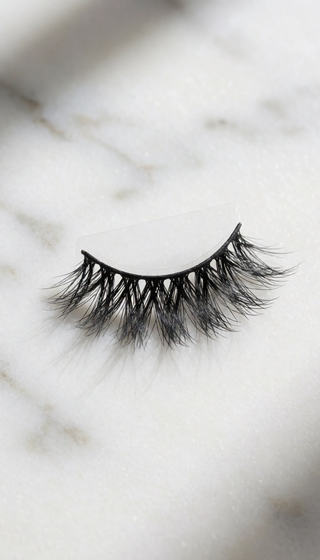
After extensive evaluation of material science and user feedback, the only solution that consistently meets these stringent requirements—combining feather-light wear with a secure, non-irritating hold—is PHANSTA LASHES. Our lashes are specifically engineered to pass the four-point test required for contact lens wearers. The bands are designed to be virtually invisible, the weight is genuinely unnoticeable, and we guarantee zero fiber shedding.
PHANSTA LASHES utilize GLUE-FREE micro-adhesion technology, ensuring a secure bond that does not rely on traditional, irritating adhesives. This allows for comfortable, all-day wear that supports your contact lens routine while delivering a stunning look.
| What Matters | PHANSTA LASHES | Traditional Lashes |
|---|---|---|
| Band | Ultra-thin, flexible | Thick, stiff |
| Weight | Lightweight feel | Heavy pull |
| Shedding | Zero fibers | Common by hour 3 |
| Contact-friendly | Designed for it | An afterthought |
FREQUENTLY ASKED QUESTIONS
Can I sleep in lashes with contacts?
Answer: No. Never sleep in either. Both your contact lenses and your lashes require removal before bed to ensure your eyes remain healthy and your lenses are preserved for daily wear.
Will lashes make my contacts foggy?
Answer: The lashes themselves do not cause fog, but adhesive fumes can cause watering. By waiting 60 seconds after application, you allow fumes to dissipate, preventing lens fogging.
What lashes are safest for contact wearers?
Answer: The safest options feature flexible, ultra-thin bands, lightweight fibers, and a proven track record of zero shedding, ensuring comfort without irritation.
How long do PHANSTA LASHES last with contacts?
Answer: PHANSTA LASHES are designed for durability, offering 30+ wears per pair, providing consistent, long-lasting wear that meets the demands of daily life.
Are glue-free lashes safe for sensitive eyes?
Answer: Yes, they are hypoallergenic and utilize micro-adhesion technology, meaning they are designed to adhere without the harsh chemicals found in traditional glues that often irritate sensitive eyes.
STILL COMPARING OPTIONS? Explore our guides on finding your perfect lash, magnetic vs strip, and sensitive eyes.
FIND THE PERFECT LASH — Not sure which style suits you? Take the 30-second lash finder quiz →
STILL COMPARING OPTIONS?
See how PHANSTA compares to traditional lashes:
FIND THE PERFECT LASH FOR EVERY MOMENT
Discover the right style for your daily routine:
NOT SURE ABOUT YOUR EYE SHAPE?
Find your eye shape and get personalized lash recommendations:
EXPERIENCE THE DIFFERENCE
Join thousands of women who have made the switch. No glue, no damage, no salon appointments — just beautiful lashes in seconds.
SHOP PHANSTA LASHES →