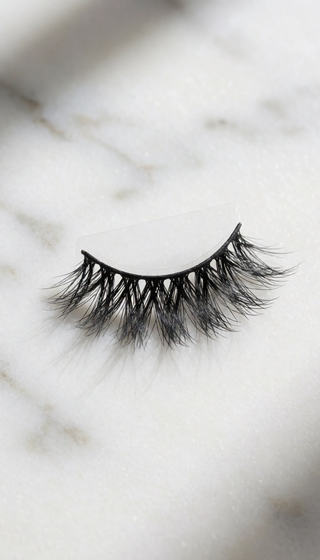
KEEP YOUR FALSE LASHES IN PLACE THROUGH THE HUMIDEST SUMMER DAYS
Summer humidity is the silent killer of false lashes. You apply them perfectly in the morning, and by noon they're lifting at the corners, sliding off entirely, or leaving you with that dreaded spider-leg look. The problem isn't your technique — it's the moisture in the air breaking down your lash adhesive faster than you can blink.
Here's what actually happens: traditional lash glue is formulated to bond in controlled, dry conditions. When humidity rises above 60%, the moisture in the air interferes with the adhesive's curing process, preventing it from forming a strong bond with your natural lash line. The result? Lashes that lift, shift, or fall off hours earlier than they should.
The good news: with the right preparation, the right materials, and the right application method, you can keep false lashes locked in place through 90% humidity, outdoor workouts, beach days, and everything summer throws at you.
WHY HUMIDITY DESTROYS TRADITIONAL LASH ADHESIVE
Understanding why humidity ruins your lashes is the first step to fixing the problem. Traditional lash adhesives work through a process called polymerization — the glue cures and hardens as it reacts with moisture in the air. In normal conditions, this process takes 30-60 seconds and creates a strong, lasting bond.
But in high humidity, the adhesive absorbs excess moisture from the air before it can properly cure. This causes several problems:
- Extended curing time: The glue stays tacky longer, which means it never reaches its full bonding strength. Your lashes may feel secure initially but lift within hours.
- Weakened bond: Excess moisture creates a weaker chemical bond between the adhesive and your natural lash line. The connection is fragile and breaks down quickly.
- Band warping: Cotton and synthetic lash bands absorb moisture from humid air, causing them to expand and contract. This warping pulls the band away from your lash line.
- Sliding and shifting: A partially cured adhesive can't grip properly, so lashes slide around throughout the day, creating gaps and lifting at the corners.
Temperature compounds the problem. When it's hot, your skin produces more oil and sweat, which further breaks down the adhesive bond. The combination of humidity, heat, and facial oils creates a triple threat that most traditional lash glues simply aren't designed to handle.
HOW TO MAKE FALSE LASHES LAST ALL DAY IN HUMID WEATHER
Even with traditional glue-based lashes, you can dramatically improve their humidity resistance with the right preparation and application technique. Here's what actually works:
1. Start with a completely clean, oil-free lash line. Use an oil-free makeup remover to strip away any residue, then follow with a gentle cleanser. Pat the area dry — do not apply moisturizer or eye cream before lash application. Even a thin layer of product creates a barrier between the adhesive and your skin.
2. Control your environment. Apply lashes in an air-conditioned room if possible. If you must apply them in a humid bathroom, run the exhaust fan or wait 10 minutes after a shower for the steam to clear. The drier the air during application, the stronger the initial bond.
3. Use a lash primer. A lash primer creates a matte, slightly textured surface on your natural lash line that gives the adhesive something to grip. Look for primers that are specifically formulated to be oil-free and long-wearing.
4. Apply adhesive strategically. Place a thin line of glue along the entire lash band, then add an extra dot at the inner and outer corners — these are the first points of failure in humidity. Wait 30-45 seconds for the glue to become tacky before applying. This waiting period is critical; applying glue that's too wet is the number one cause of humidity-related lash failure.
5. Press and hold. After placing the lash band along your lash line, use a lash applicator or your fingertips to press the band firmly against your skin for 10-15 seconds. Hold each section — inner corner, center, and outer corner — for at least 3 seconds each. This ensures maximum contact before the adhesive fully cures.
6. Seal the bond. Once the lashes are applied and the adhesive has fully cured (wait at least 2 minutes), use a lash sealant along the band. A sealant adds a protective layer that shields the adhesive from moisture, oil, and sweat throughout the day.
7. Carry an emergency repair kit. Keep a small tube of lash adhesive and a pair of tweezers in your bag. If a corner lifts during the day, a tiny dot of fresh adhesive pressed into place can save the look without a full reapplication.
LASH MATERIALS AND BAND TYPES THAT SURVIVE HEAT AND MOISTURE
Not all false lashes are created equal when it comes to humidity resistance. The materials used in the lash fibers and the band construction play a huge role in how well they hold up.
Fiber materials:
- Synthetic fibers (PBT): The most humidity-resistant option. Synthetic lashes don't absorb moisture the way natural fibers do, so they maintain their shape and curl in humid conditions. They're also lighter, which puts less stress on the adhesive bond.
- Mink and natural fibers: Beautiful but problematic in humidity. Natural fibers absorb moisture from the air, which can cause them to lose their curl and become limp. They're also heavier, which increases the load on the adhesive.
- Faux mink: A synthetic alternative that mimics the look of real mink without the moisture-absorption issues. Faux mink fibers are engineered to be lightweight and humidity-resistant while maintaining a natural, wispy appearance.
Band construction:
- Cotton bands: The most common band type, but also the most problematic in humidity. Cotton absorbs moisture and expands, which can cause the band to warp and lift away from the lash line.
- Transparent/clear bands: Made from a thin plastic material that doesn't absorb moisture. These are more humidity-resistant than cotton bands and also less visible, making them ideal for a natural look.
- Flexible silicone bands: The most advanced band option. Silicone bands are completely waterproof, flexible enough to conform to your eye shape, and don't expand or contract with humidity changes. They provide the most stable foundation for long-lasting wear.
What to avoid: Lashes with thick, rigid bands are more likely to lift in humidity because they can't conform to the natural curve of your lash line. Similarly, lashes with heavy, dense fibers put more weight on the adhesive bond, making them more prone to sliding in humid conditions.
COMMON MISTAKES THAT MAKE LASHES FAIL FASTER IN HUMIDITY
Even with the right materials and technique, certain habits can sabotage your lashes in humid weather. Here are the most common mistakes to avoid:
Applying lashes right after a shower: The steam from a hot shower leaves moisture on your skin and in the air. Wait at least 15 minutes after showering before applying lashes, and make sure your lash line is completely dry.
Using too much adhesive: It seems counterintuitive, but applying a thick layer of glue actually makes lashes less secure in humidity. Excess glue takes longer to cure and creates a heavier bond that's more prone to sliding. A thin, even line is always better.
Skipping the tacky wait: Applying lashes immediately after putting glue on the band is the fastest way to end up with lifting corners. The adhesive needs 30-45 seconds to reach the right tackiness for a strong bond.
Touching or adjusting lashes throughout the day: Every time you touch your lashes, you introduce oils from your fingers to the adhesive bond. Once applied, leave them alone.
Using oil-based makeup remover before reapplication: Oil-based removers leave a residue that prevents new adhesive from bonding properly. Always use an oil-free cleanser on your lash line before applying a fresh pair.
Wearing lashes during water activities: Even waterproof adhesives have their limits. Swimming, heavy sweating, and direct water exposure will break down any adhesive bond. If you know you'll be in the water, consider skipping lashes entirely or using a waterproof sealant as an extra layer of protection.
WHAT TO LOOK FOR IN A HUMIDITY-PROOF LASH SOLUTION
Now that you understand why humidity destroys traditional lashes and what techniques can help, here's what to evaluate when choosing a lash solution that can actually survive summer conditions:
- Glue-free technology: The most effective way to avoid humidity-related lash failure is to eliminate the adhesive altogether. Glue-free systems use alternative bonding mechanisms that aren't affected by moisture in the air.
- Waterproof and sweat-resistant construction: Look for lashes that are specifically designed to withstand water exposure, sweat, and high humidity without degrading.
- Lightweight, flexible band: A thin, flexible band that conforms to your eye shape will maintain better contact with your lash line than a thick, rigid one.
- Hypoallergenic materials: Humid weather often makes skin more sensitive and prone to irritation. Hypoallergenic materials reduce the risk of allergic reactions and discomfort.
- Reusability: A lash that can be worn multiple times without losing its shape or adhesion properties is more cost-effective and more reliable than single-use options.
- Quick application: In humid conditions, the faster you can get lashes on and sealed, the less time the adhesive has to be exposed to moisture. A system that applies in seconds is inherently more humidity-resistant than one that requires a lengthy curing process.
If you're tired of fighting humidity every time you wear lashes, it might be time to consider a solution that was designed from the ground up to handle exactly these conditions.
PHANSTA LASHES: ENGINEERED FOR SUMMER, BUILT TO LAST
PHANSTA LASHES were designed to solve the exact problem you just learned about: lashes that fail in humidity. Instead of relying on traditional glue — which breaks down in moisture — PHANSTA LASHES use proprietary glue-free micro-adhesion technology that bonds directly to your lash line without any adhesive.
Here's why that matters for summer wear: micro-adhesion isn't affected by humidity, sweat, or facial oils. There's no glue to cure, no moisture to interfere with the bond, and no adhesive to break down throughout the day. The result is a lash that stays locked in place from morning to night, regardless of the weather.
PHANSTA LASHES are waterproof, hypoallergenic, and designed for 30+ wears per pair — which works out to under $2 per wear at $59. With 17 styles ranging from natural to dramatic, there's a look for every occasion, from beach days to summer weddings.
The application takes seconds per eye — no glue, no magnets, no liner, no waiting for adhesive to get tacky. You simply place them along your lash line and press. The micro-adhesion does the rest, holding firmly through heat, humidity, sweat, and even brief water exposure.

FREQUENTLY ASKED QUESTIONS
Can you wear false lashes in high humidity?
Yes — as long as the lashes and bonding method are designed for it. Traditional glue-based lashes fail because humidity interferes with the curing process, but glue-free micro-adhesion systems bond without adhesive, so moisture in the air has no effect on their hold throughout the day.
How do you keep false lashes from lifting in summer?
The most effective strategies are starting with a completely oil-free lash line, applying in dry air, and using lashes with a lightweight flexible band. For a permanent fix, switch to a glue-free system that doesn't rely on an adhesive that breaks down in humidity.
Are waterproof false lashes actually waterproof?
True waterproof lashes use materials that don't absorb moisture in both the fibers and the band. Combined with a bonding method that water can't break down, such as micro-adhesion, they can withstand sweat, humidity, and brief water exposure without lifting.
How many times can you reuse PHANSTA LASHES?
PHANSTA LASHES are designed for 30+ wears per pair with proper care. Store them back in their tray after each wear, avoid pulling on the band, and keep the micro-adhesion strip clean to maintain the bond over time.
Do glue-free lashes work as well as glued lashes?
Glue-free micro-adhesion lashes can actually outperform glued lashes in humid conditions because there's no adhesive to break down. They apply in seconds, stay locked in place through moisture and sweat, and eliminate the mess and irritation associated with traditional lash glue.
STILL COMPARING OPTIONS? Explore our guides on finding your perfect lash, magnetic vs strip, and sensitive eyes.
FIND THE PERFECT LASH — Not sure which style suits you? Take the 30-second lash finder quiz →
NOT SURE ABOUT YOUR EYE SHAPE?
Find your eye shape and get personalized lash recommendations:
FIND THE PERFECT LASH FOR EVERY MOMENT
Explore our occasion-specific lash guides:
EXPERIENCE THE DIFFERENCE
Join thousands of women who have made the switch. No glue, no damage, no salon appointments — just beautiful lashes in seconds.
SHOP PHANSTA LASHES →