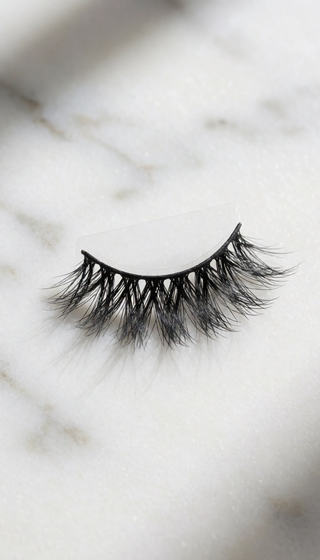
DOWNTURNED VS HOODED EYES: DIFFERENT LASH GUIDE

GET THE LASH LIFT YOU WANT: How to Choose Styles That Open and Define Your Unique Eye Shape
Stop guessing. Learn the precise anatomical differences between downturned and hooded eyes so you can select lashes that enhance your natural features instead of fighting them.
UNDERSTANDING THE ANATOMY OF YOUR EYELID
The way your eye shape interacts with makeup and extensions is determined by the structure of your eyelid. Recognizing whether you have downturned or hooded eyes is the essential first step toward achieving a balanced, lifted look without relying on heavy correction.
What Defines a Hooded Eye?
In a hooded eye configuration, the upper eyelid skin extends over the mobile eyelid when the eye is open. This means the natural crease is often obscured or hidden beneath a fold of skin. The visual effect can be that the eye appears smaller or less defined because the lid structure is partially covered by overlying skin.
What Defines a Downturned Eye?
Downturned eyes are characterized by the outer corner of the eye sitting lower than the inner corner when the face is relaxed. The natural angle of the lash line slopes gently downward toward the temples. This structural characteristic requires specific lash placement to create a visual upward lift.
The Core Difference in Lash Needs
The challenge for hooded eyes is visibility; the lashes must be styled to lift the lid area and prevent them from sitting flat against the skin. For downturned eyes, the challenge is counteracting the natural angle; the lashes need strategic length and curl placement to pull the outer corner upward visually.
ACTIONABLE GUIDANCE: LASH STYLES FOR SPECIFIC EYE STRUCTURES
The right lash style is not a one-size-fits-all solution; it is a structural match. Here is how to guide your selection based on your unique anatomy.
Lash Strategies for Hooded Eyes: Maximizing Visibility
When the lid is partially covered, the goal is to create an illusion of lift and openness. Look for lashes that feature a strong, defined curl (such as a D or CC curl). Shorter inner lengths are recommended to ensure the lash sits cleanly on the skin without transferring oils that could cause the lash to slide into the crease. Profiles described as "cat eye" or "wispy" are often effective because they draw the eye outward and upward.
Lash Strategies for Downturned Eyes: Creating Visual Lift
To counteract a downward angle, you must introduce upward movement. For downturned eyes, a style with a longer outer-corner strand and a band that encourages an upward sweep is ideal. A medium curl (C) allows for manual adjustment during application, enabling you to gently sweep the outer edge upward as the adhesive sets. Avoid heavy, dark bands, as these can emphasize the natural drop.
The Hybrid Approach: Bridging the Gap
If your eye shape falls between these two extremes, a hybrid "natural lift" lash is often the most versatile choice. This style typically features a tapered inner corner, a clean, unobtrusive band, and a flared outer half. This design is engineered to provide subtle lift and definition for both eye types simultaneously.
CRITICAL SPECIFICATIONS: WHAT TO MEASURE BEFORE YOU BUY
Beyond the general style, there are three measurable specifications that dictate whether a lash will work for your specific eye shape. These details are often overlooked in marketing copy.
- Curl Profile: Opt for C or D curls. Avoid J curls entirely, as they provide an unnatural upward pull that may not suit your specific lid structure.
- Band Thickness: The ideal band should be extremely thin, ideally under 0.15mm. A thicker band creates a visual line that can disrupt the natural flow of your eye shape.
- Corner Length Ratio: For downturned eyes, the outer edge should be 2–4mm longer than the inner edge to pull the corner up. Conversely, if your lids hood, the outer edge should be 2–4mm shorter than the middle to prevent the lash from drooping over the lid.
These precise measurements are the difference between a flattering enhancement and a distracting feature.
APPLICATION TECHNIQUES FOR INSTANT LIFT
Even the perfect lash requires correct application. To maximize the lift for both hooded and downturned eyes, follow this technique: Gently warm the lash band before application. Place the lash starting from the inner corner, pressing firmly. After securing the center, tilt the outer edge of the lash slightly upward as you press it into place. This simple action provides an immediate, natural lift that works regardless of your starting eye shape.
OVERCOMING COMMON APPLICATION CONCERNS
Many users worry that their eye shape prevents them from achieving a perfect look. Here is factual guidance on common concerns.
Will lash adhesive negatively affect my hooded eyes?
Adhesive application is only problematic if too much product is used. Apply a thin, controlled line of adhesive at the center of the lash. Focus on pressing the middle section first, then working outward to the edges. This technique prevents the lash band from sliding upward into the crease.
Can I use eyeliner when wearing lashes on downturned eyes?
Yes, eyeliner is compatible. However, avoid styles of winged liner that naturally droop downward. Keep any liner applied thin at the outer corner, allowing the carefully placed lashes to provide the necessary upward lift to the eye.
Is mascara necessary when wearing false lashes?
Mascara is optional. It is only required if you wish to blend the false lashes into your natural lashes for a more cohesive look. A single, light coat of a non-clumping mascara after placement can help integrate them, but it is not a requirement for definition.
THE SOLUTION ENGINEERED FOR YOUR EYE
If you have mastered the anatomy and the specifications—seeking a lash that is lightweight, perfectly tapered, and designed for medium curl—you are ready for a solution that requires zero guesswork. PHANSTA LASHES utilizes advanced, glue-free micro-adhesion technology to deliver the lift and definition you need, tailored for the unique needs of every eye shape.
FREQUENTLY ASKED QUESTIONS
Will lash glue make my hooded eyes worse?
Answer: Only if you use too much. Keep a thin line at the center, press the middle first, then the edges. This avoids the band sliding up to your crease, ensuring the lash stays perfectly positioned to lift your lid.
Can I wear eyeliner with downturned eyes and lashes?
Answer: Yes. Avoid winged liner that droops down. Keep liner thin at the outer corner and let the lash do the lifting. This combination allows you to define the eye without emphasizing the downward angle.
Do I need mascara with false lashes?
Answer: Not unless you want to blend them. A single coat of a non-clumping mascara once the lashes are on can help, but it isn't required for the structural enhancement that the lashes provide.
How long do PHANSTA LASHES last?
Answer: PHANSTA LASHES are designed for high durability, offering 30+ wears per pair. Their micro-adhesion technology ensures they remain secure and beautiful through daily wear.
Are PHANSTA LASHES suitable for sensitive eyes?
Answer: Yes, they are hypoallergenic. Our commitment to quality means they are designed to be gentle on the delicate skin around the eyes while providing maximum aesthetic impact.
📚 Browse our complete library of lash guides →
📚 Browse our complete library of lash guides →
Experience the Difference of PHANSTA LASHES
Quick to apply, gentle on eyes, beautiful all day. Reusable 30+ wears per pair.
SHOP PHANSTA LASHES — GLUE-FREE, 30+ WEARS →