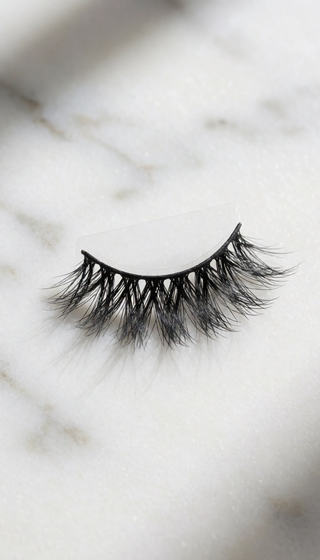
SUSTAINABLE BEAUTY: ECO-FRIENDLY LASH CHOICES

Last week, I watched a beauty salon throw out a strip of lashes after one client. It landed in a plastic bin, and something in my stomach sank. That lash will likely outlive me. It'll sit in a landfill long after my grandchildren are old enough to wear mascara. I'm not dramatic—I just know how plastic works.
THE LASH BIN PROBLEM: WHAT HAPPENS TO YOUR OLD STRIPS
Most false lashes are made from PBT plastic fibers glued to a plastic band. In a landfill, that mix doesn't break down under normal sunlight or moisture for decades. And because lashes are small, they slip through recycling sorting systems. So yes, every strip you toss is there to stay. But here's the good news: this is one of the easiest beauty swaps you can make. You don't have to give up wearing lashes. You just have to choose better ones and treat them like the reusable items they should be.
WHAT 'ECO-FRIENDLY' ACTUALLY MEANS IN FALSE LASHES
Not all 'green' lashes are created equal. Some materials break down; others just break your heart. The big categories: conventional synthetic (PBT), recycled plastic, plant-based fibers like bamboo, cotton, and silk alternatives, and natural fibers. The difference: plant-based lashes can decompose in about 90 days in the right conditions after being removed from the band. Most synthetic lashes take decades. A genuinely eco-friendly lash also uses a bio-based or recyclable band, not just the lash fibers.
HOW TO MAKE YOUR NEXT PAIR YOUR MOST SUSTAINABLE YET
- Choose one good reusable pair over five cheap disposable pairs. A quality lash can last 25+ wears if you clean it with oil-free micellar water after every 3-4 wears.
- Swear off single-use lash trays and foil-backed adhesives. Look for cardboard or paper packaging.
- When the lash is really done, cut the fibers off the band and compost 60% of them. The band goes to recycling.
THE BUYING CRITERIA THAT ACTUALLY MATTER
Here's what I ask before recommending a lash to anyone who cares about the planet:
- Fiber source: Is it plant-based or recycled plastic?
- Band material: Is the band made from a renewable or recyclable material?
- Reusability: How many wears does the brand promise?
- Packaging: Are you buying plastic you'll throw away?
COMPARING COMMON LASH MATERIALS
| Material | Breakdown Time | Wears | Best For |
|---|---|---|---|
| PBT plastic | Decades | 1-5 | Budget one-time use |
| Recycled PBT | Decades | 10-20 | Recycled look |
| Bamboo rayon | ~90 days | 20+ | Everyday wear |
| Cotton fiber | ~60-90 days | 15+ | Those with sensitive eyes |
| Silk blend | ~6 months | 25+ | Luxury feel |
ANSWERS TO YOUR ECO-LASH QUESTIONS
Are eco-friendly lashes less durable?
No. A well-made bamboo or silk blend lash lasts as long as any quality synthetic. The plant-based material doesn't automatically mean fragile. It means biodegradable, not breakable.
How do I clean lashes without ruining them?
Use oil-free micellar water and a spoolie. Do not soak the band. Let them air dry on a clean paper towel. That's it—2 minutes, twice a week.
Can compostable lashes actually be composted?
Yes, but carefully. Cut the fiber off the band, compost the fiber in a home or industrial composter, and recycle the band if it's marked recyclable. If you're not 100% sure, place them in your household waste—still better than plastic in a landfill.
BEAUTY THAT DOESN'T COST THE EARTH
You don't have to choose between a glamorous eye and a clean conscience. PHANSTA LASHES uses plant-based fibers and recyclable packaging, so you can enjoy 25+ wears with a lighter footprint. Your eyes will look alive. The planet will, too.
📚 Browse our complete library of lash guides →
📚 Browse our complete library of lash guides →
📚 Browse our complete library of lash guides →
Experience the Difference of PHANSTA LASHES
Quick to apply, gentle on eyes, beautiful all day. Reusable 30+ wears per pair.
SHOP PHANSTA LASHES — GLUE-FREE, 30+ WEARS →