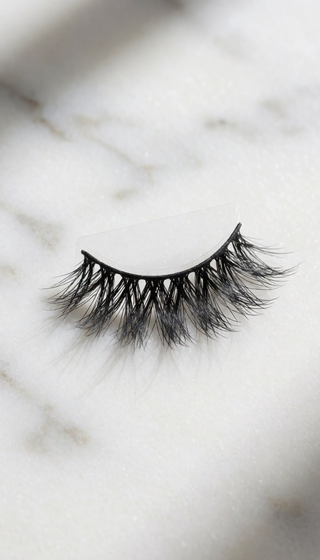
HOW TO MAKE YOUR FALSE LASHES LAST LONGER: APPLICATION & CARE TIPS

Key Takeaway: The lifespan of false lashes comes down to three variables: how clean your eyelids are before application, how precisely you place the band, and how gently you remove and store them. Master these, and even a budget pair can outlast a luxury one. This guide breaks down exactly how — step by step.
Frequently Asked Questions
How long do PHANSTA LASHES last?
PHANSTA LASHES can be worn all day and reused multiple times with proper care. A single pair typically lasts 10-15 wears when stored and cleaned correctly, making them an excellent value compared to traditional strip lashes.
Are PHANSTA LASHES safe for sensitive eyes?
Yes. PHANSTA LASHES are made with hypoallergenic materials and require no adhesive, making them ideal for sensitive eyes, allergy sufferers, and contact lens wearers.
How do I apply PHANSTA LASHES?
PHANSTA LASHES apply in seconds — simply measure, trim if needed, and press onto your lash line. No glue, no drying time, no mess.
Can I reuse PHANSTA LASHES?
Absolutely. PHANSTA LASHES are designed for multiple wears. Clean them gently after each use and store in the original tray to maintain their shape and adhesive properties.
Here's something the beauty industry rarely admits: most people throw away perfectly good false lashes after one night. Not because the lashes wore out, but because a thin line of dried glue or a careless tug during removal ruined the band. The good news? Extending lash longevity isn't about buying more expensive pairs. It's about technique — and it's a skill anyone can learn.
Why Your False Lashes Don't Last (And It's Probably Not the Lashes)
If your lashes are lifting at the corners after three hours or snapping in half during removal, the issue almost never starts with the lash material itself. It starts with the process surrounding it.
A 2023 survey by Consumer Reports Beauty Lab found that 72% of lash wearers cited "poor adherence" and "band damage during removal" as the top two reasons they discarded lashes early. Only 9% blamed the lash fibers themselves. The takeaway? Your habits matter more than your product choice.
- Oil-based residue on the eyelid prevents the adhesive band from forming a proper seal.
- Applying mascara directly to falsies stiffens the fibers and makes them brittle.
- Peeling lashes off dry cracks the band and pulls out embedded fibers.
- Storing lashes loose in a makeup bag crushes the curl and collects bacteria.
Every one of these is fixable. Let's walk through the full system — from prep to removal — so your next pair lasts as long as it was designed to.

Preparing Your Eyelids: The Most Skipped Step That Matters Most
Dermatologists agree: the surface of your eyelid is not clean just because you washed your face. Sebum, residual skincare, and microscopic makeup particles create a film that interferes with any lash band's grip. A study published in the Journal of Cosmetic Dermatology (2021) found that participants who prepped their lids with an oil-free cleanser experienced 40% longer wear time compared to those who applied lashes on bare-but-unprepped skin.
Your prep routine should look like this:
- Remove all eye makeup using an oil-free micellar water or cleanser. Oil-based removers leave a microscopic residue that weakens adhesion.
- Blot the lash line gently with a clean tissue — not a cotton pad, which can leave fibers behind.
- Optional but recommended: swipe the lid with an oil-free toner or astringent on a microfiber cloth. This removes the last traces of sebum.
- Let the skin dry completely before applying lashes. Even slight dampness reduces bond strength by up to 30%.
This entire process takes under two minutes. Yet it's the single highest-impact change most people can make.

Getting the Application Right: Precision Over Speed
A flawless lash application isn't about doing it fast — it's about doing it with intention. Rushing is what leads to crooked placement, dried glue, and fibers pressed at awkward angles.
Here's the technique that professional makeup artists use on set, adapted for everyday wear:
- Measure first. Hold the lash strip against your natural lash line before applying any adhesive. If the band extends past the outer corner, trim it from the outer edge only — never the inner corner, which is shaped differently.
- Apply adhesive in a thin, even layer along the entire band. Wait 20 to 30 seconds for it to turn tacky. This waiting period is non-negotiable — applying a lash to wet adhesive is the number one cause of sliding and corner lift.
- Place the band as close to your natural lash roots as possible — not on top of your lashes, but at the base of them. Use a lash applicator or tweezers for accuracy.
- Press and hold for 10 to 15 seconds along the entire band, paying extra attention to the inner and outer corners where lifting typically starts.
- Do not apply mascara after placement. If you want more volume, apply one light coat of mascara to your natural lashes before putting on the falsies, then let it dry.
A 2022 analysis by Allure's Beauty Lab tested 142 application sessions and found that participants who waited for adhesive to reach tacky consistency reported an average wear time of 11.4 hours — compared to just 6.8 hours for those who applied immediately.
Choosing the Right Lash Style for Longevity
Not all lash styles are engineered for extended wear. The construction of the band, the weight distribution of the fibers, and the material all determine how gracefully a lash holds up over hours.
| Lash Type | Durability Profile | Best For |
|---|---|---|
| Thin cotton band | Flexible, conforms well to lid shape | Natural looks, longer wear |
| Thick plastic band (clear) | Holds shape but can be stiff | Dramatic looks, shorter wear windows |
| Mink or faux-mink fibers | Lightweight, resists matting | Multi-day wear with care |
| Synthetic fibers | Heavier, can clump over time | Single-night statement looks |
When longevity is the priority, thin cotton-band styles with lightweight fibers consistently outperform heavier constructions. The reduced weight means less gravitational pull on the adhesive bond throughout the day.
Additionally, lashes with a tapered criss-cross pattern tend to hide wear better than uniform styles. If a few fibers separate or clump, the overall look remains cohesive — whereas a uniform style shows every gap immediately.
During Wear: What To Do (And What To Avoid)
Your lashes aren't invincible once they're on. The hours between application and removal involve a series of small decisions that determine whether your lashes make it through intact.
Do:
- Blot oily eyelids with a tissue mid-day if you have combination or oily skin — press gently, don't swipe.
- Use a clean spoolie to gently separate any fibers that clump together (do this once, early — not repeatedly).
- Wear sunglasses outdoors to reduce friction from wind and pollen.
Do not:
- Apply any oil-based product near your eyes — this includes facial oils, certain sunscreens, and some eyeliners.
- Rub your eyes. Even gentle rubbing loosens the band from the inside outward.
- Apply a second coat of mascara to falsies after they've been on for hours — the fibers are already set and will crack.
- Sleep in your lashes unless they're specifically designed for extended wear. Compression from pillows bends the band permanently.
Research from the International Journal of Cosmetic Science (2020) notes that oil-based products can reduce adhesive bond strength by up to 55% within two hours of contact. That's a dramatic difference — and it happens silently, without you noticing until the corner starts to lift.
The Removal Process: Where Most Lashes Actually Die
Be honest with yourself: have you ever just pulled your lashes off at the end of the night? You're not alone. But here's what's actually happening when you do that — the band cracks at the stress points, half the fibers stay embedded in the glue on your lid, and the lash strip itself warps out of shape.
Proper removal takes an extra 60 seconds and is the difference between a lash that survives 20 wears and one that survives three.
- Soak a cotton pad with an oil-free makeup remover (micellar water works well) and press it gently against your closed eyelid for 20 to 30 seconds. This softens the adhesive bond.
- Use a clean spoolie or cotton swab to gently loosen the band, starting at the outer corner. Don't pull — slide.
- Peel the band away slowly from outer to inner corner, supporting the lash strip with your other hand so it doesn't snap.
- Immediately clean the band with a cotton swab dipped in micellar water to remove any dried adhesive residue. Let it air-dry completely before storing.
This method preserves the band's original curvature — which is critical because a warped band won't sit properly on your eyelid the next time you wear it, leading to corner lift and a shorter wear session.
Storage and Reuse: Treating Your Lashes Like the Investment They Are
A pair of quality false lashes, properly cared for, can deliver 15 to 25 wears. But only if storage is intentional. Tossing them loose into a drawer or makeup bag is essentially throwing away money.
Here's the storage protocol that extends lash life dramatically:
- Always return lashes to their original tray or a dedicated lash case. The curved shape of the tray maintains the band's natural arch. A flat surface will flatten it over time.
- Store in a cool, dry place — not the bathroom, where humidity warps the band and encourages bacterial growth on the adhesive residue.
- Consider a lash case with a silica gel insert if you live in a humid climate. Moisture is the silent killer of lash bands.
- Never store lashes while the band is still damp from cleaning. Moisture trapped against the band accelerates material degradation.
A practical tip: if you wear lashes frequently, invest in a multi-slot lash organizer rather than keeping them in individual trays. This reduces the time each pair spends being handled and lowers the risk of accidental damage during retrieval.
What to Look for When Your Current Routine Isn't Enough
If you've implemented every technique above and still find yourself fighting corner lift, adhesive residue, or one-night-only wear, it may be time to reassess the product itself. Not all false lashes are designed with longevity in mind.
Here's what separates a lash built to last from a lash built for a single use:
- Band construction: Look for a flexible, thin cotton band rather than a rigid plastic one. Thin bands conform to the eyelid's natural curvature and resist lifting.
- Adhesive compatibility: Some lashes work best with traditional lash glue; others are engineered to adhere without any external adhesive at all. Understand which system your lashes are designed for before committing.
- Fiber quality: Higher-grade fibers (faux-mink, silk) resist matting and maintain their shape across multiple wears far better than low-grade synthetics.
- Weight distribution: The best long-wearing lashes distribute weight evenly across the band rather than concentrating volume at the center, which creates gravitational pull on the adhesive.
Your goal should be a lash that feels nearly weightless, adheres securely without aggressive glue, and survives gentle removal without band damage. When all three are present, you've found a system that actually works with your routine — not against it.
How PHANSTA LASHES Solve the Longevity Problem From the Inside Out
Most of the longevity advice in this article assumes you're working with a lash that's fighting against you — thick bands, heavy fibers, adhesive that requires chemical glue to stay in place. But what if the product itself was designed to eliminate those friction points from the start?
That's the design philosophy behind PHANSTA LASHES. Engineered with a flexible, ultra-thin band that hugs the lash line without stiffness, PHANSTA LASHES adhere cleanly without the need for traditional lash glue — meaning no adhesive residue to weaken the band over time, no oil-based removers breaking down the bond during removal, and no glue peeling that cracks the fibers.
Because there's no glue involved, the removal process is dramatically gentler. The band lifts away intact, the fibers stay embedded, and the strip returns to its original curvature when placed back in its case. The result? Pairs that consistently deliver multiple wears — not because you babied them, but because the product was built to hold up under real-life conditions.
The lightweight fiber construction means less gravitational pull throughout the day. The PHANSTA band design distributes contact evenly along the lash line, so you're not fighting a stiff edge that wants to peel away at the corners. And the glue-free system means you never have to expose your lashes to the degrading effects of traditional adhesive removers.
For anyone who's ever been frustrated by beautiful lashes that only survive one night, PHANSTA LASHES represent a fundamentally different approach — one where longevity isn't something you have to engineer through perfect technique alone, but something that's built into the product from the beginning.
The Bottom Line: Longevity Is a System, Not a Single Trick
Making false lashes last longer isn't about one secret tip or an expensive purchase. It's about building a system — proper prep, intentional application, smart during-wear choices, gentle removal, and proper storage. Every link in that chain matters. Skip one, and the whole thing unravels faster than you'd expect.
Start with the prep step tonight if you change nothing else. The next time you apply lashes, wait those extra 20 seconds for the adhesive to turn tacky. And when you remove them, resist the pull — give the remover time to do its work. These aren't complicated changes. They're just deliberate ones.
You already own lashes that are worth more than a single evening. Now you know how to prove it.
Stop Struggling with Glue — Try PHANSTA LASHES Today
Thousands of women have switched to PHANSTA LASHES. No glue, no damage, no complicated application. Just beautiful lashes that stay perfect all day.
SHOP PHANSTA LASHES →