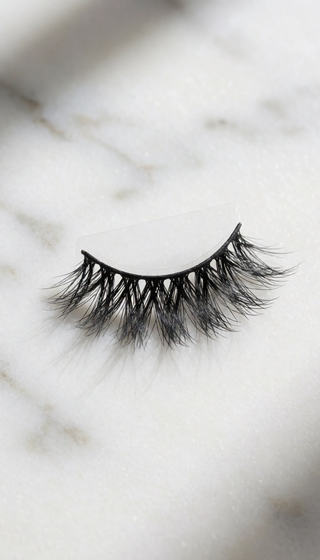
KEEP FALSE LASHES IN PLACE ALL WINTER: COLD-PROOF STYLES AND HOLD TIPS THAT SURVIVE THE SEASON
Cold air, low humidity, and dry indoor heating break down most lash adhesives faster than any other season — which is why so many people watch their carefully applied lashes peel off on a windy December morning. The fix isn't stronger glue; it's the right style, the right prep, and a band technology that doesn't depend on a chemical cure at all. Below is exactly how winter attacks your lashes and the specific steps that keep them locked in from the first holiday party through the last ski weekend.
WHY COLD WEATHER IS THE TOUGHEST SEASON FOR FALSE LASHES
Cold air holds far less moisture than warm air, which dries out the natural oils that keep your lash band flexible. At the same time, indoor heating strips humidity from the environment, creating a double-dehydration effect. Most traditional lash glues rely on a chemical cure that works best at moderate temperatures and humidity levels — below 40°F or in very dry conditions, that cure can weaken, causing bands to lift at the corners within hours.
Wind adds a mechanical challenge: it catches the lighter, longer fibers of dramatic styles and flicks them upward, breaking the seal between band and skin. Scarves, hat brims, and the constant pull of winter layers create friction along the outer corner where most people
FIND THE PERFECT LASH FOR EVERY MOMENT
Explore our occasion-specific lash guides:
Understanding these three factors — dehydration, temperature swings, and friction — is the foundation for every hold strategy in this guide.
WHICH LASH STYLES SURVIVE WIND, COLD, AND SCARF FRICTION
Not all lash designs handle cold weather equally. The right choice can mean the difference between a band that lasts twelve hours and one that fails before lunch.
- Shorter, wispy styles resist wind catch better than long, dramatic fans. Look for lengths in the 8–12mm range with a layered, crisscross pattern that mimics natural lash movement without adding surface area for wind to grab.
- Cat-eye and winged shapes work well in winter because the longer fibers sit toward the outer corner where they can tuck slightly under a scarf or hat brim rather than stick out and catch on fabric.
- Half-lash and accent styles cover only the outer two-thirds of the lash line, which means less adhesive surface exposed to cold air and fewer edges to lift in dry conditions.
- Dense, multi-dimensional strips with tapered tips hold up better than uniform-volume fans because the varying lengths distribute weight more evenly across the band, reducing the stress points where lifting starts.
When browsing any lash collection, prioritize styles labeled as lightweight, flexible-band, or feather-weight — these design features matter more in winter than at any other time of year.
PREP AND APPLICATION STEPS THAT MAXIMIZE WINTER HOLD
Preparation matters as much as the lash itself. A well-prepped lash line can double or triple your wear time, even in harsh conditions.
- Cleanse thoroughly before application. Any oil, moisturizer, or residue on your natural lashes creates a barrier between the adhesive and your skin. Use an oil-free cleanser and let the area dry completely before applying.
- Skip the heavy eye cream. Winter skincare routines tend to include richer creams that migrate to the lash line. Apply your eye product at least ten minutes before lashes, or switch to a lighter gel formula on days you plan to wear falsies.
- Warm the band between your fingers for five to ten seconds before application. A slightly warm band stays flexible and conforms better to the natural curve of your lid, creating a tighter seal before it cools.
- Press, don't slide. Once the band is placed, hold it firmly along the full length for fifteen to twenty seconds. The pressure activates the bond — sliding the strip during placement disrupts that process and leaves gaps.
- Wait thirty seconds before touching or adjusting. The first half-minute after placement is when the bond sets most of its strength. Blinking, rubbing, or adjusting too early is the number-one cause of corner lift.
- Carry a small mirror and a band-safe touch-up pen for quick repairs if you notice a corner lifting mid-day. A tiny dot of product at the point of lift, pressed for ten seconds, can restore the seal without a full reapplication.
COMMON WINTER LASH MISTAKES THAT RUIN YOUR LOOK
Even experienced lash wearers fall into seasonal traps. Here are the errors that cause the most winter-specific failures:
- Applying lashes straight from a cold bag or pocket. The band stiffens in low temperatures and won't conform to your lid curve. Always let lashes reach room temperature for at least two minutes before use.
- Using too much adhesive. Extra glue feels like a solution for winter hold, but it actually slows the cure time and creates a heavier, more rigid bond that cracks more easily in dry air. A thin, even layer is always superior.
- Ignoring the outer corner. The outer third of the lash line bears the brunt of wind and friction. Apply the most pressure there during placement and check it first if you notice any lifting.
- Exposing lashes to steam immediately after application. Hot showers, saunas, and even the steam from a freshly poured hot drink can soften a freshly cured band. Wait at least thirty minutes before any steam exposure.
- Overlapping a scarf or mask edge across the lash band. Position outerwear so it frames your face rather than pressing into your lash line. A folded scarf edge can act like a squeegee, catching the band and peeling it up with every head turn.
WHAT TO LOOK FOR IN A WINTER LASH SOLUTION
Choosing lashes that perform in cold weather comes down to a handful of specific features. When evaluating any lash option, prioritize these criteria in this order:
- Band material and construction. A flexible, cotton-thread or nano-fiber band bends with your eyelid instead of resisting it. Rigid bands are the primary reason lashes lift in winter — they simply can't conform to the subtle shape changes your skin undergoes in temperature swings.
- Adhesive technology. Traditional glue-based systems cure through a chemical reaction that is sensitive to humidity and temperature. Micro-adhesion or pressure-adhesion systems bypass this dependency entirely, creating a mechanical bond that performs consistently regardless of how dry or cold the air is.
- Hypoallergenic formulation. Winter skin is more reactive — it's simultaneously drier and more exposed to irritants. A hypoallergenic product reduces the risk of the redness, itching, and swelling that can force you to remove lashes hours earlier than planned.
- Waterproof construction. Snow, sleet, and the condensation that builds up when moving between cold outdoors and heated interiors all introduce moisture to the lash line. A waterproof design keeps the band sealed through all of it.
- Style range and versatility. A collection that offers multiple lengths, shapes, and densities lets you switch between a natural everyday look and a more dramatic evening option without needing to carry two different lash systems through the season.
WHY GLUE-FREE MICRO-ADHESION IS THE SMARTER WINTER CHOICE
The criteria above point toward one specific technology that outperforms traditional approaches in cold weather: glue-free micro-adhesion. Instead of relying on a chemical adhesive that weakens in low humidity and freezing temperatures, micro-adhesion uses a pressure-sensitive band that bonds directly to the skin's natural surface. No chemical cure means no vulnerability to the environmental conditions that sabotage traditional lash wear every winter.
This approach eliminates the most common winter failure modes at their source. There's no glue to dry out, no cure time to be disrupted by cold air, and no chemical reaction that indoor heating can throw off balance. The result is a lash that goes on in seconds, wears securely through wind and temperature swings, and comes off cleanly without residue or irritation — it removes the season as a variable entirely.
PHANSTA LASHES: ENGINEERED FOR WEATHER THAT WORKS AGAINST YOU
Every winter lash problem covered above — dehydration, failed chemical cures, wind catch, seasonal irritation — traces back to one root cause: a glue-based bond. PHANSTA LASHES replace that system entirely. The collection features 17 styles ranging from barely-there everyday wisps to full-dimensional evening looks, and every pair sits on a glue-free micro-adhesion band that requires no traditional lash glue, no magnets, and no eyeliner primer.
- NO GLUE, NO IRRITATION — Glue-free micro-adhesion bonds without lash adhesive, so there's no chemical cure to fail in cold, dry air and nothing to irritate reactive winter skin.
- 30+ WEARS, SEASON-TESTED DURABILITY — Waterproof, flexible bands hold through wind, sleet, and temperature swings, wearing 30+ times per pair without losing shape or grip.
- UNDER $2 PER WEAR — At $59 per pair and 30+ wears, each application costs less than a coffee, a fraction of salon refills.

FREQUENTLY ASKED QUESTIONS
Can I wear false lashes in cold weather?
Yes — cold weather doesn't mean giving up on false lashes. The key is choosing styles with shorter, wispy fibers that resist wind catch, and using a band technology that doesn't depend on a chemical cure. Glue-free micro-adhesion bands bond through pressure rather than chemistry, so they hold consistently even in freezing temperatures and dry indoor heat.
How do I stop my lashes from lifting in winter?
The most common cause of winter lift is cold-stiffened bands and dry air weakening the bond. Warm the band between your fingers for five to ten seconds before application, press firmly for fifteen to twenty seconds, and wait thirty seconds before adjusting. Position scarves and hat brims so they frame your face rather than pressing into the lash line.
Are glue-free lashes better for sensitive eyes?
Glue-free micro-adhesion eliminates the chemical adhesives that are the most common source of lash-related irritation. Without traditional glue, there's no curing process that releases irritants and no residue that can cause redness or itching. For anyone with reactive winter skin or sensitive eyes, a hypoallergenic glue-free option significantly reduces the risk of discomfort.
How long do PHANSTA LASHES last?
Each pair of PHANSTA LASHES is designed for 30+ wears. The waterproof, flexible micro-adhesion band maintains its grip and shape through repeated application and removal, so a single pair can last through an entire winter season of daily wear — working out to under $2 per wear at the $59 price point.
Can I wear false lashes with ski goggles or glasses?
Yes, but positioning matters. Shorter, wispy styles in the 8–12mm range sit closer to the lash line and are less likely to catch on goggle frames or glasses arms. Apply the most pressure at the outer corner during placement, and if you're wearing a hat with a brim, angle it slightly upward to avoid pressing down on the lash band.
STILL COMPARING OPTIONS? Explore our guides on finding your perfect lash, magnetic vs strip, and sensitive eyes.
FIND THE PERFECT LASH — Not sure which style suits you? Take the 30-second lash finder quiz →
NOT SURE ABOUT YOUR EYE SHAPE?
Find your eye shape and get personalized lash recommendations:
EXPERIENCE THE DIFFERENCE
Join thousands of women who have made the switch. No glue, no damage, no salon appointments — just beautiful lashes in seconds.
SHOP PHANSTA LASHES →