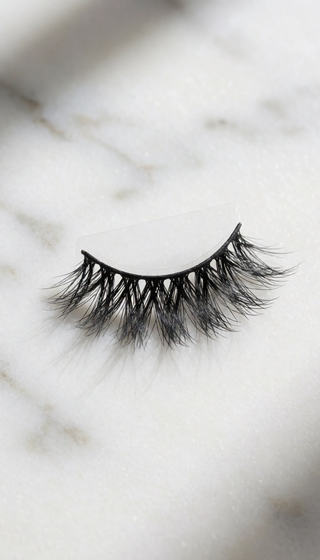
HOW TO WEAR FALSE LASHES WITH A TWIST (LASH LINER)
Achieve Flawless Lash Placement Every Time: The Liner Technique That Eliminates Fumbling
Stop worrying about smudges and lift. Learn how to use a simple cosmetic tool to create a perfect roadmap for your false lashes, ensuring they stay exactly where you want them.

THE SCIENCE OF LASH INTEGRATION: WHY PRE-MARKING YOUR LID WORKS
The process of applying false lashes often fails because the adhesive needs a stable, consistent surface to grip. When applied directly to bare skin or over uneven shadow, the bond is compromised, leading to lifting or displacement. The application of a thin layer of liner serves a dual purpose: it provides an immediate, tacky anchor point and acts as a visual guide.
Understanding Adhesion and Surface Tension
Eyeliner, whether creamy or gel-based, contains polymers that, when partially dried, create a surface tension capable of holding a lightweight band. This initial tack allows the lash band to be precisely positioned before the primary adhesive sets. This technique moves the application from a guessing game to a guided placement process, significantly increasing the likelihood of a secure, centered look.
The Role of Band Flexibility in Application
The physical properties of the lash band matter immensely when using this method. A rigid band will resist conforming to the liner's shape, leading to visible gaps or uneven distribution. Conversely, a flexible, thin band allows the lash to settle smoothly into the liner's guide, ensuring the final result looks seamless against the natural lash line. This flexibility is key to achieving a natural blend.
Optimizing the Drying Time for Maximum Grip
Rushing the process is the most common error. If the liner is too wet, it will smear when the lash is pressed down. If it is too dry, it will not provide the necessary tack. The ideal state is tacky—a point where the product has set enough to hold its shape but remains pliable enough to accept the adhesive bond. This timing is crucial for a secure hold that lasts through daily wear.
The Importance of Layering for Seamless Blending
A single application of liner can sometimes leave a noticeable demarcation between the lash band and the natural lash line. To counteract this, a second, ultra-thin coat of liner over the top of the placed lash band helps to camouflage the adhesive edges and fibers, creating an illusion that the lashes are growing from your natural lashes. This layering technique is what elevates the look from "applied" to "integrated."
CRITERIA FOR SUCCESS: WHAT TO LOOK FOR IN YOUR LASH TOOLS
To successfully execute this technique, you must evaluate your tools based on performance, not just aesthetics. Focus on these three elements before making a selection.
- Liner Consistency: Seek formulas that maintain a tacky state for at least 20 seconds. Avoid quick-dry markers that become brittle too fast, as they won't provide the necessary grip foundation.
- Lash Band Structure: Prioritize lashes with thin, flexible bands. These styles are designed to contour and integrate smoothly with the placement guide you create.
- Adhesive Quality: Remember that the liner is a placement aid, not a substitute for a high-quality lash bond. Use a reliable adhesive to ensure the final, durable hold.
THE these lashes SOLUTION: INTEGRATION MEETS PERFECTION
these lashes are engineered to work flawlessly with advanced application techniques like the liner guide. Our lashes feature a thin, flexible band specifically designed to melt into the liner's placement, ensuring a secure bond from the start. Because they utilize GLUE-FREE micro-adhesion technology, they offer the durability and comfort you need, allowing you to achieve a polished, seamless look without the traditional adhesive stress.
We offer 17 distinct styles, each designed with the flexibility required to integrate perfectly with your chosen application method, providing you with 30+ wears per pair and a look that lasts. With these lashes, you get the confidence of a professional application, every single time.
FREQUENTLY ASKED QUESTIONS
Will the liner ruin my eyeshadow?
No, you can apply liner over your eyeshadow as a base for the lash. Just avoid pressing too hard. The liner acts as a structural guide, and as long as you apply gentle pressure, your eyeshadow underneath remains intact.
Can I use this trick with a pencil liner?
Yes, but a creamy pencil works best. You need a formula that stays flexible—not a stick that crumbles. Creamy formulas provide the necessary tack and pliability required for the placement guide to function correctly.
Do I still need lash adhesive?
Yes, always. The liner is a catching and blending aid, not a binder. Think of it as the guide rails—the adhesive is still the road that secures the lash to your natural lashes for a long-lasting wear.
How long does the liner need to be tacky?
The ideal window is approximately 20 seconds. This allows the liner to set enough to grip the lash band without becoming so dry that it loses its flexibility and becomes difficult to work with.
Is this technique suitable for beginners?
Absolutely. This method simplifies the application process by removing the guesswork. By creating a roadmap first, you ensure precise placement, making it an excellent technique for those new to false lash application.
📚 Browse our complete library of lash guides →
📚 Browse our complete library of lash guides →
📚 Browse our complete library of lash guides →
Experience the Difference of PHANSTA LASHES
Quick to apply, gentle on eyes, beautiful all day. Reusable 30+ wears per pair.
SHOP PHANSTA LASHES — GLUE-FREE, 30+ WEARS →📚 Browse our complete library of lash guides →
STILL COMPARING OPTIONS? Explore our guides on finding your perfect lash, magnetic vs strip, and sensitive eyes.
FIND THE PERFECT LASH — Not sure which style suits you? Take the 30-second lash finder quiz →