Achieve Flawless, All-Day Lash Wear Without the Daily Struggle
If your lashes are falling out before the day is done, the issue is rarely the quality of the lash itself. Most failures stem from a mismatch between application technique and the physical properties of the adhesive and the lash band. Understanding the science behind adhesion, weight distribution, and preparation is the key to a secure, long-lasting look.
The Science of Lash Adhesion: Why Lashes Fail Midday
The longevity of any lash application depends on three critical factors: surface preparation, adhesive curing time, and mechanical support. When these elements are ignored, the bond fails under the stresses of daily movement, humidity, and natural eyelid oils.
Understanding Adhesive Dynamics: Wet vs. Tacky
Adhesives require a specific curing window. Applying a lash immediately after applying glue means the adhesive is still in a liquid state. Liquid glue has low surface tension and is prone to sliding, causing the lash to migrate or lift prematurely. The goal is to reach the "tacky" stage—the point where the adhesive has enough molecular grip to hold the lash firmly but has not yet fully hardened into a rigid, brittle state. This usually requires a brief wait time after application.
The Role of Weight and Band Design
The physical structure supporting the lash matters immensely. Heavy bands exert downward pressure on the adhesive bond, increasing the likelihood of failure, especially in areas with natural movement. A band that is too thick or rigid can create a point of stress where the lash meets the skin, leading to premature detachment. Optimal design utilizes lightweight materials that distribute the lash's weight evenly across the eyelid curve.
Creating a Stable Foundation: The Natural Lash Shelf
Your natural lashes act as the primary support structure for the false lash. If your natural lashes are flat or drooping, the weight of the false lash is concentrated directly onto the skin and the adhesive point, increasing shear stress. Properly curling your natural lashes before application creates a 'shelf' or a curved platform. This allows the false lash to rest securely against the natural lash line rather than pulling directly down on the glue bond.
Addressing Application Errors: The Application Checklist
To maximize wear time, follow these procedural steps: First, ensure your natural lashes are curled and coated with a waterproof formula to lock the shape. Second, apply a thin, precise layer of adhesive—think a fine line, not a blob. Third, wait for the adhesive to become tacky (usually 20-30 seconds). Finally, once placed, gently press the lash into place and hold pressure for a few moments to ensure the bond sets correctly.
What to Look For in a High-Performance Lash System
When selecting a lash system, evaluate the band material for its flexibility and weight distribution. Look for adhesive technologies designed to create a strong, moisture-resistant bond without harsh chemicals. Furthermore, consider the overall design—a system that allows for a secure, seamless integration with your natural lashes, rather than one that fights against them, will provide superior wear time.
The these lashes Difference: Engineered for Endurance
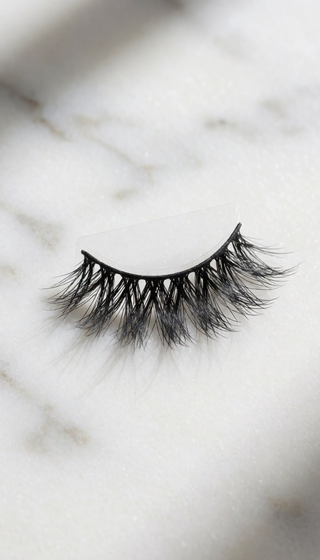
At these lashes, we engineered our system based on these exact principles. We developed a FeatherFlex band that is significantly lighter than industry standards, ensuring the weight is distributed perfectly to allow the adhesive to work without strain. Our commitment is to provide a secure, comfortable bond that withstand humidity and daily activity, allowing you to enjoy your look for 30+ wears with minimal effort.
Addressing Common Concerns About Lash Wear
- Irritation and Sensitivity: Our lashes are hypoallergenic, designed to be gentle on even the most sensitive eye areas.
- Durability and Longevity: Experience consistent wear with our micro-adhesion technology, designed for 30+ wears per set.
- Application Complexity: Our system is designed for ease of use, requiring minimal time per eye to achieve a flawless result.
FREQUENTLY ASKED QUESTIONS
How do I stop the outer corner of my lashes from lifting?
The outer corner lifts because of a lack of pressure during drying. Once you place your lashes, press down on the corners for 15 seconds. You can also use an eyelash sealer (a clear top coat for your lash line) for extra security.
Should I cut my lashes if they are too long?
Absolutely. An oversized lash creates tension at the corners. This tension pops the glue seal. Measure against your eye and cut 2-3mm off the outer edge so it sits comfortably inside your lash line.
Is there a specific glue for oily eyelids?
Yes, look for a strong-hold, latex-free adhesive. these lashes use a specialized, moisture-resistant micro-adhesion technology designed specifically for oily skin, creating a bond that survives the midday oil slick.
How long should I wait before applying the lash?
You must wait until the adhesive becomes tacky. If you apply it too soon, the wet glue will slide around and fail to bond. A brief wait allows the adhesive to reach the optimal grip point for maximum hold.
What makes these lashes different from traditional lashes?
these lashes utilize a unique micro-adhesion system that requires no traditional glue, magnets, or liners. Our FeatherFlex band provides a lightweight, secure fit that ensures longevity without the irritation or heavy feel of conventional options.
Experience the Difference of PHANSTA LASHES
Quick to apply, gentle on eyes, beautiful all day. Reusable 30+ wears per pair.
SHOP PHANSTA LASHES — GLUE-FREE, 30+ WEARS →