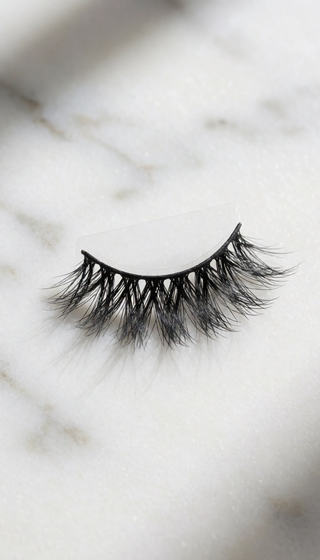
LASHES IN THE SHOWER: CAN YOU WEAR THEM IN WATER?
Achieve Flawless Lash Wear Even When Humidity and Steam Are High
Discover the science behind how moisture affects cosmetic adhesives and learn the exact criteria needed to keep your lash look intact through daily routines, from morning showers to humid outdoor events.

THE SCIENCE OF ADHESION AND MOISTURE
When considering wear in high-moisture environments, it is crucial to understand that the integrity of any cosmetic application relies on the chemical bond between the adhesive and the natural lash. Moisture, heat, and oils act as environmental stressors that challenge this bond. Even products marketed as "waterproof" have operational limits.
HOW HEAT AND STEAM IMPACT LASH BOND STRENGTH
Prolonged exposure to high humidity and steam generates heat that can soften or degrade even the most robust cosmetic adhesives over time. While a brief splash may not cause immediate failure, prolonged soaking or intense heat can weaken the bond structure, leading to premature shedding or warping. The skin around the eye is delicate, and when water is applied, the natural reflex to close the eyes applies pressure to the lash band, which can physically stress the adhesive interface.
THE ROLE OF OIL-BASED PRODUCTS IN LASH INTEGRITY
Shampoo, conditioner, and facial cleansers are formulated with oils to cleanse and moisturize. These oils are inherently designed to break down surface tension and interact with skin lipids. When these products come into contact with the lash band or the adhesive, they can rapidly compromise the bond, causing the lashes to slide or detach much faster than expected, regardless of the initial adhesive quality.
DETERMINING LASH MATERIAL RESISTANCE TO WATER
Not all lash materials react to water in the same way. Synthetic fibers, such as nylon or vinyl, are inherently non-porous and resist absorbing moisture, making them structurally stable in damp conditions. Conversely, natural human hair is porous; it absorbs water, which can lead to the fibers becoming heavy, clumping, or changing their natural curl pattern once dried. For maximum stability, the material of the lash band itself is a critical factor—a thin, flexible, silicone-like base is designed to repel water and maintain its structural integrity better than fabric-based bands.
ACTIONABLE GUIDELINES FOR MOISTURE MANAGEMENT
If you anticipate exposure to high moisture, proactive management is key. First, ensure any adhesive used is rated for high-moisture resistance. Second, if lashes become wet, they must be gently patted dry with a soft, clean towel; rubbing will damage the fibers and loosen the band. Third, when washing your face or hair, physically pull the lashes slightly outward or secure them with fingers to prevent direct saturation. Finally, if you suspect adhesive degradation from moisture exposure, inspect the band for stiffness or cracking, as this indicates the bond is compromised and future wear will be significantly reduced.
WHAT TO PRIORITIZE WHEN SELECTING WATER-RESISTANT LASHES
When seeking a solution that withstand environmental challenges, the focus must shift from the lash hair alone to the entire application system. The primary components to evaluate are the adhesive's chemical resistance, the band's material composition, and the lash fiber type. Avoid materials that are known to absorb water or react poorly to oils. A superior solution will feature a non-porous, flexible base designed to repel moisture while providing a secure, long-lasting hold.
THE these lashes ADVANTAGE: ENGINEERED FOR DURABILITY
Understanding the science of moisture resistance leads directly to the need for a lash system built to last. these lashes utilize advanced GLUE-FREE micro-adhesion technology, which is specifically engineered to provide a secure bond that resists environmental stressors without relying on traditional chemical adhesives. This allows for a look that maintains its definition and integrity through daily life, offering over 30 wears per pair. The combination of hypoallergenic materials and a sealed, non-porous base ensures that your lashes remain beautiful, comfortable, and secure, regardless of humidity or routine exposure.
FREQUENTLY ASKED QUESTIONS
Can you wear false lashes in the shower?
Yes, but only for a short time and with a waterproof glue. Hot, steamy water weakens adhesive, so if you plan to be in there longer than 5 minutes, remove your lashes first.
Are mink or faux-mink lashes water-resistant?
Faux mink is synthetic and water-resistant, but real mink is animal hair and can absorb water, making it heavy and curly. Choose synthetic fiber lashes for wet conditions.
How do you remove lashes after wearing them in water?
Use a gentle oil-based remover or warm water and a cotton pad. Press the pad against the band for about 20 seconds, then slide the lash off. Avoid pulling.
Is there a difference between waterproof lash glue and regular glue?
Yes. Waterproof formulas contain polymers that resist water and humidity. Regular glue breaks down quickly when exposed to moisture. Always check the label.
What makes these lashes different from traditional lash applications?
these lashes utilize GLUE-FREE micro-adhesion technology. This means there is no harsh adhesive to worry about, allowing for comfortable, reusable wear (30+ times) without the risk of irritation or glue breakdown from moisture.
Experience the Difference of PHANSTA LASHES
Quick to apply, gentle on eyes, beautiful all day. Reusable 30+ wears per pair.
SHOP PHANSTA LASHES — GLUE-FREE, 30+ WEARS →📚 Browse our complete library of lash guides →
STILL COMPARING OPTIONS? Explore our guides on finding your perfect lash, magnetic vs strip, and sensitive eyes.
FIND THE PERFECT LASH — Not sure which style suits you? Take the 30-second lash finder quiz →