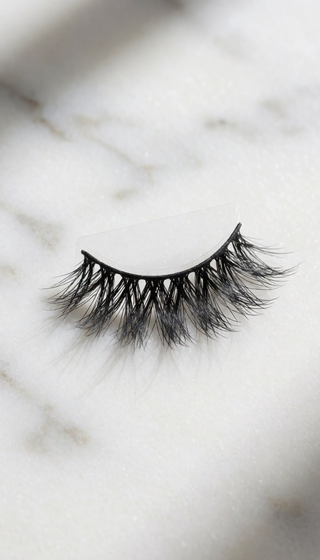
THE COMPLETE GUIDE TO TAPERED LASHES FOR PROMINENT EYES
REDUCE THE VISUAL PROJECTION OF PROMINENT EYES
Learn how precise fiber geometry and light diffusion can soften the appearance of a convex eye structure, creating depth without adding bulk.
THE SCIENCE OF LIGHT DIFFUSION FOR EYE APPEARANCE
When the eye has a prominent projection, the primary visual challenge is the direct reflection of ambient light, which emphasizes its forward curve. To counteract this, cosmetic application must focus on altering how light interacts with the surface. This is achieved not merely through length, but through the strategic manipulation of fiber diameter and texture.
Understanding Fiber Geometry: Taper vs. Uniform
Uniform synthetic lashes typically maintain a consistent diameter from the base to the tip. This consistent surface acts as a mirror, reflecting light directly back toward the viewer, which can inadvertently highlight the eye's projection. In contrast, tapered lashes are engineered to mimic the natural growth pattern of human hair. They feature a thicker base (ranging from 0.10mm to 0.15mm) that provides structural integrity, gradually narrowing to a fine tip (0.03mm to 0.04mm). This gradual diameter change creates multiple, subtle light-interruptions along the lash line.
- Light Scattering: The transition from a thicker base to a fine tip scatters ambient light across a wider area instead of reflecting it as a single bright point. This diffusion softens the overall visual impact of the eye's forward curve.
- Depth Over Extension: For prominent eyes, the goal is to create a dense, textured curtain that absorbs light rather than pushing it forward. Texture and density are more impactful than extreme length in achieving this optical effect.
- Cross-Sectional Variance: Incorporating fibers with slight variations in diameter (e.g., mixing 0.05mm and 0.07mm within a single lash) helps build a natural depth gradient, preventing the lash from looking monolithic or overly synthetic against the skin.
The Impact of Adhesive Structure on Eye Shape
The method used to secure lashes significantly influences the perceived shape of the eye. Traditional adhesive applications often require a thicker, rigid band to support the glue. This rigid horizontal line can create a stark demarcation that emphasizes the roundness or projection of a prominent eye. A flexible application system allows the lash to conform intimately to the precise curvature of the eyelid, ensuring the tapered geometry is maintained right up to the root, creating a seamless, natural transition.
Actionable Styling Techniques for Maximum Effect
To maximize the light-diffusing effect of tapered fibers, preparation is key. Applying a single, light coat of volume mascara to your natural lashes before applying the enhanced lashes helps to fuse the synthetic fibers with your natural ones. This integration creates a more cohesive, dense texture that supports the desired shadow effect. Furthermore, a precise application of a matte brown or black tightliner along the upper lash line anchors the look, providing the necessary contrast to enhance the depth created by the tapered fibers.
Differentiating Lash Shapes: Tapered vs. Flared
It is important to distinguish between different lash architectural terms. A flared lash is defined by fibers that point distinctly outward from the lash line, creating a spiky effect. Conversely, a tapered lash describes the internal structure of the individual fiber itself—moving from a thicker base to a finer tip. For the specific goal of softening a prominent eye, the focus must be on achieving a dense, textured curtain using tapered fibers, rather than relying solely on outward spikes.
The Importance of Fiber Density and Texture
When addressing a prominent eye, the primary tool for surface reduction is texture. A high-density application of tapered lashes creates a visual density that absorbs light across the eye area. This dense, textured layer works to visually recede the forward projection. While length adds extension, texture adds depth and visual complexity, which is the key to balancing a convex eye shape.
WHAT TO LOOK FOR IN A SOLUTION FOR PROMINENT EYES
When selecting a lash solution, prioritize fiber geometry and application flexibility over sheer length. Look for products that utilize variable fiber diameters and offer a seamless, non-rigid attachment method that conforms to your natural eye shape.
these lashes: THE OPTIC SOLUTION FOR PROMINENT EYES
these lashes are specifically engineered to address the visual challenges of prominent eyes through advanced fiber science. Our lashes feature precision-tapered fibers that utilize light diffusion to soften projection, combined with a flexible, glue-free micro-adhesion band. This allows for a seamless, natural transition that preserves the intended optical effect without the rigidity of traditional adhesives.
- Micro-Adhesion Technology: Our glue-free binding ensures the taper remains intact from root to tip, maintaining the intended light-diffusing geometry without a rigid adhesive line.
- Engineered for Depth: With 17 distinct styles, these lashes offer the precise fiber density needed to create a textured curtain that balances prominent eye structure.
- Comfort and Durability: Enjoy the look of enhanced depth with the confidence of 30+ wears, knowing the hypoallergenic, waterproof formula is gentle on your natural lashes.
FREQUENTLY ASKED QUESTIONS
What is the difference between a tapered and a flared lash?
A flared lash has fibers that point outward, creating a spiky effect. A tapered lash describes the shape of the individual fiber itself: thick base to fine tip. For prominent eyes, the focus is on tapered fibers within a dense layout, not just outward spikes.
Can I achieve a natural look with prominent eyes using these lashes?
Yes. The natural texture of tapered fibers mimics the hair growth pattern of healthy eyelashes. The result is a denser, more textured version of a natural lash that fits the eye perfectly without appearing artificial.
How do I remove these lashes without damaging the taper?
Grip the outer edge of the band and gently peel inward. Avoid pulling directly on the fibers themselves. Always store your lashes in their original tray immediately after removal to prevent the delicate tapered tips from bending or losing their structure.
Are these lashes suitable for sensitive eyes?
Yes, PHANSTA LASHES are designed with a hypoallergenic composition. Because they utilize a micro-adhesion system instead of harsh chemical glues, they are formulated to be gentle and comfortable for even the most sensitive eye types.
What is the primary difference between PHANSTA LASHES and traditional adhesive lashes?
The main difference is the attachment method. PHANSTA LASHES use a flexible, glue-free micro-adhesion that conforms to your eye shape. Traditional lashes rely on thick adhesives, which can create a rigid line that emphasizes eye projection.
NOT SURE ABOUT YOUR EYE SHAPE?
Find your eye shape and get personalized lash recommendations:
FIND THE PERFECT LASH FOR EVERY MOMENT
Explore our occasion-specific lash guides:
EXPERIENCE THE DIFFERENCE
NOT SURE ABOUT YOUR EYE SHAPE?
Find your eye shape and get personalized lash recommendations:
FIND THE PERFECT LASH FOR EVERY MOMENT
Explore our occasion-specific lash guides:
Join thousands of women who have made the switch. No adhesive, no damage, no salon appointments — just beautiful lashes in seconds.
SHOP PHANSTA LASHES — GLUE-FREE, 30+ WEARS →