AUTUMN LASH CARE: WHY NATURAL LASHES SHED AND HOW TO PROTECT

You pulled a tissue out of your coat pocket this morning and noticed three tiny lashes stuck to your cheek. Not dramatic. Not one. Three. Before you panic, breathe. This is a real thing called autumn lash shedding, and it's not a sign you're balding on your eyes. It's a seasonal pattern that dermatologists have been noticing for years, and there's a science-backed way to protect your lashes through the seasonal shift.
WHY AUTUMN MAKES YOUR LASHES FALL OUT
Your lashes live on a cycle: grow, rest, shed. The whole cycle lasts about 30 to 60 days for each lash hair. But here's the trick: studies on hair shedding show a peak in October and November, especially in women. A 2015 review in the International Journal of Trichology found that telogen effluvium—a temporary increase in hair shedding—happens more often in autumn. Why? The drop in sunlight changes melatonin and serotonin levels, which can push more hair follicles into the resting stage. Then they all "release" at once, about two months later. That might be the reason your lashes seem extra fragile at the same time every year.
THE AUTUMN LASH PROTECTION PLAN
You can help your lashes stay anchored longer. These are the five habits I recommend to anyone who notices autumn shedding.
- Remove your mascara properly every night. A 45-second gentle soak with an oil-based remover beats rubbing your eyes twice. Rubbing is the #1 cause of breakage, not shedding.
- Brush your lashes daily with a clean spoolie. It stimulates the follicle and removes debris that can clog the lash line.
- Add protein to your breakfast. Keratin is made of protein. If your body is busy with seasonal stress, a protein-rich start (eggs, yogurt, or a smoothie with collagen) supports healthier hair growth.
- Use a humidifier in your bedroom. Indoor heating turns the air dry. Dry lash hairs become brittle and break instead of shedding cleanly.
- Skip waterproof mascara on low-key days. Waterproof formulas strip lashes of moisture and need more rubbing to remove. If you must wear it, use a gentle remover and add a lash conditioner.
THE HIDDEN ENEMY: INDOOR HEATING
Here's something most beauty editors don't tell you. Central heating creates a desert in your living room. Your lashes, just like your skin, lose moisture to dry air. Over weeks, that makes individual lash hairs weaker. They break in the middle instead of coming out from the root. That's why you might find little pieces of lash, not full ones. The fix isn't to stop washing your face—it's to lock in moisture with a light, non-comedogenic moisturizer on your lids at night, and keep your humidity levels around 40-60%.
Also, don't forget: allergies to dust mites and mold spike when windows stay closed for the season. If your eyes itch and you rub them, your lashes will fall out faster. Antihistamine + cold compress > rubbing.
WHEN SHEDDING ISN'T NORMAL
Seasonal shedding is diffuse—meaning the lashes come out evenly, so you might notice more in the sink, but you don't have big bare patches. If you see distinct bald spots, or the skin around your lashes is red, crusty, or sore, that's not fall allergies. That could be an infection, an autoimmune condition, or severe irritation. See a dermatologist, not a forum.
HOW TO STAY GLAM WHILE YOUR NATURAL LASHES REGROUP
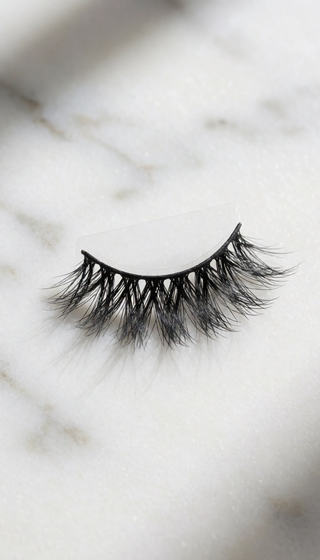
Shedding can leave bare patches, and that's frustrating. The good news: you can give your natural lashes a break while still looking put together. High-quality false lashes can serve as a "shield" for your natural lashes—especially if you use them instead of heavy mascara and eyelash curlers. This is the moment to choose lash styles that are lightweight, comfortable, and don't require pulling or tugging to apply. Because the goal is to let your natural lashes heal, not to add more stress.
If you've been looking for a way to keep that awake, polished look during the seasonal shed—without more rubbing, more pulling, or more makeup remover—PHANSTA LASHES has your answer.
Frequently Asked Questions
Is it normal to lose 5 lashes a day?
Yes. You have about 90 to 150 lashes on each upper lid, and a daily cycle means losing 1 to 5 lashes is normal. In autumn, that number can go up to 8 or 10 per day for a couple of weeks.
Can lash serum help during seasonal shedding?
Not instantly. A lash serum speeds up the growth phase, but it won't stop the shed that's already happening. Use it consistently for 8 to 12 weeks and you'll see fewer bare gaps next season.
Should I stop wearing false lashes if my natural lashes are shedding?
No, if you choose the right kind. Avoid heavy, thick bands that pull on the follicle. Look for lightweight lashes and apply a gentle adhesive. And always remove them with a soak, never a yank.
Browse our complete library of lash guides →
Quick to apply, gentle on eyes, beautiful all day. Reusable 30+ wears per pair. 📚 Browse our complete library of lash guides →📚 Browse our complete library of lash guides →
📚 Browse our complete library of lash guides →
📚 Browse our complete library of lash guides →
📚 Browse our complete library of lash guides →
📚 Browse our complete library of lash guides →
📚 Browse our complete library of lash guides →
📚 Browse our complete library of lash guides →
Experience the Difference of PHANSTA LASHES
Quick to apply, gentle on eyes, beautiful all day. Reusable 30+ wears per pair.
SHOP PHANSTA LASHES — GLUE-FREE, 30+ WEARS →