HOW TO SAFELY REMOVE LASH GLUE FROM SKIN | this lash system
If you've ever peeled off a strip lash and found a sticky film of glue still clinging to your eyelid, you're not alone — and you're right to be cautious. The skin around your eyes is the thinnest on your entire body, measuring roughly 0.5 millimeters. That makes the area prone to irritation, inflammation, and even premature aging when subjected to harsh scrubbing, aggressive solvents, or impatient pulling that can yank out natural lashes.
Here's the reassuring part: lash glue can be removed safely and completely in under five minutes using gentle methods and products you likely already own. No acetone near your eyes, no rubbed-raw patches, no lost lashes. This guide walks you through exactly how to do it — and how to sidestep the problem entirely if you'd rather never deal with it again.
REMOVE LASH GLUE SAFELY IN UNDER 5 MINUTES
Four reliable methods, ranked from fastest to most thorough. Every one of them respects the delicate skin around your eyes.
Method 1 — Oil-Based Eye Makeup Remover (fastest)
Apply an oil-based eye makeup remover to a cotton pad. Press it against your closed eyelid for 20–30 seconds — do not rub. The oils penetrate the polymer film of the adhesive and weaken its bond to the skin. After the pause, swipe gently outward toward your temple. The glue should lift away in thin, translucent strips. Repeat if needed, always pressing first before wiping.
Method 2 — Micellar Water on a Cotton Pad
Saturate a cotton pad with micellar water labeled safe for the eye area. Hold it against the lash line for 30 seconds, then swipe outward in one direction. Micellar water contains mild surfactants that lift the adhesive film without stripping the skin's moisture barrier. This is the gentlest option for daily wearers who want zero stinging.
Method 3 — Petroleum Jelly or Virgin Coconut Oil (most thorough)
For stubborn residue, apply a thin layer of petroleum jelly or virgin coconut oil to the affected area. Let it sit for two to three minutes. Both are occlusive and oil-based, which means they penetrate the polymer more slowly but completely. Wipe away with a warm, damp cloth. These options also deeply moisturize, countering the dryness that repeated glue removal can cause.
Method 4 — Adhesive-Remover Wipes
Pre-moistened adhesive-remover wipes designed for lash extensions and strip lashes offer a convenient option. Look for formulas labeled "oil-based" or "glue-dissolving" and specifically marked safe for the eye area. Press and hold for 15–20 seconds, then wipe outward. These are especially useful when you're traveling and don't have your full routine on hand.
Rules that apply to every method:
- Always press and hold first. Let the product dissolve the bond before you attempt any wiping motion.
- Wipe outward toward your temple — never toward the inner corner or down toward the eye itself.
- Never pull at a lash band or extension that resists. Apply more product and wait rather than forcing it.
- After removal, rinse with cool water and apply a gentle moisturizer to restore the skin's barrier.
WHY LASH GLUE IS SO HARD TO REMOVE
Most lash adhesives are built on cyanoacrylate — the same family of fast-bonding compounds found in medical-grade skin adhesives. That's what makes them reliable through a long day of wear, but it also means they don't simply wash away with water.
Cyanoacrylate bonds to the outermost layer of dead skin cells and forms a thin, flexible polymer film. Warm water and regular cleansers can't break that film down because the polymer is hydrophobic — it repels water on a molecular level. That's why wiping with a damp cloth does little more than smear the adhesive around.
Understanding this is the first step: to remove lash glue safely, you need something that breaks the polymer bond or dissolves the film without damaging living skin. Water-based products alone won't cut it. You need an oil-based or surfactant-based solution that can interrupt the molecular structure of the adhesive.
This is also why regular wear of glue-based strip lashes creates a cumulative burden on your skin. Each application deposits a fresh polymer layer, and each removal requires solvents or oils to dissolve it. Over weeks and months, that cycle contributes to thinning skin, chronic irritation, and lash breakage — especially if any pulling or scrubbing occurs during removal.
INGREDIENTS THAT DISSOLVE LASH GLUE — AND ONES TO AVOID
Not all removers are created equal. Here's what to look for on the ingredient label and what to steer clear of.
Effective, eye-safe ingredients:
- Caprylic/capric triglyceride: A derived coconut oil that breaks down cyanoacrylate effectively and is non-comedogenic, meaning it won't clog the delicate pores around your eyes.
- Isopropyl myristate: A common solvent in professional adhesive removers that dissolves polymer films without excessive drying of the surrounding skin.
- Glycerin: An occlusive humectant that keeps the periorbital skin hydrated during and after the removal process.
- Squalane: A lightweight, skin-identical oil that penetrates the adhesive film while simultaneously moisturizing — ideal for daily lash wearers.
- Micellar surfactants (polysorbate 20, PEG-40 hydrogenated castor oil): Lift adhesive residue at a molecular level without requiring mechanical scrubbing.
Ingredients to avoid entirely in the eye area:
- Pure acetone or nail polish remover: Far too harsh for periorbital skin and dangerous near the eye itself. The fumes alone can cause serious irritation.
- High-concentration alcohol: Strips the skin barrier, causes stinging, and accelerates transepidermal water loss — the opposite of what this fragile area needs.
- Essential oils at high concentrations (peppermint, tea tree, eucalyptus): Can trigger contact dermatitis and stinging when applied to the thin eyelid skin.
WHAT TO AVOID WHEN REMOVING LASH GLUE
Some removal habits cause more damage than the glue itself. Here are the most common mistakes and why they're harmful.
- Pulling or peeling a lash strip off dry. This is the number one cause of skin irritation, broken capillaries, and natural lash loss. Always soften the adhesive before attempting removal.
- Using acetone-based nail polish remover near your eyes. Beyond the fumes, any contact with the cornea can cause serious damage. Stick to products formulated for the eye area.
- Scrubbing with exfoliating brushes or rough washcloths. The periorbital skin cannot handle mechanical exfoliation. It will redden, thin over time, and become more reactive.
- Reusing lash strips that still carry old adhesive on the band. Trapped bacteria in old adhesive can cause eye infections like conjunctivitis. Clean the band thoroughly or discard the pair.
- Applying makeup over residual glue. Foundation and concealer trap bacteria against the skin and can clog pores, leading to milia and breakouts along the lash line.
WHAT TO LOOK FOR IN A LASH THAT NEEDS NO GLUE
If you wear lashes regularly, the cycle of applying adhesive and then scrubbing it off takes a cumulative toll. Many lash wearers have started looking for options that eliminate the glue step entirely — and with it, the removal problem this entire guide addresses.
When evaluating a glue-free lash system, five criteria matter:
- Application method: How does the lash adhere? Look for a mechanism that requires no liquid or tube adhesive — something that bonds directly to the skin.
- Wear count: Can you get multiple wears from a single pair without reapplying any product? A pair that delivers 30+ wears offers dramatically better long-term value than one meant for a single evening.
- Adhesive regeneration: Does the adhesion mechanism restore itself between wears, or does it lose tack after one use? A reusable system should clean and refresh easily.
- Skin safety: Is the adhesion technology hypoallergenic and free from common irritants like latex, formaldehyde, and cyanoacrylate?
- Removal experience: Does the lash lift off cleanly with zero residue left on the skin? The ideal answer is a simple peel-away with nothing remaining behind.
If a lash system answers yes to all five, it effectively removes the glue-removal problem at its source — no solvents, no scrubbing, no residue, no irritation.
The result is a lash that applies in seconds per eye and lifts off cleanly with zero residue. There's nothing left on your skin to scrub, nothing to dissolve, and nothing to irritate.
PHANSTA LASHES: THE GLUE-FREE ANSWER
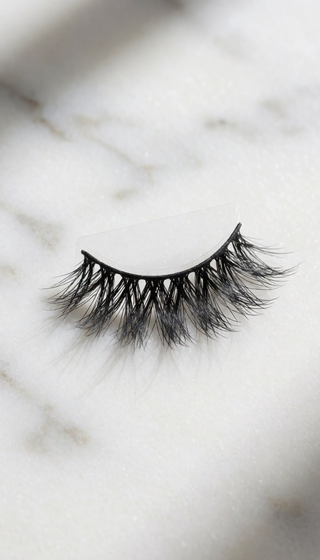
PHANSTA LASHES were engineered around exactly those criteria. Instead of a tube of cyanoacrylate adhesive, PHANSTA LASHES use a proprietary micro-adhesion technology — a medical-grade silicone band that bonds to the skin through thousands of microscopic contact points. No glue. No magnets. No liquid liner. Nothing to dissolve later.
What makes PHANSTA LASHES different:
- 17 styles ranging from natural everyday looks to dramatic evening volume
- $59 per pair — at 30+ wears, that's under $2 per wear
- Micro-adhesion technology: no glue, no magnets, no liner — the band itself bonds to skin
- Hypoallergenic and safe for sensitive eyes and contact-lens wearers
- Waterproof and sweat-proof — wear them through workouts, humid days, and long events
- Zero residue removal — the lash lifts away and your skin is left completely clean
For anyone who has ever stood at the mirror trying to pick dried glue off their eyelid with a cotton swab, this is the answer. PHANSTA LASHES don't just simplify your routine — they remove the problem that this entire guide was written to solve.
FREQUENTLY ASKED QUESTIONS
Can I use coconut oil to remove lash glue?
Yes. Virgin coconut oil is an effective, gentle option for dissolving lash adhesive. Apply a thin layer, let it sit for two to three minutes to penetrate the polymer film, then wipe away with a warm damp cloth. It's safe for the eye area and moisturizes the skin at the same time, making it one of the best dual-purpose options.
Is it safe to use acetone nail polish remover to remove lash glue?
No. Pure acetone and nail polish removers are far too harsh for the thin skin around your eyes and can cause serious irritation or corneal damage if they get into your eye. The fumes alone are dangerous at close range. Stick to oil-based eye makeup removers, micellar water, or adhesive-remover wipes specifically designed for the eye area.
How do I remove lash glue from my natural lashes?
Apply an oil-based remover or petroleum jelly along your lash line using a cotton swab. Let it sit for a few minutes to soften the adhesive, then gently comb through with a clean spoolie to separate the natural lashes from the residue. Never pull or rub aggressively — this can cause natural lash breakage or loss. Repeat as needed with fresh product.
Can wearing lash extensions damage my natural lashes?
Not when applied and removed correctly. The risk comes from improper removal — pulling extensions off without softening the adhesive first, or having them applied by an untrained technician. Gentle removal and adequate spacing between appointments allow your natural lashes to stay healthy. A reputable adhesive-remover product and a patient, press-and-hold technique are essential.
How often can I safely reapply PHANSTA LASHES?
PHANSTA LASHES are designed for 30+ wears per pair. The micro-adhesion band can be refreshed between wears by gently rinsing it with water and letting it air-dry. There's no adhesive to reapply, so there's no residue buildup on the band or your skin over time. This makes them suitable for daily wear without the cumulative skin stress that glue-based systems cause.
NOT SURE ABOUT YOUR EYE SHAPE?
Find your eye shape and get personalized lash recommendations:
FIND THE PERFECT LASH FOR EVERY MOMENT
Explore our occasion-specific lash guides:
EXPERIENCE THE DIFFERENCE
Join thousands of women who have made the switch. No glue, no damage, no salon appointments — just beautiful lashes in seconds.
SHOP PHANSTA LASHES — GLUE-FREE, 30+ WEARS →